
I struggled with a pretty extreme case of perfectionism from the time I was a young child until well into adulthood. Occasionally, I still have to talk myself down from the attitude that “everything you do has to be exceptional or you’re a failure.”
If you have children, please make sure they don’t have to deal with this. It stunts development. Seriously. If you have a child who is afraid to make mistakes, you (and they) run the risk that they will constantly feel like they’re failing and so will be afraid to try new things, and/or be afraid to explore whatever limitations they encounter.
We’re all going to find things that we’re just not that good at, particularly if we don’t have a lot of experience with them. If those things are things you don’t enjoy all that much, it’s fine to move on from them. But if you have enjoyed those experiences, and want to explore more about them, you should feel free to explore them, even if that exploration doesn’t look productive to others.
We all deserve the opportunity to mess up now and then. Mistakes can be a gateway for learning, particularly if you can look at your own work and figure out how you might approach the same task in the future.
I have been experimenting with printmaking and bookbinding over the last few months. My background is in lettering, illustration and graphic design, with a little bit of (darkroom!) photography thrown in for good measure. I’ve dabbled with both book making (mostly single signature, but some stab binding) and eraser carving, but this year I’ve been experimenting with techniques that are a squidge more technical — they are techniques I’ve never used and know nothing about.
There have been some disasters, and some near disasters. And my most successful books and prints are, well, the work of a beginner…
… And that’s OK.
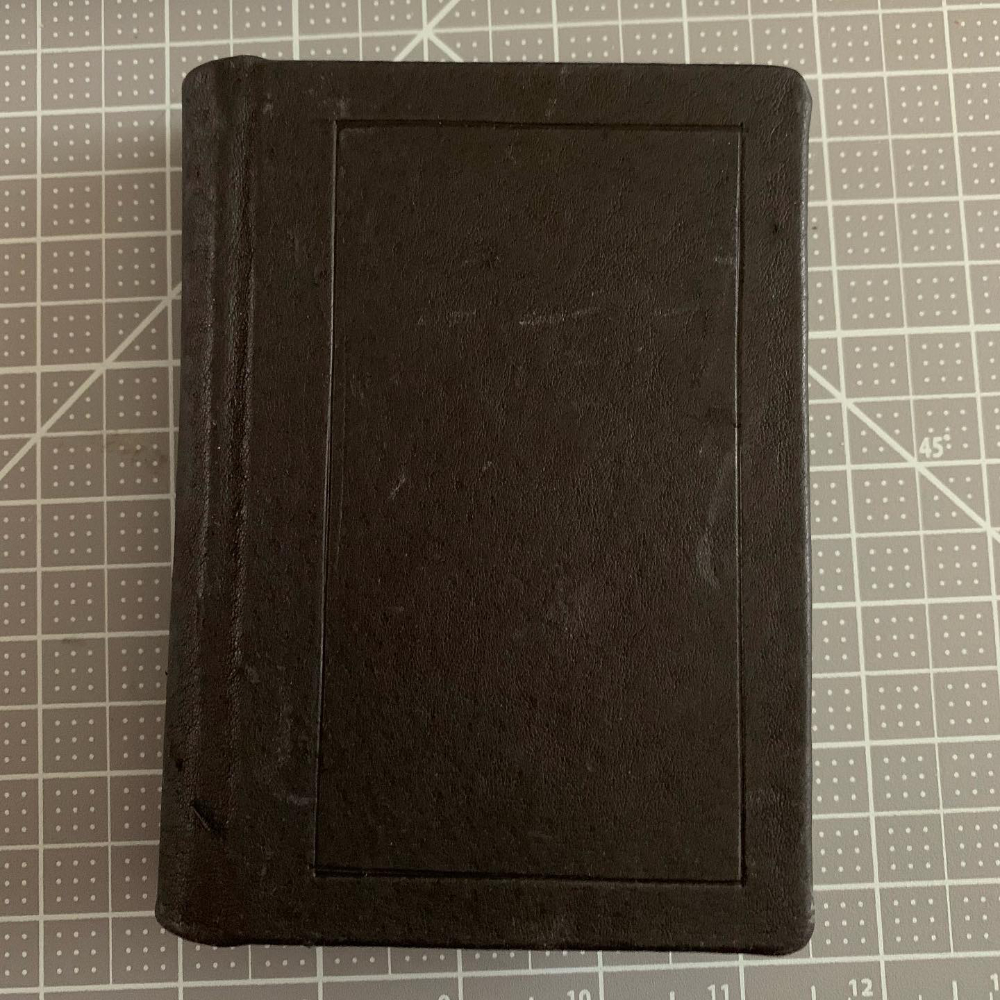
As I move into this next phase of my life, as I work to contextualize and let go of perfectionism, I’m learning that I am not good at setting goals. If you aren’t working on specific goals, you can’t fail, right?
But you can’t succeed, either.
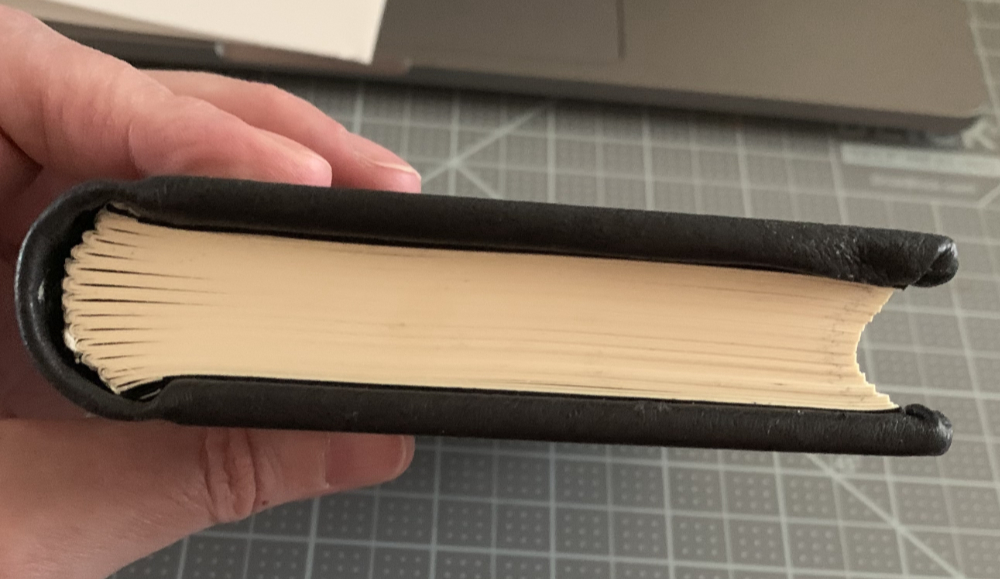
The bookbinding workshop I attended last weekend contained techniques that I was so unfamiliar with that all I could do was listen carefully to the instructions, do my best, and seek help often. (I’m really grateful for a compassionate and kind instructor!)
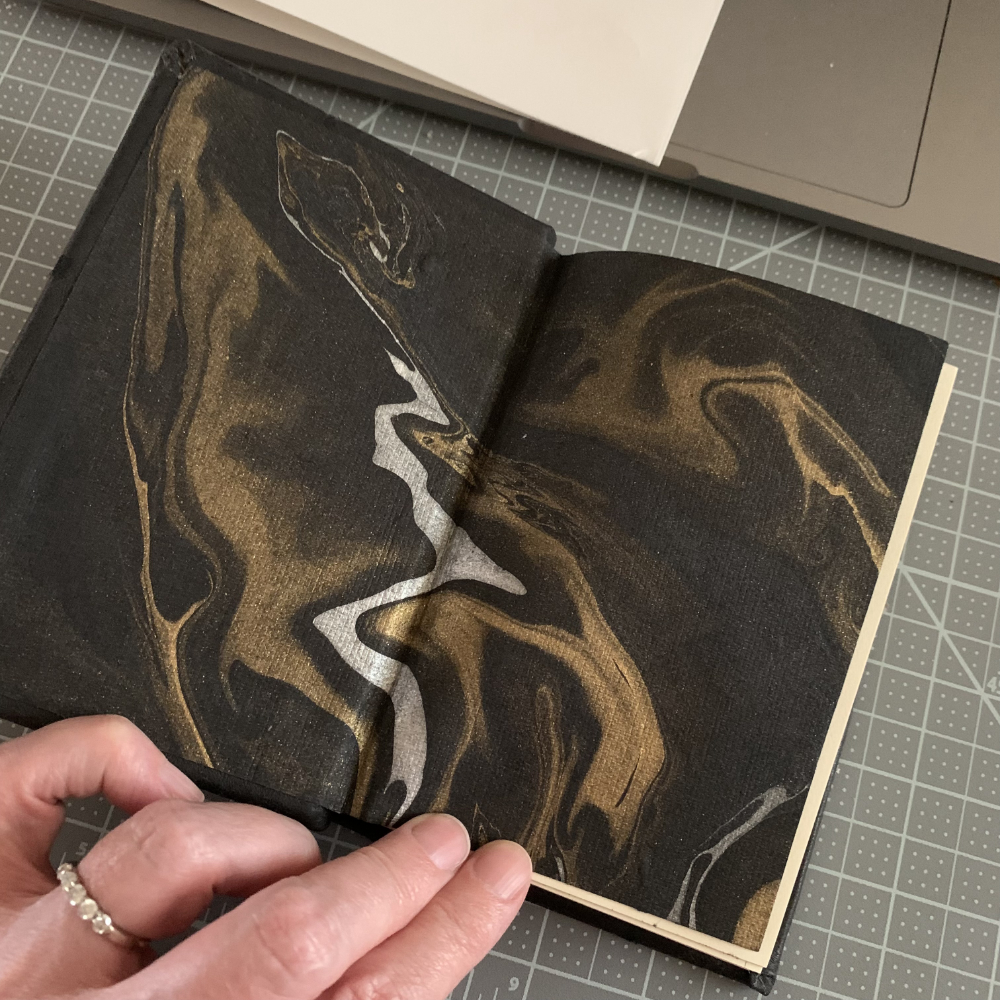
My takeaways from this workshop: the skills I was introduced to last weekend will require a lot more practice before they become truly useful to me. I’m grateful to be able to learn.
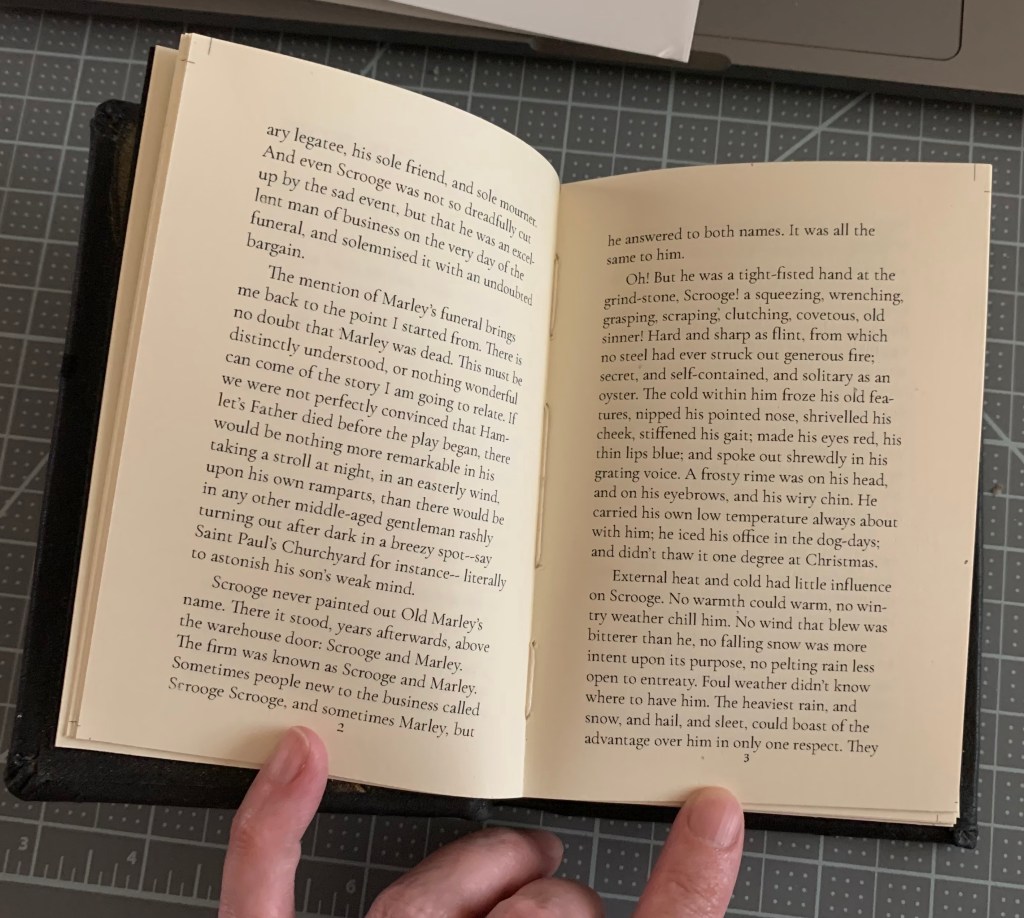
Not a disaster, but it really could have gone either way at just about every point. Let’s just say it’s desperately imperfect and leave it at that. That’s OK. I’ve never used these skills, and there’s a first time for everything.
Ultimately, I want to be able to make my own journals. That’s my goal for right now.
This week, I tried it. My immediate goal is to work on my sewn bindings, because my books are a little more wobbly than they should be.
I folded the signatures one day and put them in the press for 24 hours. Then I made the sewing station pattern and created the sewing stations.
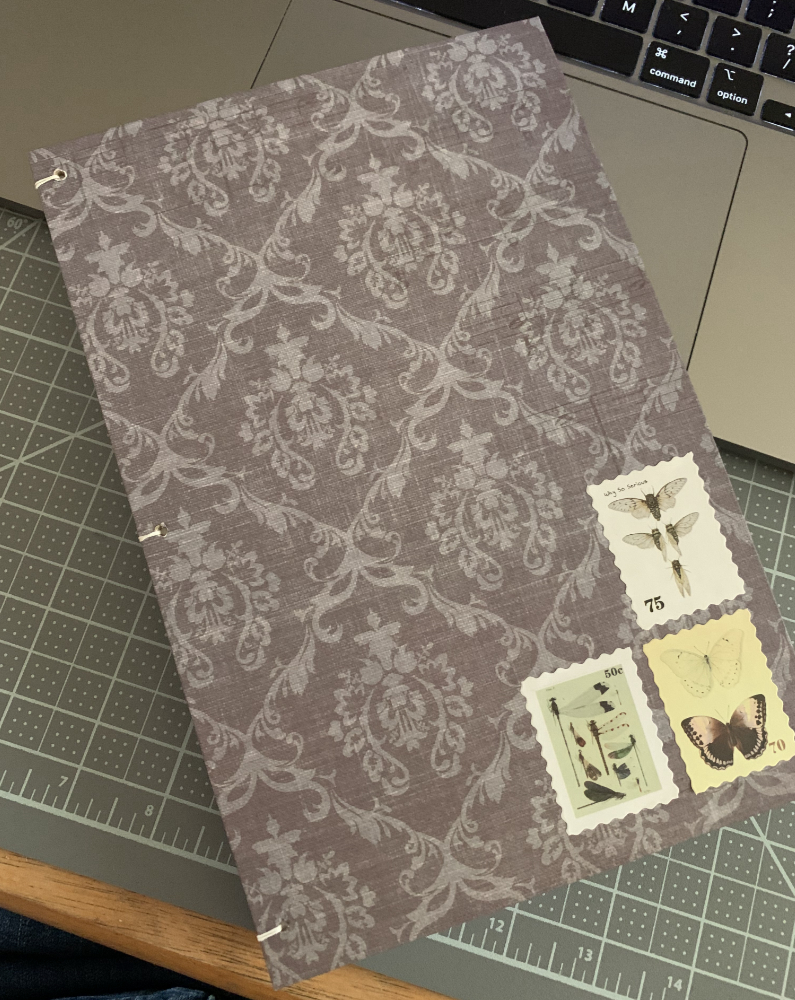
The covers are made from too thin chip board, covered with scrapbook paper I had in my stash using PVA. They spent 24 hours in the press to cure.
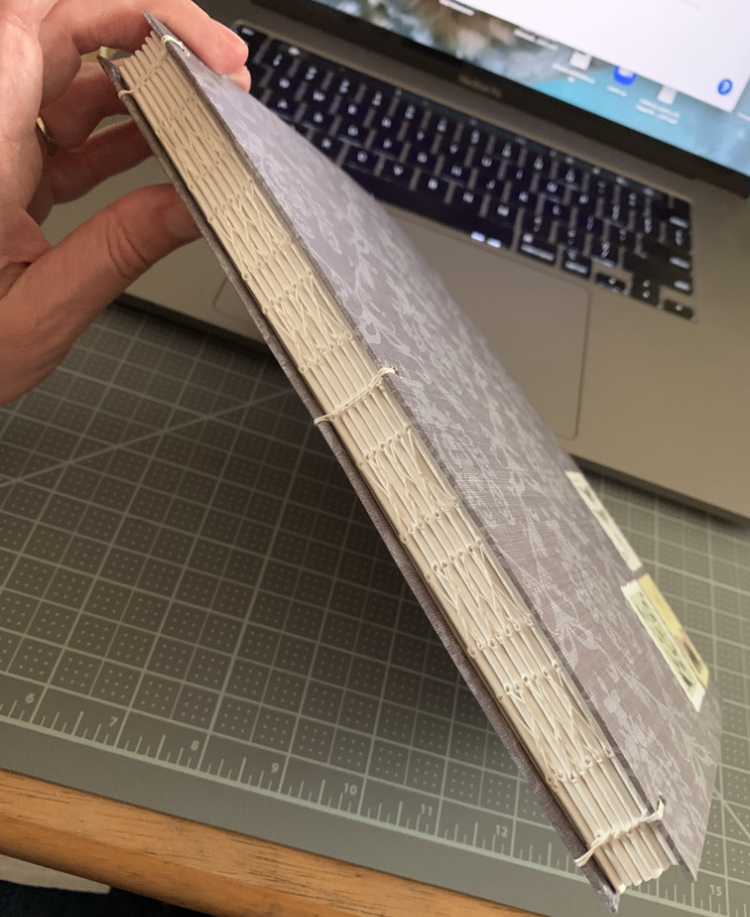
You can see that the covers are a little bit warped from too much tension at the head and tail. But the stitching at the spine is improved from some of my earlier efforts.
Despite its shortcomings, this will be a useable journal. On that front it’s a success!

Some things I learned from this project:
- The chipboard I used for the covers is too thin, but if I want to try making actual end papers again (or even if I don’t and want to use the first sheet as an anchor, I can sandwich them.
- Make some bookcloth (or buy some) for the covers. This paper cover won’t be as sturdy as I need it to be… by the time I get to the end of this journal, the corners will be a mess… and maybe the rest of the cover will be as well.
- … and (maybe) watch to make sure the pattern is right side up! (face palm)
- Watch my stitching tension, particularly at the head and tail.
- The covers are not square. Not sure how to manage that… it might be a lack of experience/practice.
- Explore the notion of making a leather (cloth?) reusable cover. (If I do that, I don’t necessarily need a nice or fancy cover — I can use plain board.)
The point of all of this is, it’s okay to not be an expert on your first (or second, or third) go. (Sometimes it’s actually fun because the expectations are a bit lower than shooting for perfect. Attention to detail is good — maybe double check to make sure your covers are right side up — but so is acceptance that it might not be as nice as you’d like.)
It’s good to have experiences. It’s great to be able to interrogate those experiences — and the products coming out of them — and to identify a) whether you want to keep going, and b) what you can do to challenge whatever limitations or shortcomings you encounter.
Let your first efforts (at whatever) be disasters… or desperately imperfect. Learn what you can from them and take that knowledge and experience with you as you move forward. It’s all good.

 Carmen Yount