“An object at rest stays at rest and an object in motion stays in motion with the same speed and in the same direction unless acted upon by an unbalanced force.” ~ Newton’s First Law of Motion
I like this statement. Physics has never been my jam — it’s not that I don’t appreciate physics, it’s that I don’t have any grasp of calculus. But Newton’s First Law makes a lot of sense to me in a pragmatic way.
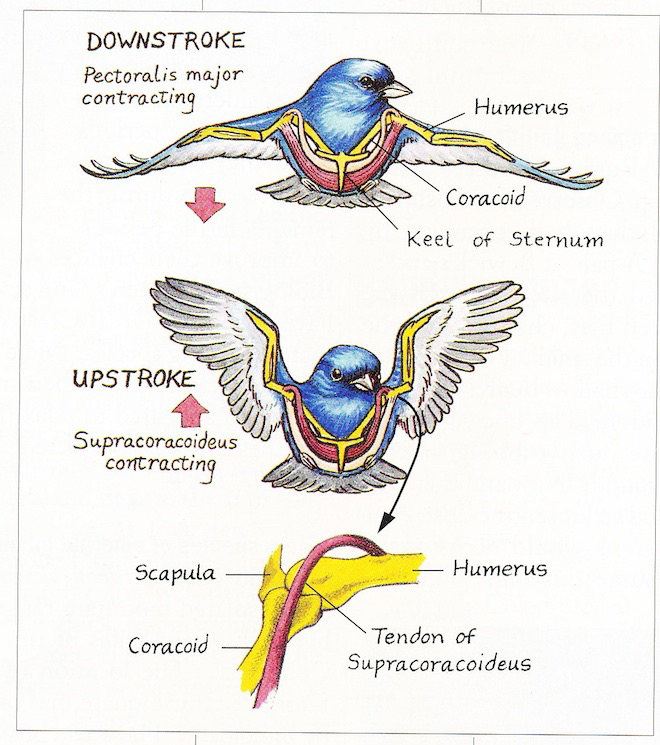
Flighted birds have gigantic pectoralis muscles for their size… so big that they require an extra bit of equipment (a keel) to support them. Birds that are healthy, capable flyers have incredible muscle tone across their chests. They also have multiphasic breathing to provide oxygen to their flight muscles. (Yes, I agree, they’re amazing.) They have perfect adaptations for the most energy intensive part of their lives: becoming and staying airborne.
I come from a long line of people who wait, for permission, for validation, for “the right time.” (Not the adult men, mind you, but the women and children, who are somehow not capable of action without approval.) These things don’t spring out of nowhere, so it’s likely been going on for generations.
I have witnessed, in myself and in others, the effects of this kind of waiting. Nothing gets done and the person stuck in the waiting position suffers from the stress, anxiety, and depression that comes from… well… waiting, for permission/approval/validation that will likely never be forthcoming.
Being stuck (when you don’t have to be) is its own kind of trouble. Not only do you feel like you can’t move, you lack the experience and practice of being in motion.
(Anyone who has had to wait for biopsy results can tell you that, obviously, there are times when waiting is all a person can do. I’m not talking about those times here.)
When I find myself or a loved one in this kind of unnecessary holding pattern, the pep talk goes like this: Pick an objective — anything — and start moving in that direction. The goal at the beginning is to begin moving so you know what it feels like to be in motion. You will encounter resistance at some point, and at that point you have some decisions to make: keep going and push through, adjust your course, or pick a new objective. But do not stop moving. The idea is that once you are moving, in any direction, it’s easier to stay in motion.
When you are stuck, this is very, very difficult. Transitioning from an “at rest” position to an “in motion” situation requires an enormous amount of energy, particularly when whatever obstacles you face are invested in keeping you moving in the wrong direction, or maintaining the status quo of rest.
We see this with owls. Owls are capable of silent flight, which is great for hunting (if you rely on your sense of hearing, not getting in your own way is a good thing). The trade-off is a loss of efficiency; it requires an enormous amount of energy (more than birds without these specialized flight feathers) to get airborne. Once they’re in the air, they have an easier time — not super maneuverable, but capable flyers.
Thankfully, at the moment I’m not stuck at rest. There are some things I need to address (thanks, therapy!), but I am actually in motion in a few different ways. It’s time for me to adjust some of my volunteering impulses (where I’m working hard on other people’s projects), find a focus that belongs to me (requires some exploration), and pivot to move in that direction.
Should be easy, no? (JK, won’t be easy, but I’m a healthy songbird, not a grounded owl.)

 Carmen Yount