Uncategorized

Arden Outside

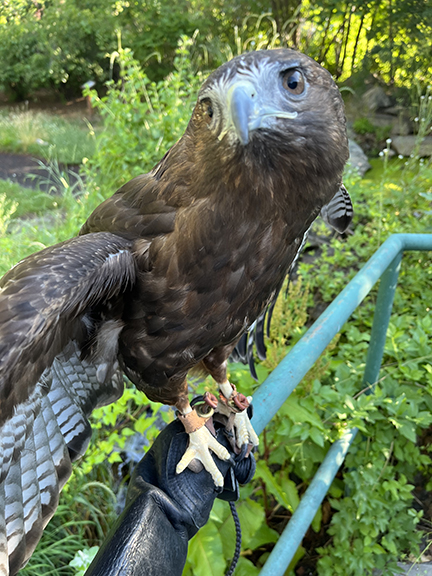
Thursdays are my volunteer days at the Outdoor Learning Center, which means I get to spend some time working with Arden, our unreleasable red-tailed hawk (poorly healed wrist injury — she can mostly fly and prefers to perch high, but she has a knot of scar tissue on her right wrist, and it was determined by both veterinarian and rehabber that she would struggle if released.)

She’s (mostly) fearless, and very opinionated. She’s wary of crates, cameras, excited tiny humans. She flat out does not like changeable weather (changing barometric pressure –> restless bird). She could take or leave showers from the hose, and prefers to bathe when no one is around. When she’s wound up or stressed out, she’ll sometimes hang from the ceiling (which is not a thing we encourage, but it’s also not a thing we’re going to harass her to stop).

But she seems to appreciate being outside on summer mornings when it’s a little bit cool and breezy. We have a water feature, so as often as we can, we go hang out there. We can listen to the water and enjoy the cool morning.

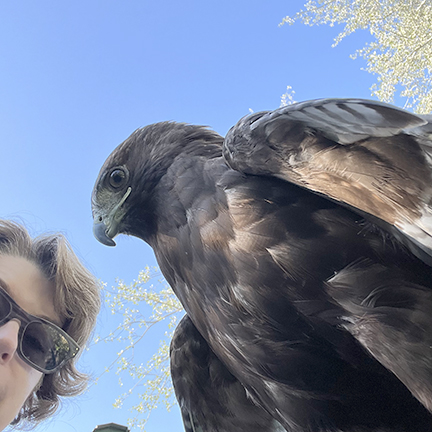
But, add too much attention from the camera to a distraction overhead and you get this:

Sometimes even Arden can be a little derpy.

She’s perfect and I love her.

Uncategorized

One Year

Today marks one year since I woke up unable to move, sit, or stand, without excruciating pain. It marked the end of what I like to refer to as “my very brief and undistinguished stint as a patio installer.”

(I’m sure the PA I worked with initially — who was perfectly compassionate and businesslike — was mildly amused when he saw me. “Oh, look, another middle-aged lady with back issues.” He didn’t even have to examine me, just took a look at my posture and listened to my situation, and was like, “here’s what we’re going to do…”)

I’m happy to report that after a week of prednisolone (anti-inflammatory) + gabapentin (nerve blocker) + methocarbamol (muscle relaxant), six weeks of rest, 10 weeks of physical therapy and the intervening months of yoga, core workouts, range-of-motion workouts (including splits training!), and walking, I’m (mostly) pain free.

Can I lift anything heavy or awkward?

I cannot.

Can I work for hours on end in the garden?

Nope.

Can I sit for hours on end?

Ummm, no.

But let’s face it, none of us is supposed to sit for hours at a time without a movement break.

(And no, my splits aren’t there… YET. It’s been a long time, and while I’m happy to report that my flexibility is still mostly there and I’m pretty strong… well, it’s been a long time.)

Part of the problem with my injury is hyper mobility in my back, and I still have a bunch of work to do to strengthen my core and improve my stamina. But I know *how* to do that work now without exacerbating it. I can tell when I’m getting too close to something titchy, and to modify the effort. (Do I always do it when I should? No, but I’m learning.)

I can do all of my daily stuff without issue, and almost all of my volunteer stuff. I can lift our very old, small (15lb) dog, with ease, when I need to take her down the stairs or to the vet. I can stand to cook and bake, to present with birds, and to draw in the field. No issues with any of that stuff!

My only ongoing issue is some numbness in my left shin, so there’s still some impingement, but it doesn’t hinder my ability to move at all. It feels funny when I shave my legs, but that’s the only real issue… and how real is that, really? (Minor! So minor!)

I am grateful. For helpful physicians, and helpful medications. For physical therapy, and physical therapists! For yoga apps. For a nice neighborhood to walk around in. For improved self-awareness. But most of all, for healing.

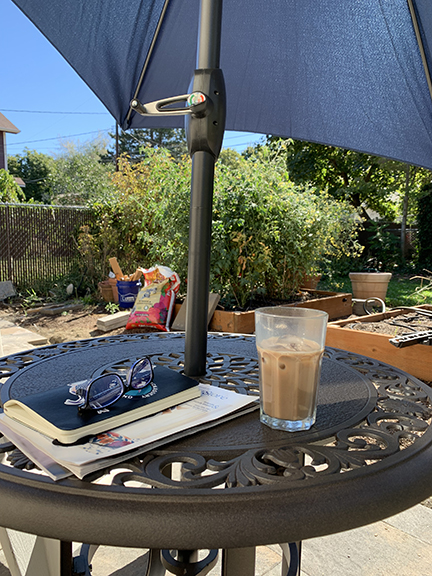
Coffee on the new patio (photo from late summer 2021) .
Uncategorized

Life is what happens…

… when you’re making other plans. That’s how the saying goes, right?

Well, we’re in it right now. Not gonna lie, it’s unpleasant, sad, and frustrating. There are some things that I just wish we could avoid, but that’s not possible. Trying to stay present and make good decisions in the midst of it all is a challenge… one I’m not sure I’m equipped for. I’m trying.

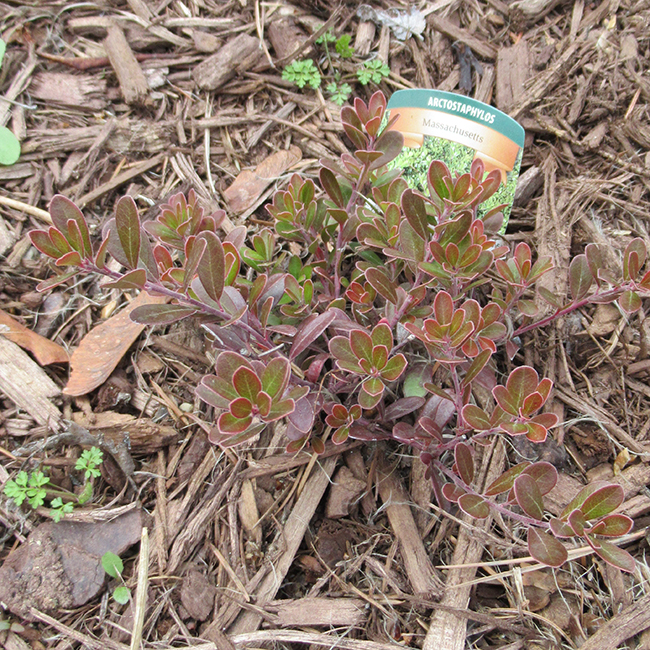
But it is spring, and I’m starting to see some of the perennials I planted last fall come back, and that feels kind of magical.

It’s all a grand experiment in the backyard. Now that we have a working patio (hooray!), I can turn my attention to the actual yard, and I’m looking forward to seeing what we can do to make some reasonable bird and bug habitat. I’m working on a bed on the west side of the house that gets a bunch of sun, putting in native plants (and non-natives adjusted to our poor soil) that birds and bees find appealing.

It was SO HOT last summer (90+ degrees for 40 days, and well into the 80s for several more) that I stopped buying plants in the late spring, and put off most of it until the fall (the buying and the planting). Then I worried that I got everything in too late for it to start establishing before it all froze and was covered by snow.

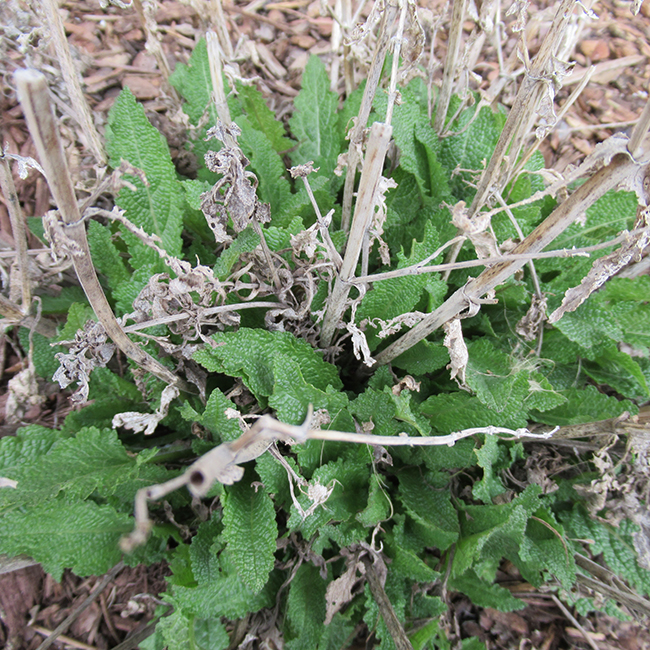
Some of the perennials die back dramatically, like, to the soil, after their seasons, so because they basically disappeared I had no idea what would survive. Evidence so far suggests that at least some of them did… yay!

The Mugo pines also did pretty well, and I’m waiting to see if some of the grasses, the Russian sages (that have been stepped on a few times, sadly), and the ice flowers do their thing. One of the coneflowers is making an attempt, so that’s good. We have some lavenders that I planted last spring that struggled in the heat, but will hopefully have become better established. Our mock orange plants are starting to send out leaves as well, so hopefully they’ll thrive this year.

I am thankful that in the midst of personal challenge, the change in seasons injects some much needed perspective: there are seasons to life. Change is always happening, for better or for worse.

Uncategorized

Failure: A Good Thing

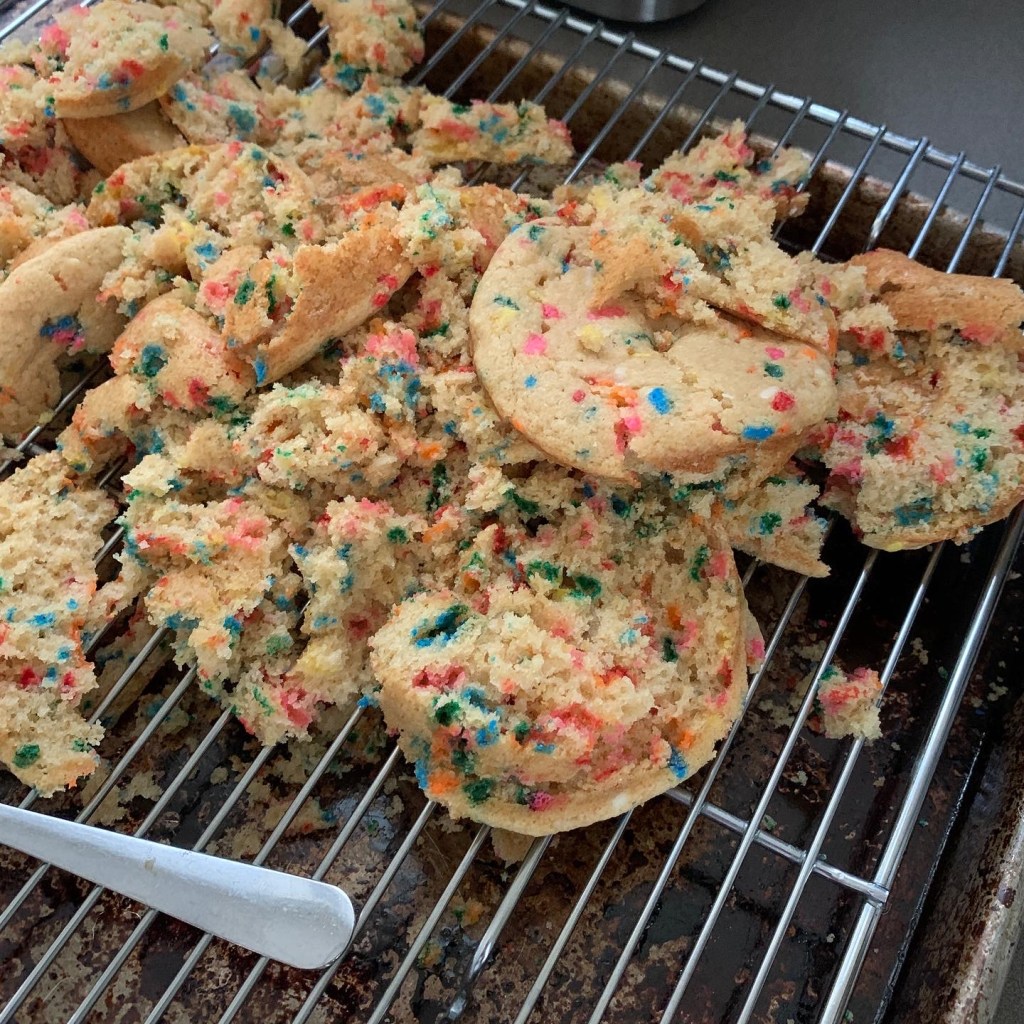
So, my New Year’s Resolution to try a new-to-me recipe every week is going pretty well. Or it was going pretty well, until the baked doughnuts with coffee glaze…

Whoops.

I honestly don’t know what happened. I thought I followed the recipe, but maybe I made a mistake somewhere. My oven is very old, so maybe it wasn’t up to the task. I measured out the ingredients by weight, not by volume, and I think that maybe the weight of baking powder was more than the volume, but I’m not sure that would have caused this kind of disaster.

I’m not all that upset, to be honest. I mean, it would have been nice not to waste the ingredients, but whether it’s a mistake I made (likely), an aging oven issue (less likely, but not out of the question), or the recipe needs a little tweaking (unlikely, but not outside the realm of possibility), it’s okay to fail every now and again.

Makes you think a little bit…

I’m going to try a different recipe, because I like the idea of baked doughnuts. I’ll see if a different technique works better. If it’s “bad user on device” I can work out my issues. And if it’s my oven… well, we did take a trip to Lowe’s this last weekend to look at what our options are. (I mean really, the oven is 40 years old and I’ve replaced the element three times in the last 10 years…)

I’ll get it figured out. And if I don’t? It’s not rocket science or brain surgery.

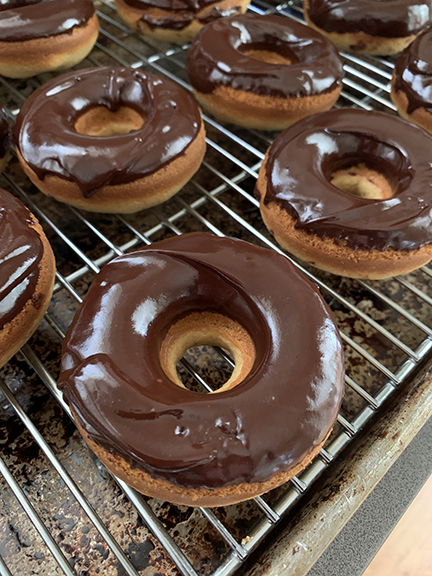
P.S. I tried a different recipe — similar method, but little bit different ingredients. The second try was a smashing success.

Much better.
Uncategorized

Pandemics + Parrots –> Epic Fail

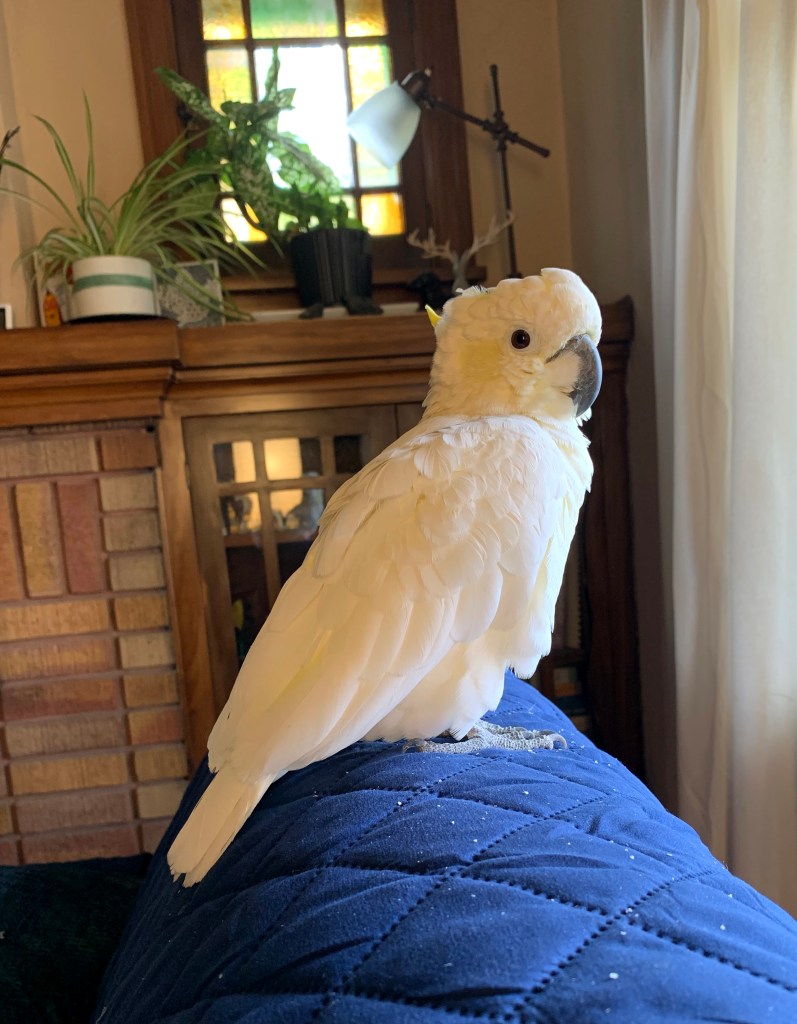
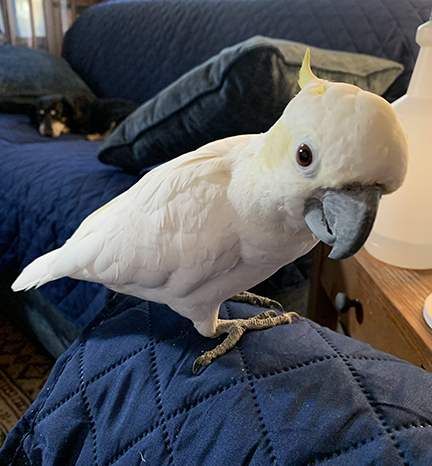
We live with a lesser sulphur-crested cockatoo named Bernini. She’s been with us for 23 of her 24 years.

Because she was young when she came to us, her eyes were still very dark, so we thought she was a male. The two things happened: she got boy crazy (for human boys), and her irises lightened to a beautiful burnt orange. A DNA test proved what we suspected — she’s definitely a female.

She is a good bird. She loves my husband, but she tolerates others (including me) reasonably well. Despite some anxiety around people she doesn’t know, and a fear of trucks and buses (?), she has a good bit of confidence.

She has her own room in our house. It’s small, but it’s warm in the winter, cool in the summer, has a lot of western light (afternoon). Her cage is large and well stocked with toys. She’s fed, watered, and has a superficial cage cleaning twice a day. She’s not a biter, at least not without warning (when she feels like things aren’t going the way she thinks they should, she’ll give you a warning nip so you know to back off). She feels safe enough in her space that when someone she doesn’t know comes into the house to do maintenance, she removes herself to her cage until the person leaves.

When at least one of us is at home, she has the option to come out of her cage. She has places around the house that she likes to spend time: the towel rack in the bathroom, a wire rack in the sun room, the back of the couch in front of a picture window. Or she can stay in her cage and work on her toys.

Here’s the thing about parrots: though they are incredibly social, they like to have some patterns in their days. They like to “get up” at roughly the same time, and go to bed at roughly the same time. They need time to socialize with their flocks (avian or human), so should not be left to their own devices for hours and hours each day.

But they also like (and need) a little bit of alone time each day. B likes a couple of hours in the morning after breakfast, so she can eat, maybe take a nap, enjoy the day.

And that’s the problem. I used to leave the house for a couple of hours each morning when Dana went to work. I would go get some coffee, and journal or start working or run errands. When the “lockdowns” started, Dana and I were both home all day, every day. Dana went back to the office as soon as he could, but my morning ritual no longer exists (at least during the winter). I go for walks each day, and volunteer two mornings a week, so that’s something, but it’s not enough for B.

It has made everything about our days more difficult. We are all strung out because everything about her already giant personality is amplified when she doesn’t get some downtime. We took her to the vet to make sure that everything is OK with her (she’s fine, a little overweight but not obese). The vet said that the parrot she and her husband live with was having similar issues, and recommended a parrot behaviorist to us.

She’s a good bird, but at this point we all need a little bit of help.

Uncategorized

Newton’s First Law of Motion

“An object at rest stays at rest and an object in motion stays in motion with the same speed and in the same direction unless acted upon by an unbalanced force.” ~ Newton’s First Law of Motion

I like this statement. Physics has never been my jam — it’s not that I don’t appreciate physics, it’s that I don’t have any grasp of calculus. But Newton’s First Law makes a lot of sense to me in a pragmatic way.

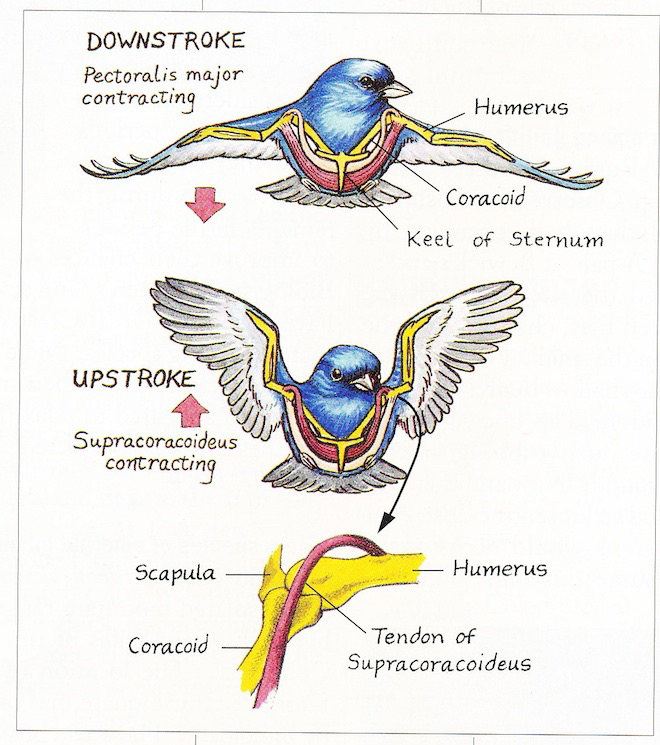
Flight Diagram, illustration by Denise Takahashi.

Flighted birds have gigantic pectoralis muscles for their size… so big that they require an extra bit of equipment (a keel) to support them. Birds that are healthy, capable flyers have incredible muscle tone across their chests. They also have multiphasic breathing to provide oxygen to their flight muscles. (Yes, I agree, they’re amazing.) They have perfect adaptations for the most energy intensive part of their lives: becoming and staying airborne.

I come from a long line of people who wait, for permission, for validation, for “the right time.” (Not the adult men, mind you, but the women and children, who are somehow not capable of action without approval.) These things don’t spring out of nowhere, so it’s likely been going on for generations.

I have witnessed, in myself and in others, the effects of this kind of waiting. Nothing gets done and the person stuck in the waiting position suffers from the stress, anxiety, and depression that comes from… well… waiting, for permission/approval/validation that will likely never be forthcoming.

Being stuck (when you don’t have to be) is its own kind of trouble. Not only do you feel like you can’t move, you lack the experience and practice of being in motion.

(Anyone who has had to wait for biopsy results can tell you that, obviously, there are times when waiting is all a person can do. I’m not talking about those times here.)

When I find myself or a loved one in this kind of unnecessary holding pattern, the pep talk goes like this: Pick an objective — anything — and start moving in that direction. The goal at the beginning is to begin moving so you know what it feels like to be in motion. You will encounter resistance at some point, and at that point you have some decisions to make: keep going and push through, adjust your course, or pick a new objective. But do not stop moving. The idea is that once you are moving, in any direction, it’s easier to stay in motion.

When you are stuck, this is very, very difficult. Transitioning from an “at rest” position to an “in motion” situation requires an enormous amount of energy, particularly when whatever obstacles you face are invested in keeping you moving in the wrong direction, or maintaining the status quo of rest.

We see this with owls. Owls are capable of silent flight, which is great for hunting (if you rely on your sense of hearing, not getting in your own way is a good thing). The trade-off is a loss of efficiency; it requires an enormous amount of energy (more than birds without these specialized flight feathers) to get airborne. Once they’re in the air, they have an easier time — not super maneuverable, but capable flyers.

Thankfully, at the moment I’m not stuck at rest. There are some things I need to address (thanks, therapy!), but I am actually in motion in a few different ways. It’s time for me to adjust some of my volunteering impulses (where I’m working hard on other people’s projects), find a focus that belongs to me (requires some exploration), and pivot to move in that direction.

Should be easy, no? (JK, won’t be easy, but I’m a healthy songbird, not a grounded owl.)

Uncategorized

When things are moving and not moving at the same time.

Big stuff going on in our household at the moment.

Our 16-year-old dog is declining. She was declining precipitously there for a while, but she seems to be coming back from the brink… for now. We don’t know how much longer we have with her, so every day feels both precious and like it will never be enough.

Covid is… declining? In this region it looks like it’s starting to plateau. Both case counts and hospitalizations are much lower than they were even a month ago, so I’m relaxing some of my mask wearing. When grocery shopping? No mask. When around kids where I volunteer? Mask. Crowded restaurants? Hard pass. Sitting on patios and decks to eat? All in.

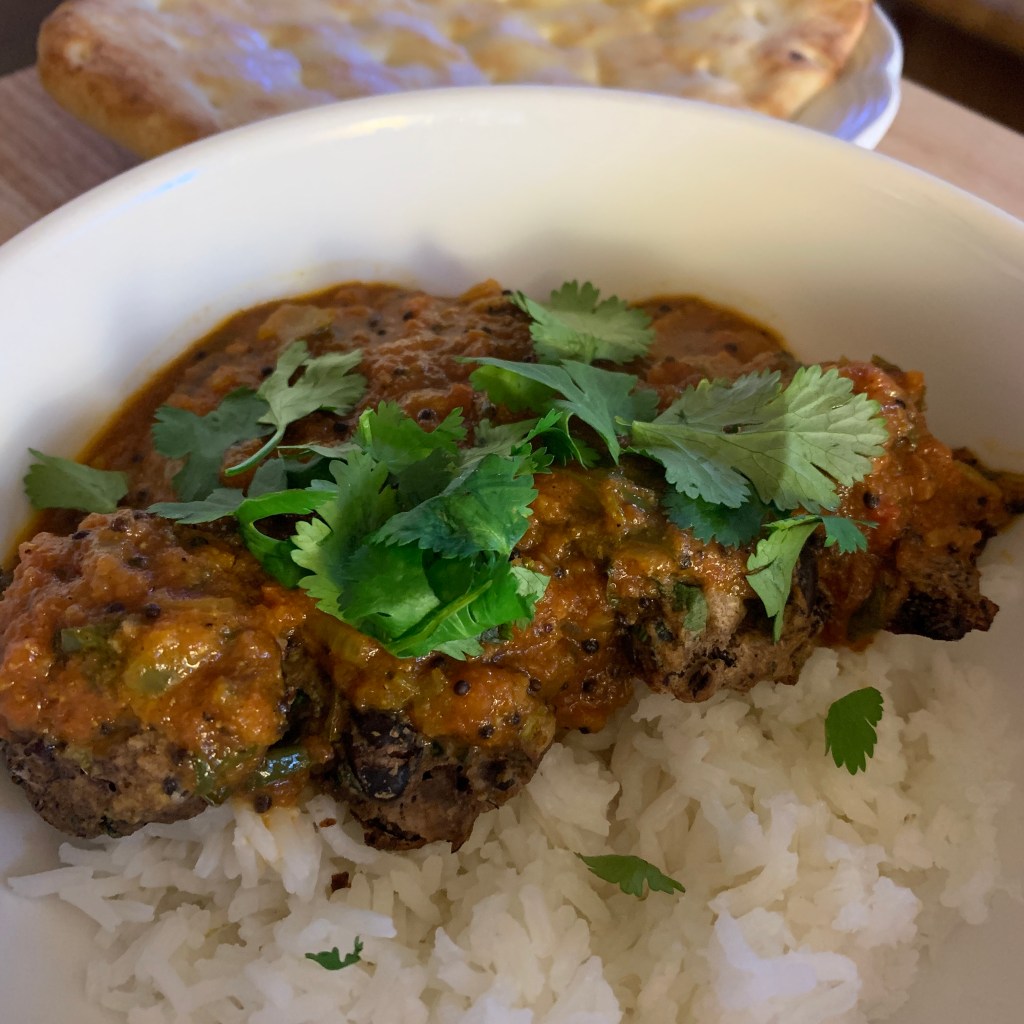
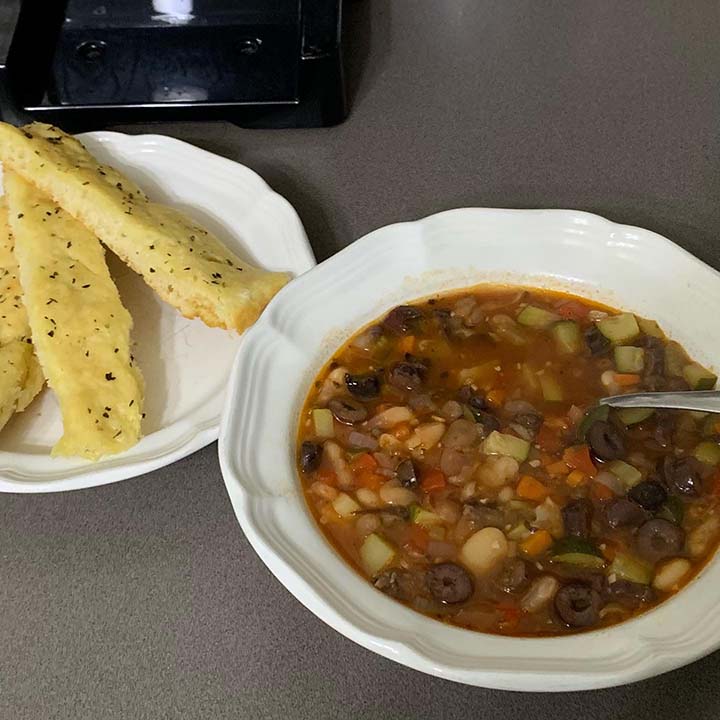
Still cooking and baking. When there’s nothing that can be done about a sick dog or cranky parrot, we still need to eat. As I type this I’ve got some experimental chickpea “meat” balls in the oven. I made kofta with black beans last night — a bust because of a rookie mistake on my end — but this chickpea version might be better suited to my taste.

This grand experiment has reinforced a couple of things in my mind.

Number one: I’m really not all that creative as a cook. I mean, I’m really good at following directions (rookie kofta mistake aside), but I’ll never be one of those people who can pull out whatever is in the fridge and make a three-course meal out of it. I mean, I might be able to put together a simple stir-fry, but not much else.

Number 2: While I don’t mind cooking, I’m not passionate about it. I like to eat what I like to eat, and I don’t want to rely on other people to make it for me, so that’s as good a motivation as any, I guess. (And also, our weird dietary preferences and restrictions require some extra attention by someone, and that someone would be me.)

Moving on…

In recent conversations, I have been asked what I do. The answer right now is, not much. I was doing some freelance graphic design before the pandemic. It was not going well, and then it was not going at all. And I’m not going to lie, it was a bit of a relief at the time.

Over the last several years, I’ve gotten very good at volunteering. I didn’t need a salary (thankfully), and was so broken from a work situation that lasted more than a decade where bullying was a thing, that I gravitated toward volunteer situations where I could a) make a tangible impact, and b) wouldn’t be subject to abuse.

I was Spokane Audubon’s newsletter editor for five years, which was super fun. I was a private art tutor for a little while, and got to work with an extraordinary student. While I enjoyed those experiences, I do not wish to repeat them as a volunteer.

I’m a raptor docent at the West Valley Outdoor Learning Center (and have been for the last ten years) — I still love working with the birds, but I’m learning that I need to set better boundaries around the rest of it. Like, maybe I don’t need to be on the hook for cleaning 2x/week — maybe I can be more helpful if I have one regular shift and can help out when other people need to miss their shift.

And now it’s time to figure out what’s next beyond volunteering, and I have no idea. I still don’t need a 9-to-5, and I’m grateful for that. But I also need to figure out a new direction with some different patterns… wish me luck, I guess.

Uncategorized

A New Year’s Resolution

Last year sucked. So far, this year has also sucked. Thanks for nothing, Covid.

For 2022, I decided that I wanted to try some new things to counter the suckitude. I’m the cook in my household and my kitchen is fairly well stocked (even though most of my pans are from the 90s and my range is so old they don’t make burners for it any more). So this year I have been trying at least one, new-to-me recipe each week.

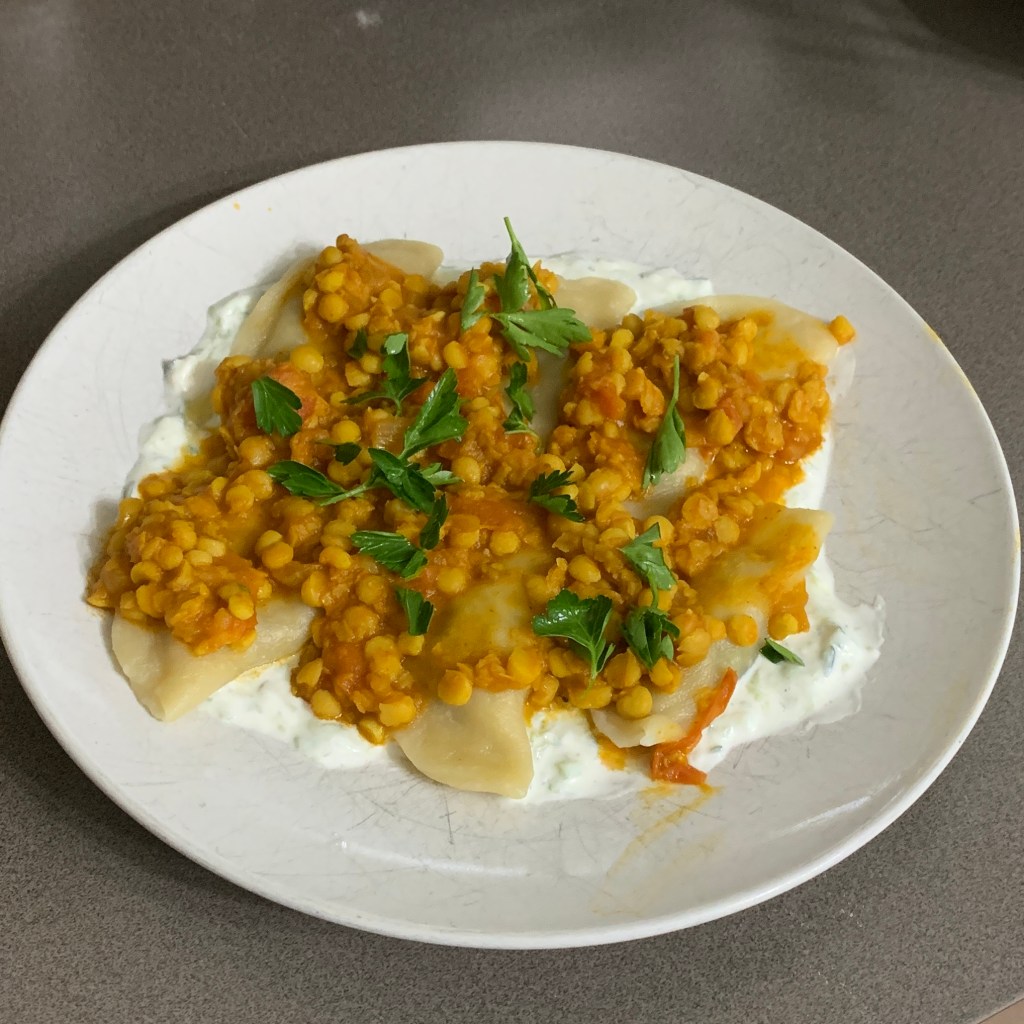
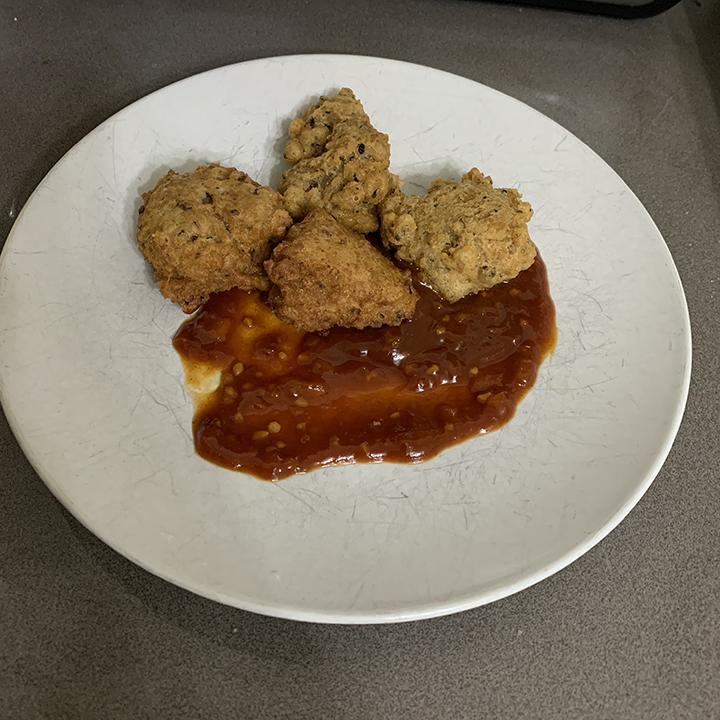
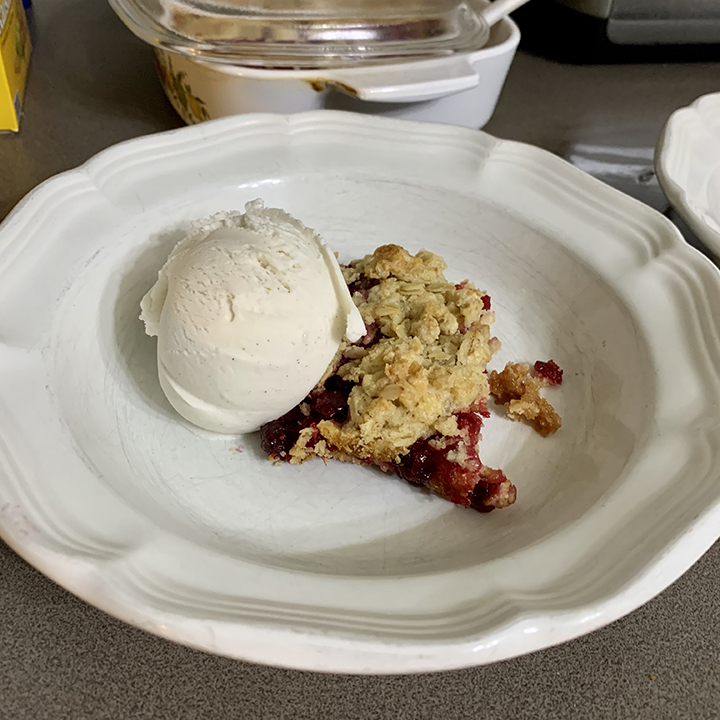
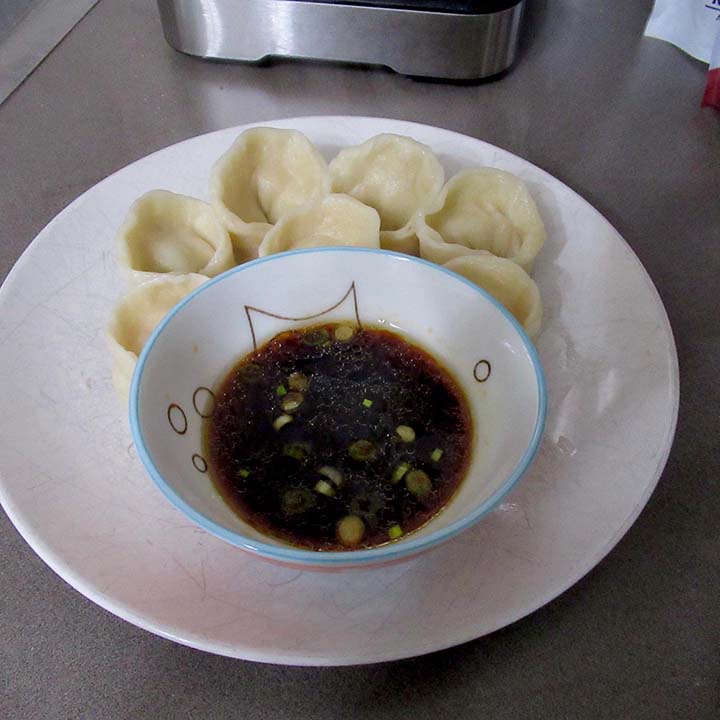
We’ve had baked goods, dumplings, a couple of soups, and last night, a West African staple, akara (black-eyed pea fritters).

I’m cooking and baking recipes by Black chefs and recipe developers this month because it’s Black History Month, and I’ve found that, for me, because white everything is my default (because I’m white and am surrounded by mostly white people), it’s important for me to actively seek out the work of people who are different from me.

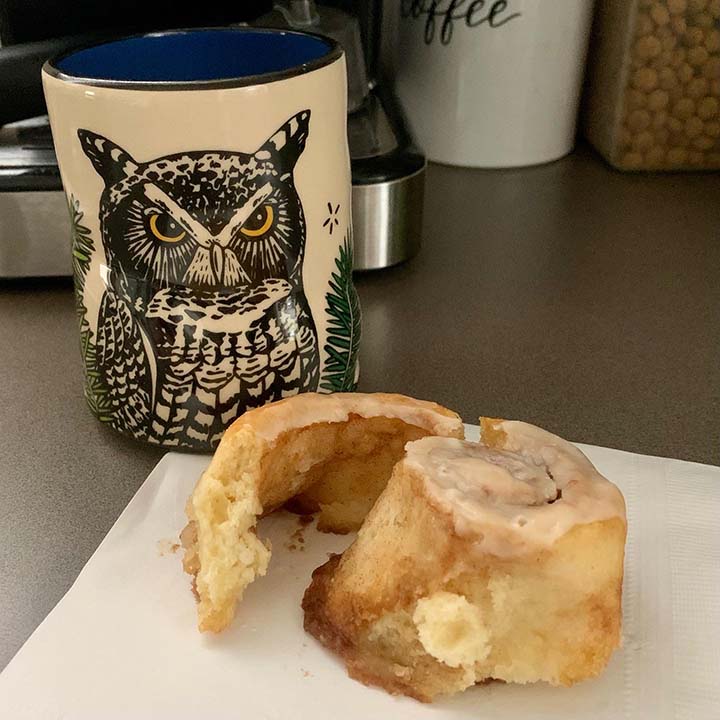
(To that end, upcoming recipes include Afghan Ashak, Korean Curried tteokbokki, and Mexican conchas… and more dumplings… lots more dumplings.)

I’m enjoying the cooking, so far. Most of it is plant-based, because I don’t eat meat and Dana can’t have dairy. (If you need to avoid dairy for whatever reason, the vegans have got you covered — some enormous creativity on that front.) Cooking from someone else’s recipe is an interesting way to get some insight into their thinking about food, and I’m enjoying reading the cookbooks (and web sites, and blogs). As with our “regular” food, there’s not a lot of tofu or meat substitutes in these recipes so far (tofu will make an appearance next week). There’s nothing wrong with tofu or meat substitutes, but I cook them about as often as most people use beef, which is to say, not daily.

I think, most importantly, it’s giving me an opportunity to try new-to-me things. It’s fueling my need to have novel experiences (a thing I have sorely missed during the pandemic), and in some ways (dumplings) it has been a way to experiment with food that I love but have a difficult time finding (because I don’t eat meat).

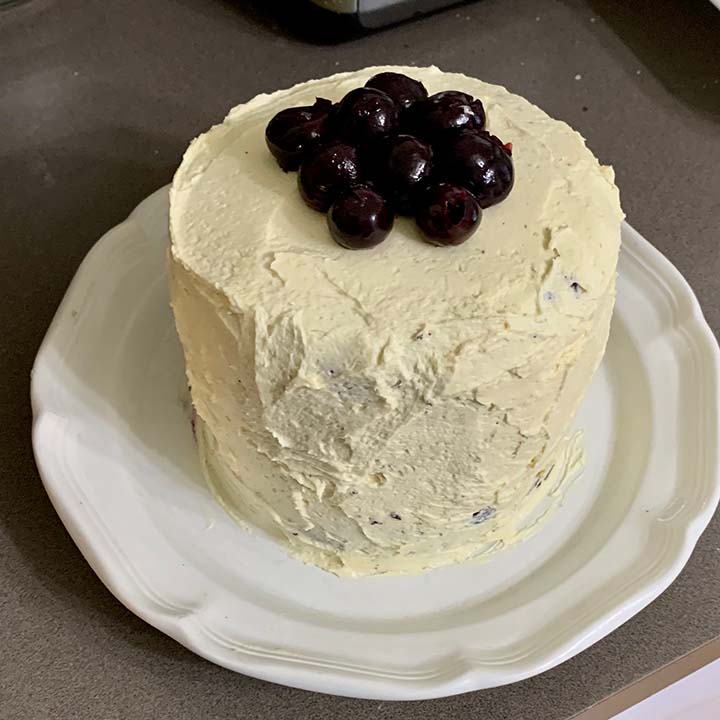
I’m making a chocolate cake with whipped ganache and berries for Valentine’s Day (from Black Girl Baking: Wholesome Recipes Inspired by a Soulful Upbringing, by Jerrelle Guy), and next week I’m making Lil’ Tofu Po’Boys with Creamy Red Bell Pepper Sauce (from Afro-Vegan: Farm-fresh African, Caribbean and Southern Flavors Remixed, by Bryant Terry).

So far, finding a new recipe to cook every week has been a lovely practice, and has yielded some fun surprises (those black-eyed pea fritters are the bomb). I’m looking forward to seeing what else we enjoy.

Uncategorized

B*tch, Please.

Or, phrases that I find triggering right now.

“Stop living in fear.”

Um, let me see, I’m still out here getting my groceries, volunteering at my local outdoor learning center two or three times a week, around other people, going for walks and shoveling snow (ick), getting my hair cut, going to doctors’ appointments, getting takeout…

We went on vacation — twice! — last year, to the Oregon Coast in August and to San Diego for Christmas. We tested several times, spent most of our time outside, and masked when we were around other people, but we were very much around other people.

Regardless of mandates, my modus operandi for the duration of the pandemic has been “when case counts are high, we shouldn’t be breathing on other people (because there is a lot of virus circulating in the community.)”

I wear masks when I’m around other people, even for a few minutes. I’ve received three doses of the Moderna vaccine. When rapid tests are available and I know I”m going to be traveling, I test before, after, and depending on the length of the trip and availability of tests, during. I do what I can to keep myself safe, and others safe from me.

I’m not eating in crowded restaurants (too many unmasked people in an enclosed space with unknown HVAC) or spending time in coffee shops (sob!), going to sporting events (yelling unmasked people). Missing these things suck rocks and I miss them, but right now our case counts are higher than they ever been and hospitalizations are ticking up…

… so we shouldn’t be breathing on other people.

That’s not fear. That’s pragmatism.

“You need to trust your immune system.”

Yeah, that’s going to be a solid “no.”

My immune system believes, with its whole being, that grass pollen is a legitimate reason to go to DefCon 1. (And some trees, ragweed in the East, and … tumbleweeds… ?) I did five years’ worth of immunotherapy because my seasonal allergies rendered me unable to perform my day-to-day activities without significant pharmaceutical intervention — year round — including antihistamines, eye drops, nasal sprays and inhalers.

Let’s not forget the secondary sinus infections, which are long lasting and painful.

And then there’s the fact that I have to take medication for the rest of my life because my immune system decided that the thyroid isn’t an essential organ. Granted (and thankfully), as far as autoimmune diseases go, this is one of the easier ones. But the weight gain, hair loss, dry skin and chronic constipation (now very well controlled, thankyouverymuch) aren’t really walks in the park.

In other words, my immune system is not known for making terrific decisions without significant instruction.

And then there’s this:

After my Covid booster, I had a robust immune response — probably a good thing, and not unexpected, but unpleasant — chills, fever, body aches, headache, and fatigue.

My asthmatic lungs encountered this set of conditions and swelled.

I do not have allergic asthma; it developed within a year of 9/11, when we were living in NYC. My triggers are cold/dry air, thermal inversions, smoke, and illness.

Your lungs can only expand so much before they hit your ribcage and start putting pressure your other organs. It makes breathing difficult, and it’s painful. Thankfully, the fever was short-lived and my medications helped allay most of the swelling within 36 hours. A week later, I did a short course of methylprednisolone to knock back the rest of the swelling. A month after that, I’m still coughing (thank you, cold/dry air) — it’s not worsening, it’s not dangerous (and not Covid — I tested multiple times with antigen tests in the two weeks after the booster and everything came back negative), but it’s not super fun.

If my lungs responded that way because of a vaccine response (not as a vaccine response, but rather a response to the vaccine response), I’m going to guess that they would have had a harder time with *actual* infection. That seems like a potential complication waiting to happen.

Right, so no, I do not trust my immune system. On its own, it’s not a reliable actor, and even when it acts in expected ways it can trigger other things.

If you want to trust your immune system to keep you safe during a global pandemic, you do you, but you might want to say a prayer that your immune system won’t be anything like mine, because that might not be a great experience for you.

“We need to learn to live with Covid.”

Yes, that’s absolutely true. We are in agreement on that point.

But I think this means something entirely different to you, the person who refuses to wear masks, or get vaccinated, and spends time in restaurants and at sporting events.

To me, learning to live with Covid means prioritizing our social situations and adjusting to accommodate those priorities. Schools and hospitals are of paramount importance; kids need to be in schools, and healthcare workers need to be able to do their jobs.

To me, this means that students, teachers and staff need to be able to be in schools safely. Not zero covid, but able to prevent major outbreaks. What’s required? The ability to identify — through rapid testing — who is most likely to be contagious and give them safe options for isolating. The ability to reign in spread when case counts are high, using masks, good ventilation and being outside (when possible). We’re doing these things where I am, though imperfectly.

And hospitals… we all bear responsibility for staying out of the hospital with dangerous Covid through vaccination, masking when around others, and testing, when necessary. This part is not hard.

I am not in favor of closures — and where there have to be closures, we as a society need to be ready to financially support businesses like restaurants and gyms so that we can go back to them when the threat recedes.

And, for the life of me, when people talk about closing schools — or trying to keep them open when they have major absence rates/high infections among teachers and staff (the school is not a safe environment if kids and teachers continually get sick) — but not bars/restaurants/arenas, it makes my blood boil.

Learning to live with Covid does not mean ignoring it and hoping it will go away. It means mitigating it with individual behavior *and* upgrading (or otherwise changing) systems that don’t work in the face of high infection rates. It’s not easy — or inexpensive — but it’s a way forward that acknowledges the challenges introduced by a highly contagious respiratory disease.

Good grief.

–*–*–

OK, so the folks who keep spouting these phrases can keep on keeping on — I have no say over what anyone says (or believes) and that is the way it should be — but every time I hear them, the little bubble over my head says “Bitch, please.”

Uncategorized

If you aim at nothing, you hit nothing. (Part 2)

So yeah, this quote (the title) from Shang-Chi kind of sent me spinning.

My problem (and it has been a longstanding problem… like, for my whole life), was that I did what I was told. I listened to what my parents/grandparents, teachers, bosses, and other people in positions of authority, told me, and because I was the youngster, student, or underling, I believed them, without question.

By trying to emulate my mom’s “goal-setting doesn’t work” mindset, I set myself up to become an adult who spent many years climbing ladders she didn’t want to be on.

The best time to solve this was 30 years ago. The second best time is now.

I’m going to spend the next bit of time working on my sketching/drawing/illustration skills. Ultimately, the goal is to develop mad skillzâ„¢ (as the kids say) to apply to nature journaling in the context of becoming a naturalist.

I’ve been doing design and illustration for many years now, and even have some education in both disciplines, but my drawing skills are still more stilted than I would like them to be.

A lot of nature journalers focus (rightly) on observation vs. quality of drawing — as far as the experience goes, that is appropriate and desirable. For *my* experience, I want to be a person who can reliably sketch whatever is in front of me in a way that reads well, and that’s going to require *a lot* more practice. (Please don’t ask me to draw a person, a horse, or a car… it will be a disappointing experience for all of us.)

Also, this area does not have a master naturalist course, so I’ll have to go to Oregon (via the Columbia Plateau ecoregion, directly adjacent to where I am, and where I am more likely to spend time because of the geopolitical boundaries), or Montana (via the Northern Rockies ecoregion, which I technically reside in, but because of geopolitical boundaries, I’m less likely to spend time in Idaho and Montana than working in Washington, where I live). Some things need to be ironed out there.

For now, though, I’m going to draw some cars (which I am very bad at, at the moment) and work on human faces. At the end of next month, I’ll join an artistic anatomy class and a different sketching class and see where they go.

There’s no five-year plan here, or a plan to monetize anything… there’s still much to figure out, but I figure having a goal is a start, right?

P.S. Please don’t tell my mother, because her first question will be, “But what are you going to *DO* with that?” It’s an innocent question that cuts me to the bone. (FTR, she doesn’t like it either. She didn’t tell her parents she was studying the harp, ever. It runs in the family.)