Nature Journal · Studenting · Volunteering

Education: Spring 2025

Today is MLK day. If you’re interested in reading one of King’s speeches, might I recommend his Give Us the Ballot speech, delivered at the Prayer Pilgrimage for Freedom on May 17, 1957 (text courtesy of Stanford’s Martin Luther King, Jr. Research and Education Institute). (H/T to Andrew Weissmann for the suggestion via his Substack newsletter.)

I’ve got a big semester coming up. Okay, so not any more intense than usual (I hope), but I think it will be both engaging and useful. Topics of courses this semester: data visualization, and instructional design. For the instructional design class, if the textbooks are any indication, we will be exploring information literacy, a topic most of us could learn a bit about and from.

Photo of three textbooks: "Designing Information Literacy Instruction," "Information Literacy Instruction, Second Edition," and "Now you see it" (a book about data visualization).
The textbooks in question…

I volunteer in an organization where I do a bit of community outreach — mostly with adults and families, but sometimes I get pressed into service to work with kids on field trips. I do raptor talks, or insect talks, or (very occasionally) nature journaling, so I work very much in the realm of things that can be observed first hand. That said, I hear a lot of assumptions about wildlife, in both kids (which I expect, because most of them are young enough to lack a lot of context), and their adults (which can be indicative that there’s a concerning lack of education in very basic biology and ecology), that are… incorrect… and sometimes dangerous, for both the animals and the people.

In the realm I work in, these assumptions tend to be variations on themes of “tameness” and training (which, again, is somewhat understandable, given that most of us don’t — and shouldn’t — have actual relationships with raptors), or human supremacy/dominance (in other words, because we exist, we have something to offer animals that we think they need, or we need to bring them to heel).
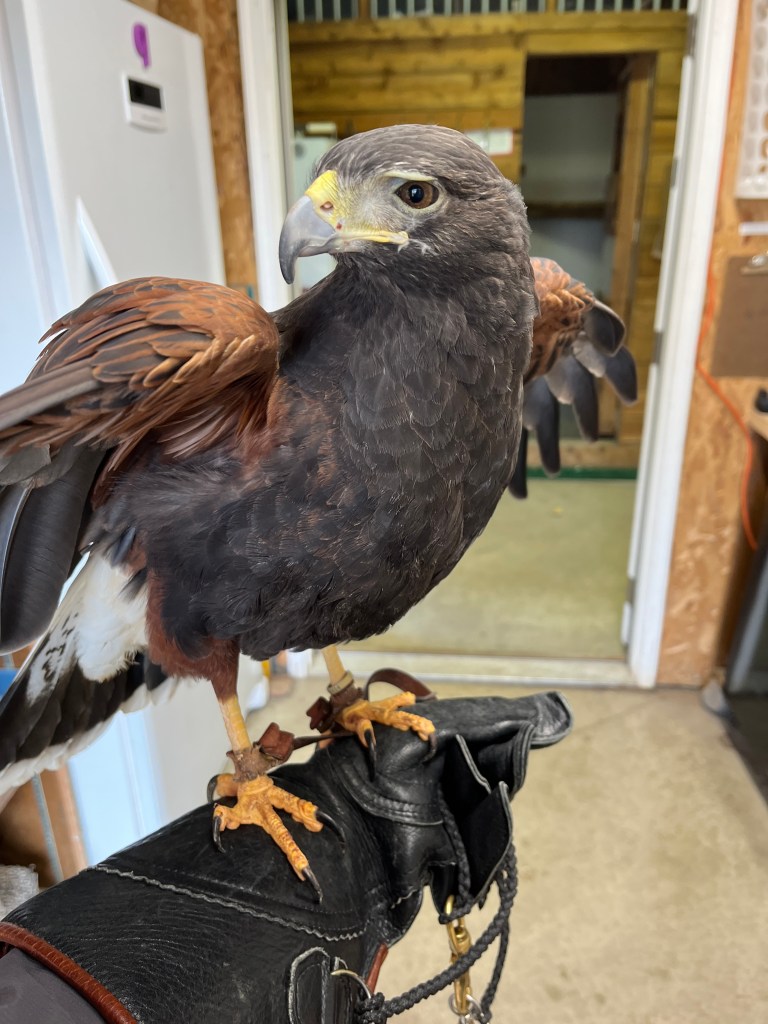
For most of us, our experience with animals is primarily with domesticated animals, like our pets. The understandable impulse is to apply our experience with our pets to other kinds of animals… which doesn’t work, and can be very dangerous, for everyone.

Take the ideas of tameness and training. These birds (who are unreleasable/cannot survive in the wild) are trainable, with consistency and a lot of practice, but they are not tame. They are not pets. Generally speaking, unless they are nesting or migrating, raptors are solitary. Stan is the possible exception, because Harris’s hawks live and hunt in small family groups in the wild. On the flip side of that, Stan, because he was raised primarily by people, turns into kind of a jerk when he’s looking for a girlfriend (he still has strong feet with sharp talons).

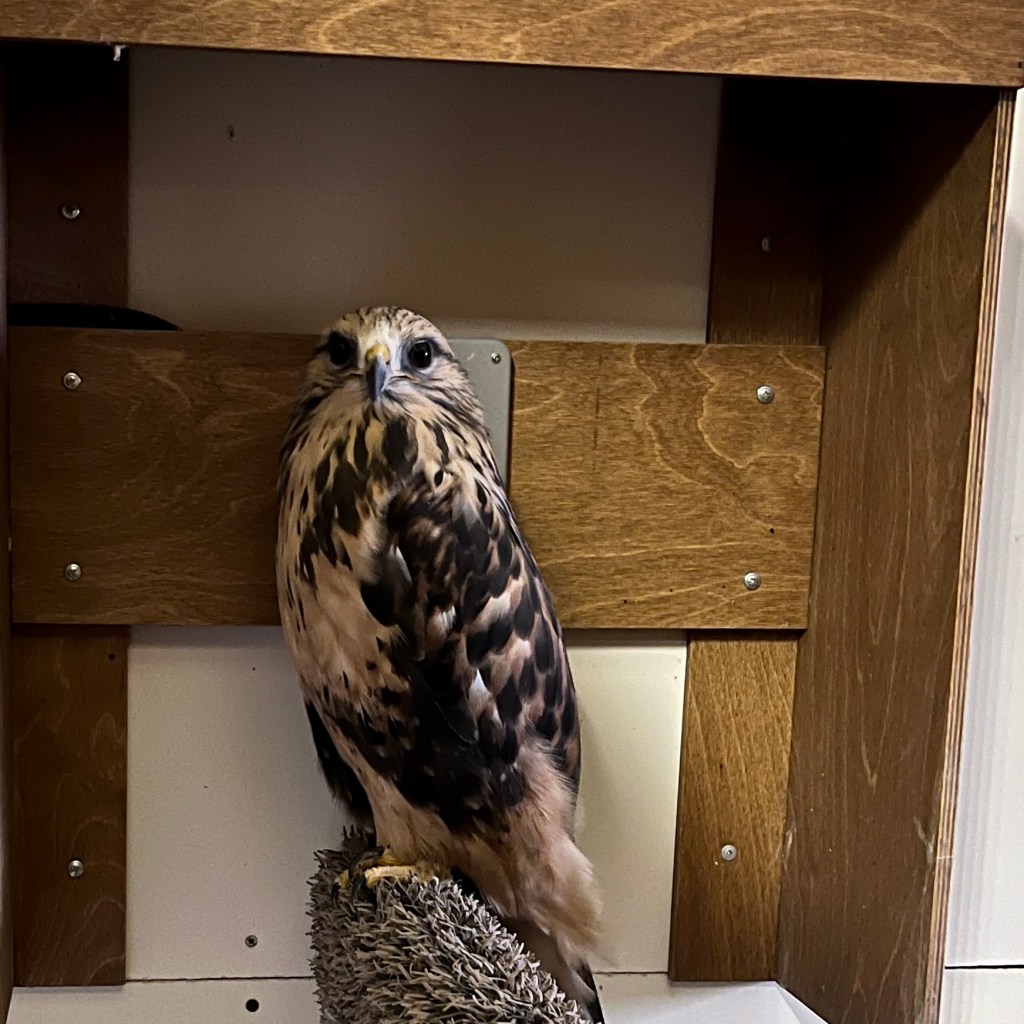
But Pants (rough-legged hawk) and Whoolio (Western screech owl)… definitely solitary — if they never saw any of us again, they would be fine. (I mean, they wouldn’t survive because their disabilities render them unable to hunt, but our absence wouldn’t leave them in any kind of emotional distress.) It’s difficult for us, as social animals, to understand that solitary animals do not need or want company; they are not lonely, and the presence of others often puts them at a competitive disadvantage.

And as for the other thing, the human supremacy… I’m not sure how to deal with that one, except to say that humans are bear-sized snacks, so if you are in bear habitat, you would do well to consider yourself a potential prey item and act accordingly. Interacting with moose, or bison, or Canada geese, is always a bad idea, because they don’t like us, and it would not matter if they did, because humans are predators and they do not want us in their spaces. A bison or moose that feels threatened could easily kill you and not think twice about it.

Even if we’re top of the food chain, the animals around us will do what they can to survive in our environment if we move into their habitat; coyote will do what they can to survive, including taking animals you may not want them to take. Same with owls. And raccoons (avoiding raccoons is tough; we live in a suburban area, and our dog treed two of them recently).

So yeah, having an opportunity to think about information literacy will be interesting. What is information literacy? How to we acquire it? How do we pass it on, in ways that people can ingest? If your thoughts about your interactions with animals are based primarily on vibes/your experiences with your pets, how can I introduce you to a way of thinking that’s more inclusive of wild animals and their habitats — in a way that is factual, and respectful/compassionate?

On another (very much related) front, I have to do some continuing education to maintain my Montana Master Naturalist certification. In past years, I’ve done nature journaling coursework, or seminars about ecology topics around the West. This year, I’m changing it up a little bit and working on introductions to topics that are more foundational, like ecology, climate change, and fire ecology (which, if — like me — you live in the Western US, is a topic you’re already probably more familiar with than you would like to be).

One of the reasons I love the internet is that you can learn just about anything. So, for ecology, I’m taking a Coursera Course: Introduction to Biology: Ecology (offered by Rice University).

Screenshot of Coursera dashboard, focused on a course named Introduction to Biology: Ecology.

I’m enjoying the content. It’s very basic, and the stakes are low. But it’s informative for a person like me, whose education has been mostly liberal-arts based, and who is interested in being exposed to a new and different topic.

I’m using this course to develop a little bit of foundational knowledge on the broad topic of ecology, and then using that foundation to inform some investigation into the topics of climate change, and fire ecology.

And hopefully, I’ll be able to bring some nature journaling into all of it.
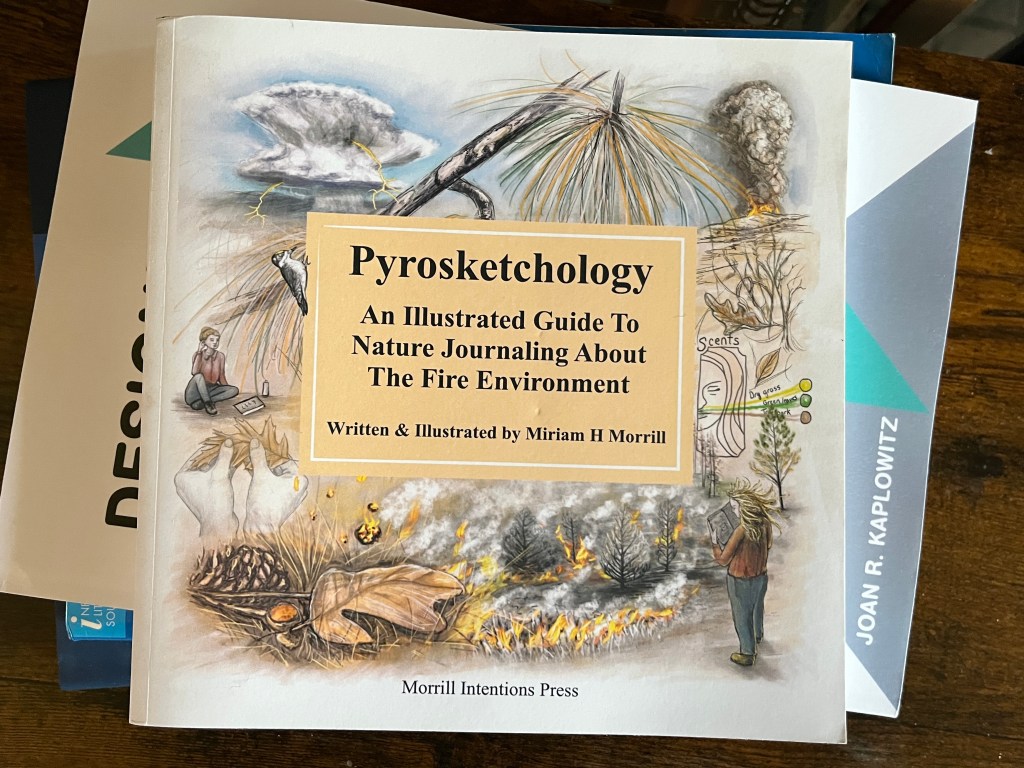
This looks to be an excellent book. I’m excited to delve into it while I learn more about fire ecology. (Bookshop.org link)

So, yeah, much to do this spring. I’m looking forward to it.

(Today will also include making a loaf of beer bread and some lentil soup for dinner.)

Nature Journal · Outdoor Learning Center · Volunteering

A Grand Experiment Gone Wrong

Or at least not entirely right…

I love nature journaling. I don’t get to do it as often as I’d like, particularly these days. My school load, volunteer work, and home life mean my schedule doesn’t have a huge amount of flex time for finding a “sit spot” and… you know, sitting.

Some animal skulls from 2022.

When I was asked to lead a nature journaling workshop at the outdoor learning center where I volunteer, I was excited, because I think it’s a perfect crossover.

Nobody signed up. (Might have been the topic — or the teacher — there also may have been some marketing issues.)

Still, I thought the idea had merit, so I suggested we do something shorter (1.5 hours instead of 3), less formal (drop-in without a prior sign up), tie it to an open house (both the timing and the theme), and see what happens. October’s open house was a Halloween theme, featuring animals that are perceived as being “creepy.” (For the OLC, that’s the resident rats and insects.)

The challenge: insect activity is low in our area right now, because it has gotten cold at night. We had a bunch of bumble- and honeybees until about 3 weeks ago, and water striders in the ponds, but everything has gone quiet. The spiders have gone into hiding (though we’re starting to see some webs in the raptor sanctuary, so maybe they’re finding food in there). We probably could have found some pill bugs, with some effort, but yesterday morning was going to be more comfortable inside. (I don’t know about anyone else, but my brain stops working when my feet get wet, and I lose too much coordination in my hands when I’m wearing gloves.)

With all that in mind, I gathered supplies:

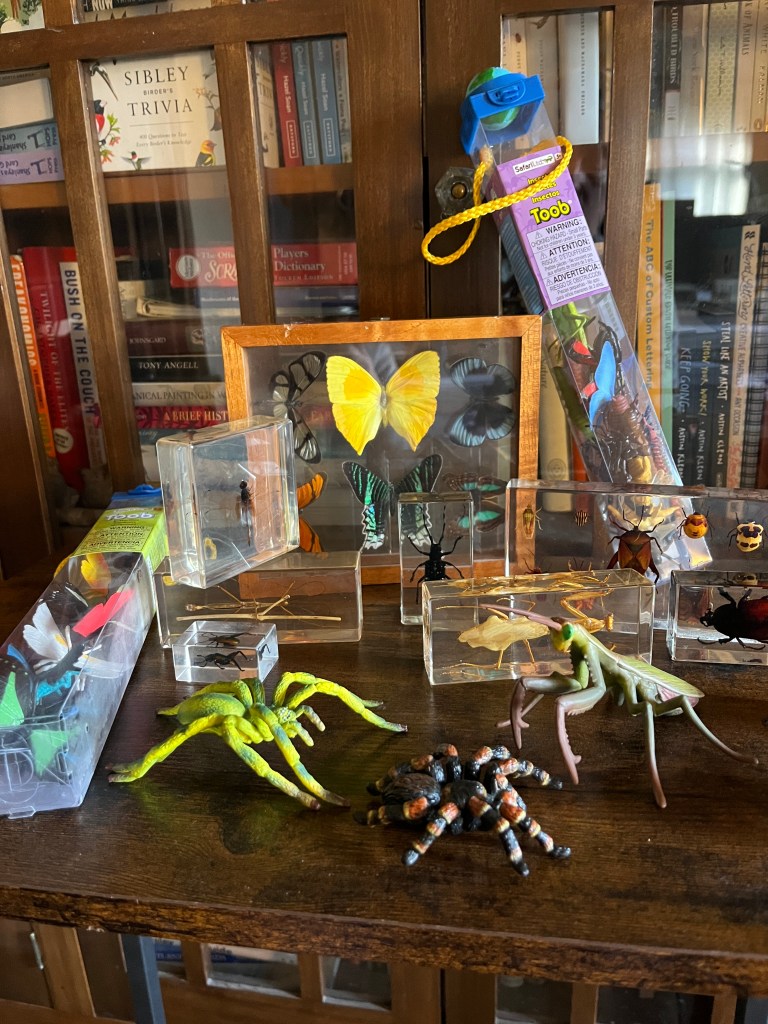
  • insects preserved in resin (difficult to draw, and not like living animals, but a good way to see some of the finer details of limb and wing structure, eye placement, and overall shape and size.)
  • plastic models (also not great representations of live insects, but a) they don’t move around, and b) it’s a good way to see the body plan, and how the masses of the body relate to each other)
  • I “borrowed” some of the live insects from the classroom: a roach, a couple of beetles, a couple of small stick bugs, and some mealworms.
  • sheets of 90lb watercolor paper (not precious, but sturdier than printer paper), and clipboards for stability
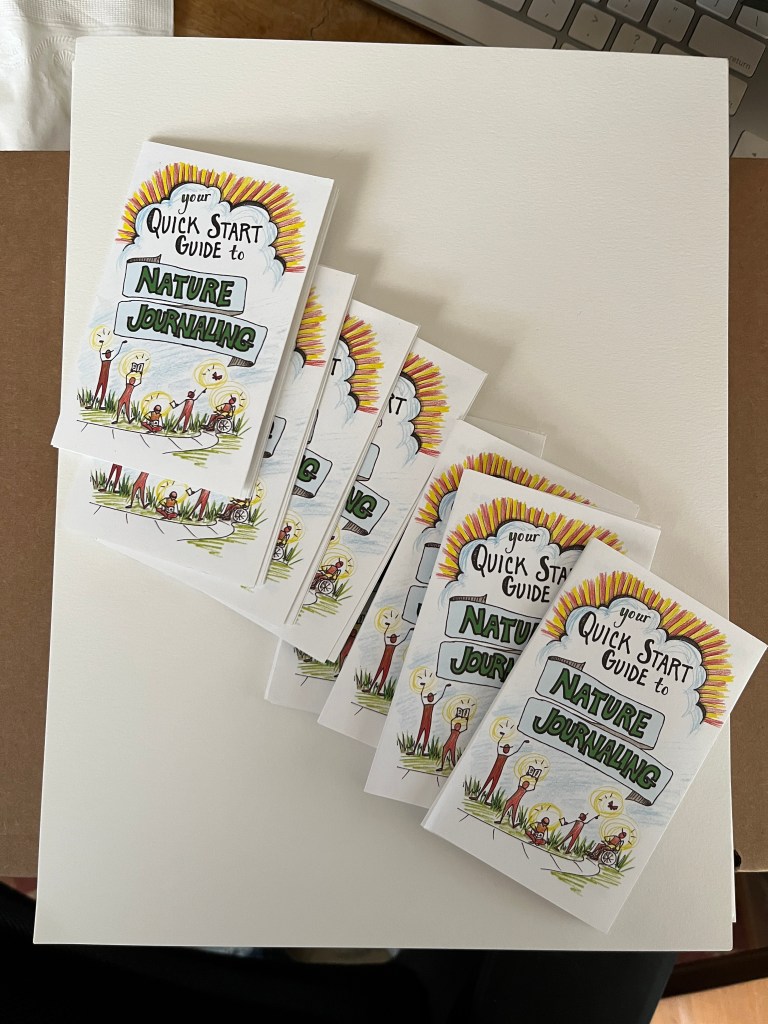
  • zines about nature journaling (available from the Wild Wonder Foundation)
  • some reference books about insects
  • colored pencils, number 2 pencils, and some watercolors

I spent some time this week making a “focus flyer” — a one-page intro with tips about how to approach nature journaling insects. (I made it with Procreate on the iPad — simple black and white so it could be photocopied.)

Everything got used, for sure, but I ended up spending most of the time chatting with small children and their parents about bugs (yes, for the record, I know that all bugs are insects, but not all insects are bugs — it’s the sucking mouth parts in bugs that make the difference — and that arachnids are their own thing, and so are the myriapods).

And hey, there is nothing better in the world than when a second grader sidles up to the table and says (something to the effect of), “let me tell you something I know.” To which I love to reply, “I’m all ears, friend.” If we’re dealing with insects or dinosaurs, it will probably be new-to-me information. In this particular case, after my education, we got to puzzle out whether a praying mantis’s forelimbs are legs, or something else (they’re counted in the leg count, even though they can be functionally different).

So yeah, it ended up being a lot of fun, even though it wasn’t nature journaling. There was no writing, very little counting, and no drawing (I think I got so far as to lay in the very first initial pencil-in of a long-horned beetle). I had planned on working with 5 – 8 (maybe?) people, ages 12 – adult, for 30 – 45 minutes. At one point, in the 90 minutes I was active, I think there were 25 people in the room (both kids and parents), and it got very loud.

I still think that nature journaling can be a great activity for kids, but unless they’re ready for it and intrigued by it, it’s going to feel more like a chore for most of them… and most kids already have plenty of obligations. The OLC’s open house wasn’t a great fit for a strictly defined nature journaling activity.

But it was still a good learning experience, and, as I am not a big bug person, a brain-stretching exercise. In the future, if the OLC is interested in a quasi-educational, quasi-artsy experience available at open houses, I think we should go a different way… perhaps a “coloring corner,” with nature-journaling-style worksheets. (I’ve been sitting with this idea overnight, and the longer I sit with it, the more I like it. Also, how fun would it be to design those worksheets?!)

Nature Journal

Nature Journal Educator Workshop

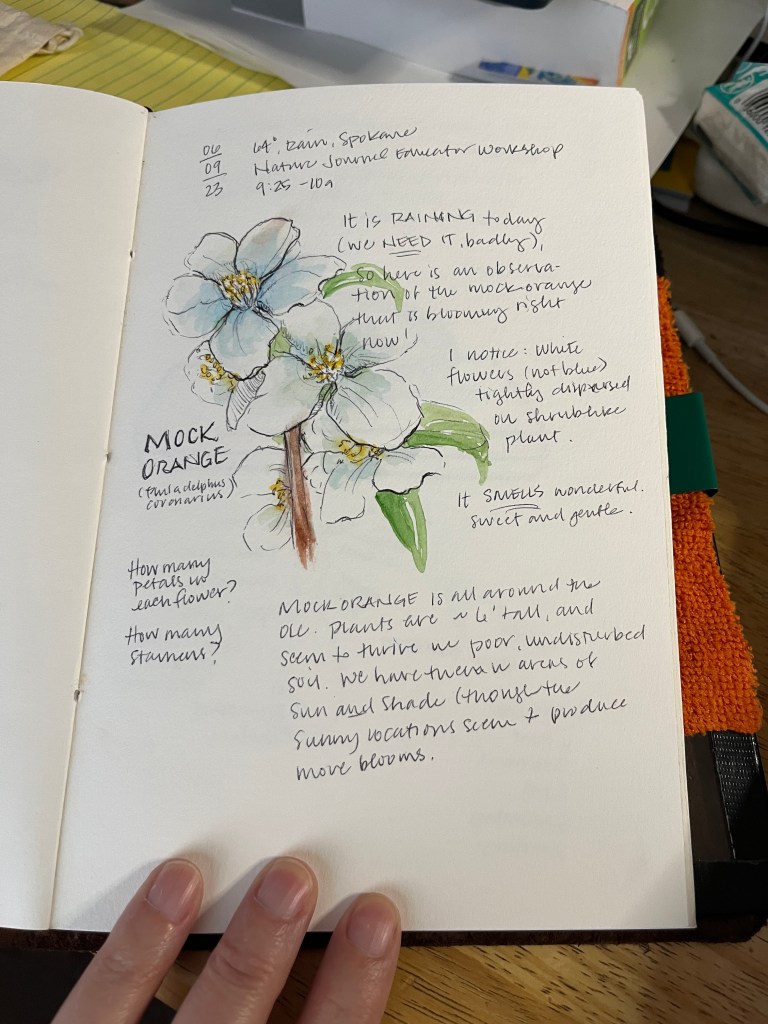
This weekend I’m participating in the 2023 Nature Journal Educator Workshop presented by the WildWonder Foundation.

These are my people. People who like to go outside and hang out… and write things down, or draw them, and consider them deeply. And then help other people figure out how to do the same in a way that works for them.

Cognitive science. Pedagogy. Natural science.

I am in heaven. (Note: there are a lot of academic papers to read in this area of heaven.)

I notice. I wonder. It reminds me of…

Attention. Curiosity. Creativity.

Words. Pictures. Numbers.

My brain is exploding, in the best way.

25 minutes yesterday. It was raining (not a drizzle, actual rain) — going outside would have soaked everything, so I had to work from a photo.

My background is in natural science illustration and writing, so words and pictures are my jam. I’m working on expanding my visual vocabulary to include charts, scatter plots, maps and such.

And numbers… I’ve been a mathphobe forever. I got lost in Algebra 1 and never quite got caught up. (I really enjoyed statistics and trigonometry, but the other stuff… ugh.)

[As an aside, there’s a magical unicorn/drag queen — IG: @mathisadrag — Carrie the One, who explains mathematical concepts via Instagram Reel. I wish she were around when I was struggling with math learning… this is great content.]

So yes, I am also working on including more number-related content in my journals.

I was in a small group yesterday for just a few minutes, and one of the folks mentioned that, as a scientist, they use their nature journals to describe behaviors, using an orb weaver as the day’s example. It was so interesting to hear them talk about their process.

I talked about how I get so distracted by the things I gravitate to that I don’t get to the stuff I’m less aware of/comfortable with, and then a grade 4-5 teacher in the group said that they focus their kids with prompts, like, “Today we’re going to focus on numbers.” That seems like a good strategy to keep in mind, even for our personal practice.

Today’s focus on issues for community educators (there is a separate track for school educators).

My brain is full, and so is my heart… which feels kind of weird, in an unusual and lovely way.