Coding · Studenting · The Personal Project · Volunteering

This summer sucks.

Confession: a big part of that is on me.

[I am in a mood today, and I feel like screaming into the void. (Sorry, not sorry) This post is even more skippable than most.]

I mean, for a little bit of context, am I the one snatching legal residents from the streets of Spokane? No.

Am I causing uncertainty in the markets by threatening/misusing tariffs, defunding the Corporation for Public Broadcasting, “re-appropriating”(?) funds to spiff up a “free” jet, and building a $200M ballroom at the White House? Also no.

Am I sending congressional propaganda email polls to my constituents in WA-5 (do you think the US should bomb Iran, or should Iran be allowed to build nuclear weapons unchecked? Oh, I see, those are the only options in that situation…) and chirpy weekly newsletters about how I’ve met with three constituent groups and explained to them that the Big Beautiful Bill is the best thing that ever happened to America? LOL, most definitely not.

[Quick aside, though, to Congressman Baumgartner (Harvard, ’02*): given the demographics of our district, you’re going to be re-elected for as long as you want to hold the office. How are you going to manage your next term, after that bill starts limiting access to Medicaid in earnest, given that our district will be one the most impacted in the state? “Waste, fraud, and abuse” are rampant at the federal level (see “free” jets, ballrooms, firings/hirings, and paying people not to work), and your party has given over the power of the purse to the executive. You enabled (funded!) secret police to indiscriminately snatch people off the streets. And, um, you might want to steer clear of talk of high moral character. So, Mr. “fiscal conservative” who campaigned on economic responsibility, protecting the southern border, and family values… what’s your plan?]

Ok, off the soapbox, and back to business. Yes (waves arms), all the things are a monumental buzzkill. But here’s the thing: I don’t actually have any control over any of that. So when I say that this summer has been icky, I’m not talking about all the things. I’m taking about the fact that I made a couple of dicey choices:

  1. I took two graduate courses this summer (because I need to get through this degree before it either goes away or becomes too expensive to continue — another set of circumstances I preemptively blame Congressman Harvard* for). In my defense, one of them was a one-month, one-unit seminar on copyright law. It might have been manageable, if I hadn’t added the second course. Where I really messed up was taking a web development class — a 15-week spring/fall course that was compressed into a ten-week summer semester. BIG. MISTAKE. (It’s a good class, and I know way more about CSS inheritance and precedence, grids/flexboxes, and media queries than I did before, but I would have gotten more from it, had an easier time of it, and enjoyed it more, with a little bit more time.)
  2. And then, to add insult to injury, I took on an additional weekly volunteer shift. Ugh. By the time I realized how messed up that was, it was too late to back out of it without creating a lot of work for a few other people. (It would not have been advisable, or fair, for me to say “whoops, my bad” when I volunteer for a small, heavily volunteer-staffed, environmental education organization whose few employees take a much-needed quasi-break during the summer.)

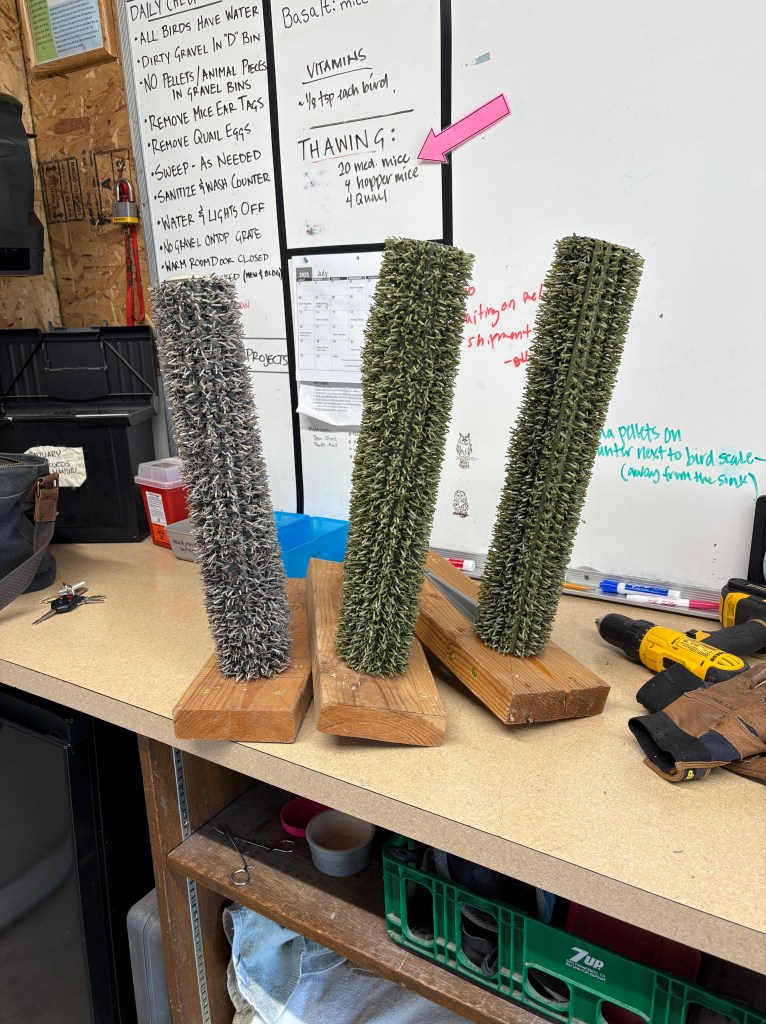
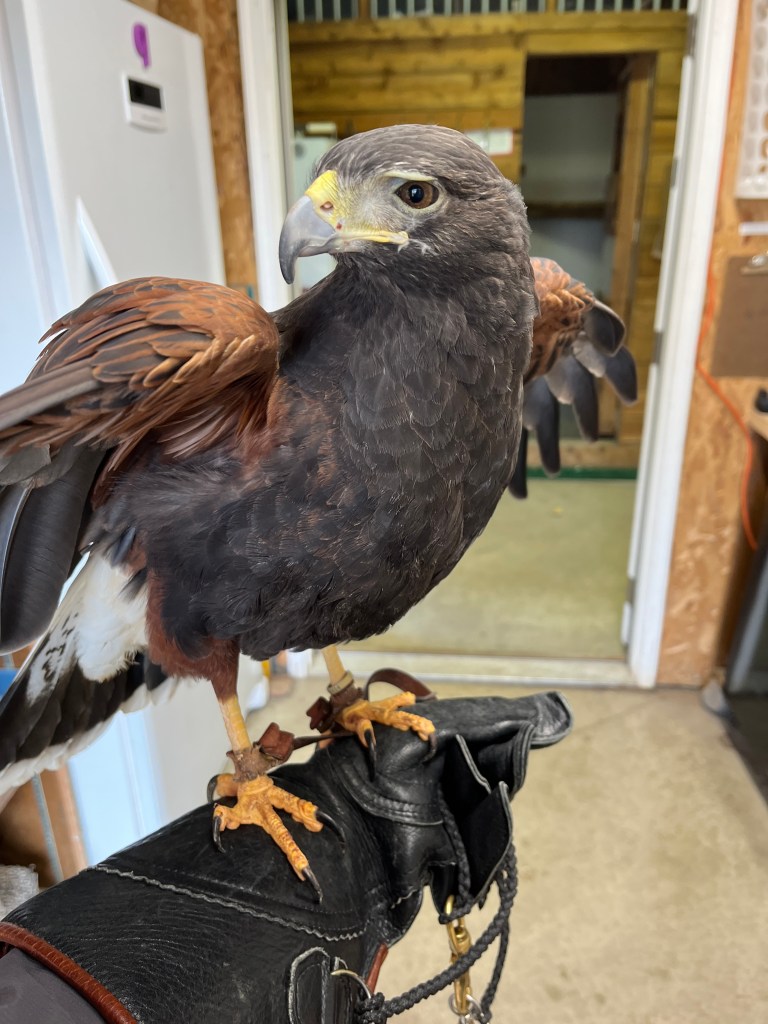
Any one of those choices would have been doable. But all of them together? Not great. Don’t get it twisted; even in the midst of (waves arms) all the things, I did it. I finished my final assignment last night at 9:30p; both of the classes were interesting and worth taking. I haven’t missed any of my volunteer commitments (I have 3 shifts next week); the OLC’s birds (and sometimes other critters, depending on the day and what the rabbit’s enclosure smells like) are fed and cared for, the raptor gravel piles have new markers, and the Harris’s hawk has three new perches (because power tools are a delight).

But it has not been easy, or pleasant. I’m in charge of the meal planning in my house, and that’s not going well (although it is also summer, when my coffee is cold brew, my morning toast is store bought, and we often have “snacks for dinner” so I can avoid using the range — no one is going hungry, but it is… inelegant). I have no hobbies at the moment, and very little social life. The only extracurricular reading I have brain space for is rom-coms, for 30 minutes before going to sleep — think spicier Hallmark stories (at least they’re from the library). My TV time has been largely limited to replays of WNBA games (League Pass, FTW).

But I also haven’t had a lot of time for social media, and maybe that’s a good thing.


* Congressman Baumgartner (Harvard, ’02) used a not insignificant amount of space in one of his weekly newsletters to parrot the administration’s anti-Harvard shenanigans. I gather, from the newsletter, that Harvard is elite, they’re not sending their best, and they need to be taken down a notch. I could have told you that, Congressman Harvard, but how are you the exception?

Coding · Studenting

Summer School

I made a couple of miscalculations this summer.

Last year I took a MySQL course, which is only taught during the summer at SJSU. It’s designed to run as an intensive 10-week course. And yep, it was intense — the kind of situation where you end up knowing about 1000% more than you did before you started, but you recognize that you’re still just scratching the surface. It was a good class.

This summer, I’m taking a front-end web development survey course. Most of the material is a review (not all of it, but I’ve been at least exposed to most of the concepts and have a little bit of experience with the code), so I was not worried about tackling it over the summer. I was so unbothered by the prospect that I added a four-week seminar that examines copyright law through the lens of digitization of special collections (also only taught during the summer, by a professor I like).

Those were both miscalculations.

The seminar, because it’s designed as a short course covering a specific (very niche) topic, required a lot of reading, a fair amount of writing, and some engaging assignments. It was heady stuff — interesting and dense, and full of important information. It ended last week.

The WebDev course is primarily taught in the Spring and Fall semesters, as a 15-week course. For the summer, that course is compressed to 10 weeks. It’s also a graduate-level survey (similar content to an undergraduate course of this type, but you’re expected to do a deeper dive and produce a more “finished” product). And as it turns out, there is a significant difference between a 10-week intensive course and a compressed 15-week course. I wouldn’t change the course structure or content; I really enjoy this kind of work — any coding, or working with data, is absolutely my jam. My primary frustration with the situation is that there is not enough time to finesse or explore anything beyond what’s in the task list, because the timeline is so compressed.

The latest example: we had to produce a navBar and style it, which I did (with flexbox!), but it’s not responsive for mobile screens (yet) because a) it wasn’t explicitly part of the assignment, b) it would have required another big technical leap (for me), which I did not have time for, because c) there was another — totally unrelated — piece of the assignment to complete.

The navBar in question.

Sometimes you don’t finish projects… you just have to end them so you can move on.

There are other things going on that are making the summer more challenging, including a bigger volunteer load and some unforeseen family stuff. It’s tempting to be all dramatic, like, I’m in hell, but that would be inappropriately hyperbolic; it’s just a more than I expected… sometimes an uncomfortable amount of more.

[Side note: almost all of the projects I do for my MLIS program in some way involve the organization I volunteer for, because there’s a lot of information floating around an environmental education organization that is responsible for animal care. These projects aren’t affiliated with the OLC, but I discuss them with the director, and if anything I do is relevant to their interests, they’re free to use my work. I strongly suggest that if you decide to pursue graduate work, you have some experience (volunteer or paid) that you can draw on; I have found it extremely helpful for contextualizing what I’m learning in class.]

Studenting

Get the Useless Degree

Get in losers, we’re going for a trip down memory lane, via my current grad school classes. I’m feeling salty today, for reasons, so there might be some swears. (Here’s a photo tax.)

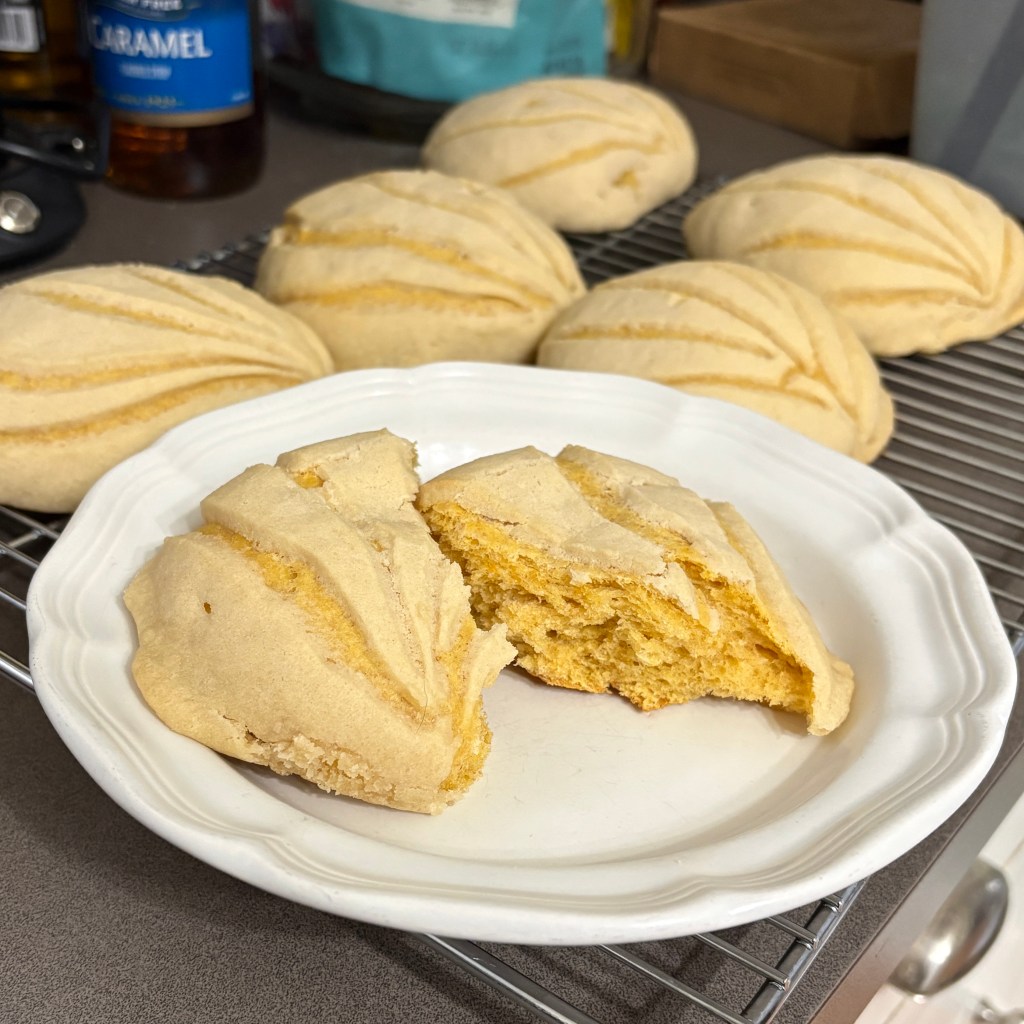
My homegrown drip coffee setup: a quart-sized mason jar, a quart-sized measuring cup with a strainer and coffee filter. In front is an iced caramel latte with cold foam.
Improvised cold brew system. The drink: caramel iced latte with cold foam.

I’m an MLIS student (Library and Information Science), and this summer I’m taking a one-month seminar on copyright for cultural institutions, and a 10-week front-end web development survey. (Turns out doing them at the same time is not something I would advise; I’m struggling at the moment.)

Before the MLIS program, I spent a hot minute as a graphic designer. Before that I spent a few years in school (New York City College of Technology — CUNY FTW) studying graphic design and print production. I took a lot of shit for it, because despite the program being vocational in nature (the print production part), it’s… ahem… not useful.

OK, but here’s the thing: I learned how to research and write during my “useless” undergraduate degree (Classics). What that means right now: I don’t use AI LLMs because I don’t find them useful — too much copyright infringement (cheating) and making stuff up, or “hallucinating” (lying), that I would have to account for, and I’m sorry, but ain’t nobody got time for that. Everything is already too complicated to have to spend extra time dealing with AI slop. (This is not to say that there is no use for AI; I’m saying that for what I’m doing right now, it’s more distracting than helpful, so I just don’t use it… and I would appreciate it if Microsoft would stop reactivating CoPilot every time office updates.)

As for studying graphic design, guess who has a pretty reasonable foundation in copyright law, particularly with regard to fair use? That would be me. When you’re in art school, you copy masters on purpose. And you might use photos that don’t belong to you to mock up design assignments… and you learn pretty quickly that you’re not allowed to sell or distribute those works. While you might have a defensible fair use argument for creating that work in the context of an education setting, the copyright holders of the original works may very well be able to claim infringement if you publish or otherwise distribute their work without permission or licensing.

Drawing from a photo reference? Did you take the photo? The drawing is yours to do whatever you want with. If you didn’t, and your drawing is a faithful reproduction (has not been substantially altered), it’s not yours to sell or distribute. And guess what, friends? Posting something to the internet is a potential method for distribution.

[Related: do not ask me to remove a watermark from a low-resolution digital mockup so you can use it as the finished piece. I made it a low resolution digital mockup with a big ol’ watermark on it for a reason.]

Also:

  • Darkroom photography –> photo editing in Photoshop or Affinity Photo
  • Typography –> relative measurement units in CSS
  • PPI vs DPI –> IYKYK
  • Color theory –> related to everything, everywhere… it’s astonishing, really.

Moral of the story: study what you want to study, and make sure to develop some critical thinking skills along the way. Everything is related, and even if you don’t end up using that exact discipline for your work for the rest of your life, there’s a better than even chance that at least some of it will be useful.

Nature Journal · Studenting · Volunteering

Education: Spring 2025

Today is MLK day. If you’re interested in reading one of King’s speeches, might I recommend his Give Us the Ballot speech, delivered at the Prayer Pilgrimage for Freedom on May 17, 1957 (text courtesy of Stanford’s Martin Luther King, Jr. Research and Education Institute). (H/T to Andrew Weissmann for the suggestion via his Substack newsletter.)

I’ve got a big semester coming up. Okay, so not any more intense than usual (I hope), but I think it will be both engaging and useful. Topics of courses this semester: data visualization, and instructional design. For the instructional design class, if the textbooks are any indication, we will be exploring information literacy, a topic most of us could learn a bit about and from.

Photo of three textbooks: "Designing Information Literacy Instruction," "Information Literacy Instruction, Second Edition," and "Now you see it" (a book about data visualization).
The textbooks in question…

I volunteer in an organization where I do a bit of community outreach — mostly with adults and families, but sometimes I get pressed into service to work with kids on field trips. I do raptor talks, or insect talks, or (very occasionally) nature journaling, so I work very much in the realm of things that can be observed first hand. That said, I hear a lot of assumptions about wildlife, in both kids (which I expect, because most of them are young enough to lack a lot of context), and their adults (which can be indicative that there’s a concerning lack of education in very basic biology and ecology), that are… incorrect… and sometimes dangerous, for both the animals and the people.

In the realm I work in, these assumptions tend to be variations on themes of “tameness” and training (which, again, is somewhat understandable, given that most of us don’t — and shouldn’t — have actual relationships with raptors), or human supremacy/dominance (in other words, because we exist, we have something to offer animals that we think they need, or we need to bring them to heel).

For most of us, our experience with animals is primarily with domesticated animals, like our pets. The understandable impulse is to apply our experience with our pets to other kinds of animals… which doesn’t work, and can be very dangerous, for everyone.

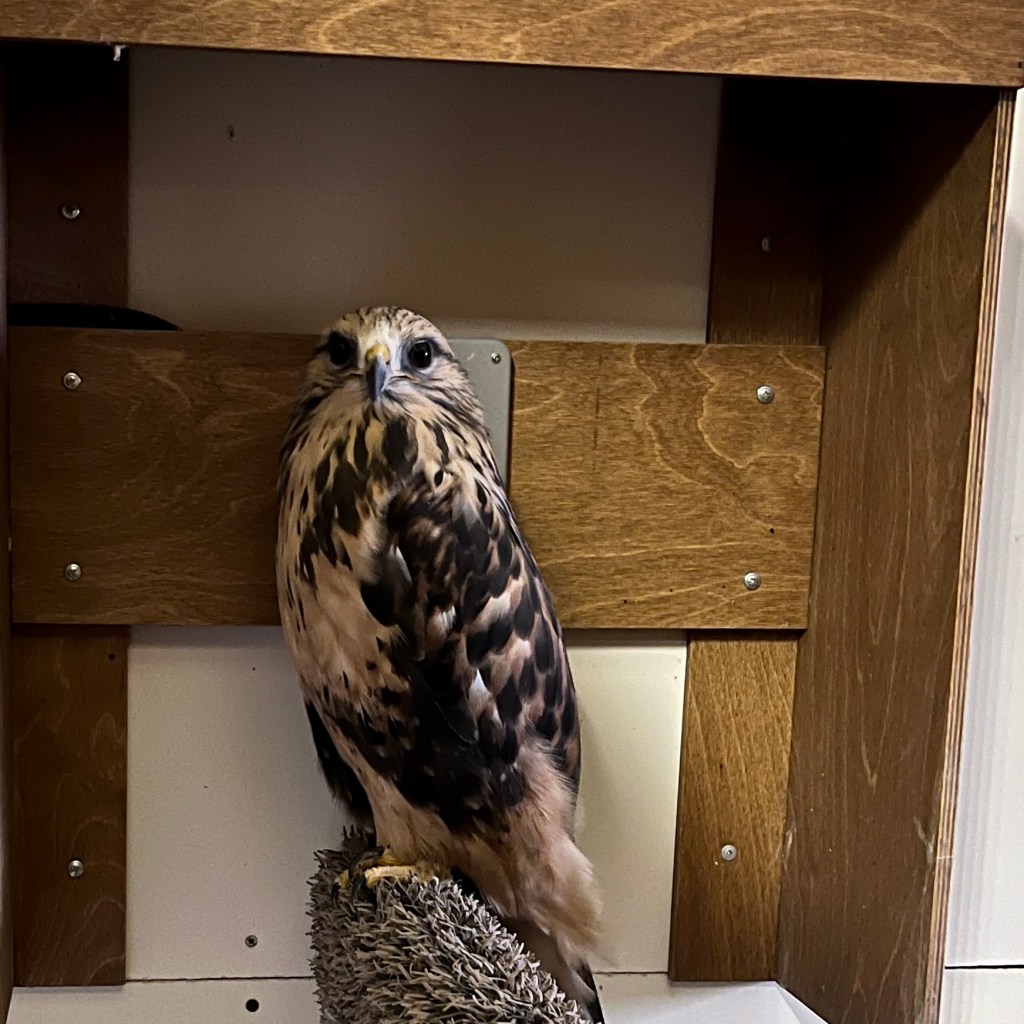
Take the ideas of tameness and training. These birds (who are unreleasable/cannot survive in the wild) are trainable, with consistency and a lot of practice, but they are not tame. They are not pets. Generally speaking, unless they are nesting or migrating, raptors are solitary. Stan is the possible exception, because Harris’s hawks live and hunt in small family groups in the wild. On the flip side of that, Stan, because he was raised primarily by people, turns into kind of a jerk when he’s looking for a girlfriend (he still has strong feet with sharp talons).

But Pants (rough-legged hawk) and Whoolio (Western screech owl)… definitely solitary — if they never saw any of us again, they would be fine. (I mean, they wouldn’t survive because their disabilities render them unable to hunt, but our absence wouldn’t leave them in any kind of emotional distress.) It’s difficult for us, as social animals, to understand that solitary animals do not need or want company; they are not lonely, and the presence of others often puts them at a competitive disadvantage.

And as for the other thing, the human supremacy… I’m not sure how to deal with that one, except to say that humans are bear-sized snacks, so if you are in bear habitat, you would do well to consider yourself a potential prey item and act accordingly. Interacting with moose, or bison, or Canada geese, is always a bad idea, because they don’t like us, and it would not matter if they did, because humans are predators and they do not want us in their spaces. A bison or moose that feels threatened could easily kill you and not think twice about it.

Even if we’re top of the food chain, the animals around us will do what they can to survive in our environment if we move into their habitat; coyote will do what they can to survive, including taking animals you may not want them to take. Same with owls. And raccoons (avoiding raccoons is tough; we live in a suburban area, and our dog treed two of them recently).

So yeah, having an opportunity to think about information literacy will be interesting. What is information literacy? How to we acquire it? How do we pass it on, in ways that people can ingest? If your thoughts about your interactions with animals are based primarily on vibes/your experiences with your pets, how can I introduce you to a way of thinking that’s more inclusive of wild animals and their habitats — in a way that is factual, and respectful/compassionate?

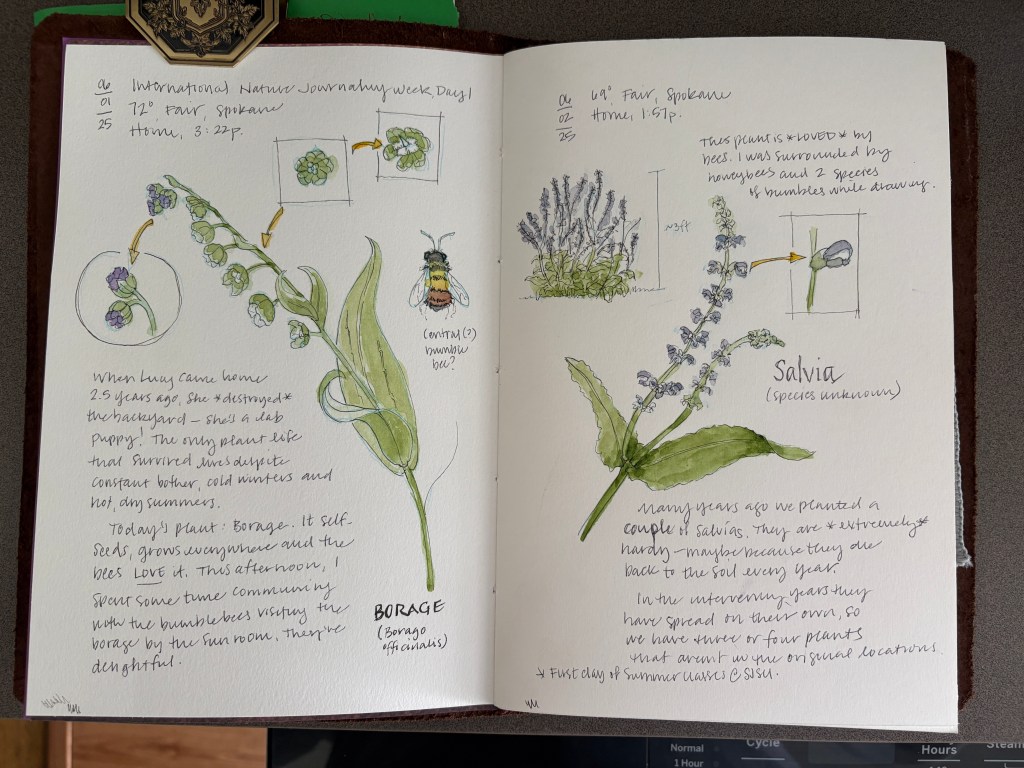
On another (very much related) front, I have to do some continuing education to maintain my Montana Master Naturalist certification. In past years, I’ve done nature journaling coursework, or seminars about ecology topics around the West. This year, I’m changing it up a little bit and working on introductions to topics that are more foundational, like ecology, climate change, and fire ecology (which, if — like me — you live in the Western US, is a topic you’re already probably more familiar with than you would like to be).

One of the reasons I love the internet is that you can learn just about anything. So, for ecology, I’m taking a Coursera Course: Introduction to Biology: Ecology (offered by Rice University).

Screenshot of Coursera dashboard, focused on a course named Introduction to Biology: Ecology.

I’m enjoying the content. It’s very basic, and the stakes are low. But it’s informative for a person like me, whose education has been mostly liberal-arts based, and who is interested in being exposed to a new and different topic.

I’m using this course to develop a little bit of foundational knowledge on the broad topic of ecology, and then using that foundation to inform some investigation into the topics of climate change, and fire ecology.

And hopefully, I’ll be able to bring some nature journaling into all of it.

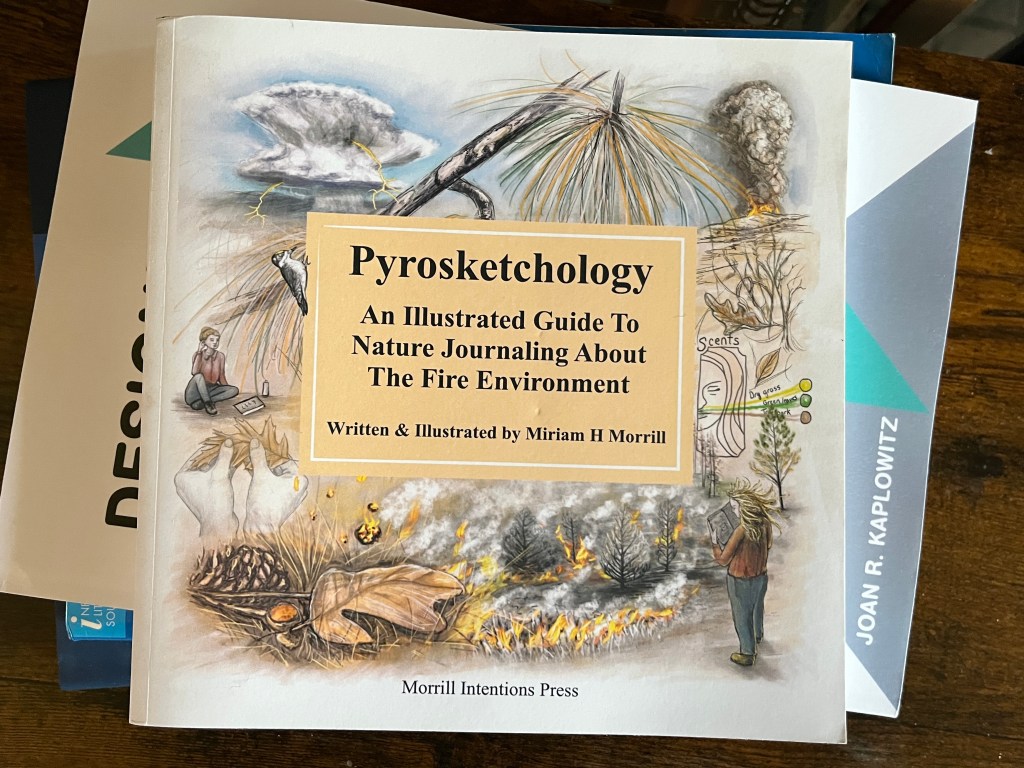
This looks to be an excellent book. I’m excited to delve into it while I learn more about fire ecology. (Bookshop.org link)

So, yeah, much to do this spring. I’m looking forward to it.

(Today will also include making a loaf of beer bread and some lentil soup for dinner.)

Outdoor Learning Center · Studenting

Jack of All Trades

First, have a bird:

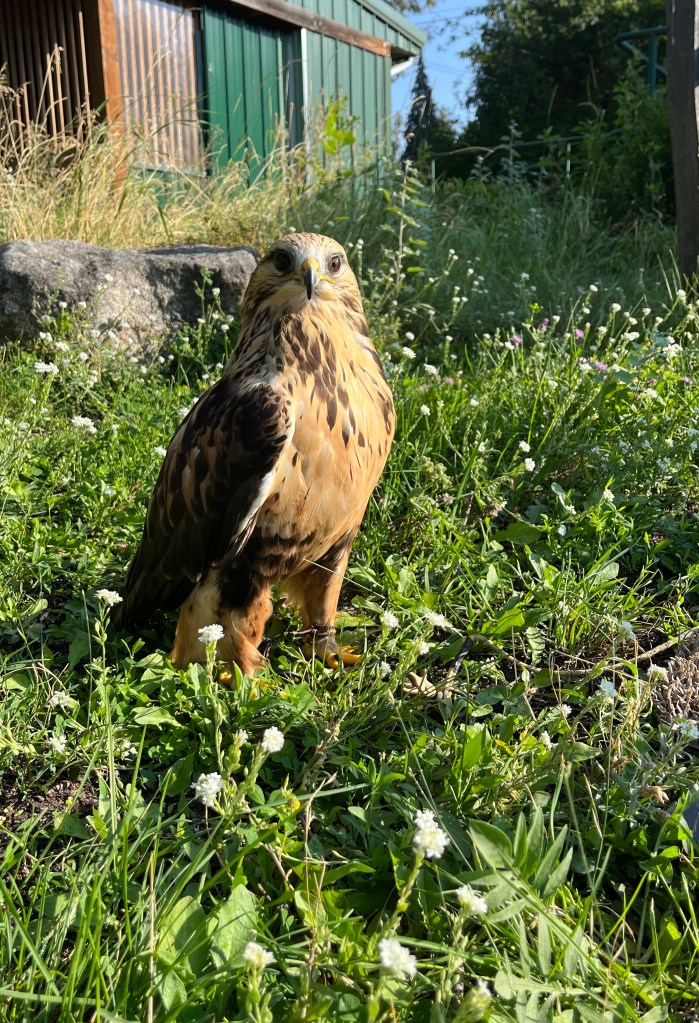
Pantalones (aka Pants), a mostly caramel-colored rough-legged hawk, standing amongst the wildflowers (aka weeds). She is a beautiful bird.
Pantalones, aka Pants, a rough-legged hawk at the
West Valley Outdoor Learning Center, enjoying some outside time.
Summer 2024

Pants has a partial wing amputation with significant tissue damage on her right wing, which, on top of the amputation, is missing both primary and secondary flight feathers. She is quite elderly, at 24+ years, and has arthritis. She has personality to spare, and in addition to being really pretty, she is quite sassy.

She had a near miss with Nelson, the OLC’s 80lb tortoise, the other day, and afterwards she seemed remarkably unbothered. She’s a champ.

Okay, down to business. I’m doing a skills inventory right now, and here are some of the skills I have listed: project management, database management, GIS, natural science illustration, graphic design, basic carpentry (power tools: *chef’s kiss*), raptor daily care and maintenance, research and writing, working at a coffee bar, community outreach.

Point is, you would not be wrong if “Jack of all trades, master of none” came to mind.

It is some comfort that one version of the “jack of all trades” quote goes something like this:

“Jack of all trades, master of none,
is oftentimes better than a master of one.”

(A Wikipedia article on the topic says that the couplet isn’t actually the original version, as many online like to claim, but I like it because it feels a bit less… awful? I’m not going to be able to solve the crises of the world, but I can make you a coffee?)

Believe it or not, even though my skills inventory looks like it’s all over the place, there are some through-lines:

  • I’ve worked on a few different newsletters, working on both writing and production — digital and print.
  • I enjoy engaging with technology: for database work, graphic design, and front-end web coding.
  • I’ve never been a teacher, but I have done a fair amount of training, teaching, and community outreach.
  • I gravitate toward environmental education and conservation.

It’s turning out to be an illuminating exercise. It will be interesting to see where it goes.

Lucy the Pup · Studenting · The Personal Project

New Class: INFO 282

INFO 282: Seminar in Library Management: Marketing Yourself in a Networked World

OK, so, here’s the thing.

I absolutely suck at this… “marketing yourself” business. This is entirely by design. If you grew up in a particular kind of patriarchal (more than a little bit misogynistic), conservative, Christian household, you may have a similar mental block.

Some of the statements I internalized:

“Work hard, and let the work speak for itself.”

“Don’t call attention to yourself. Be humble.”

“Always obey your elders/those in authority. They are where they are for a reason. Learn from them.”

When I tried to explain this class to my mother (who is one of the most intelligent, thoughtful, competent people I know), this was her response: “I don’t understand. Why would you need that?”

(Because cultural/familial/religious standards generally don’t emerge spontaneously in one generation.)

I mean, sure, there is some truth in all of these statements. it is important to produce work that is useful in some way, and that you’re proud of. Humility is an important attribute to cultivate, no matter who you are. And yes, we should all be willing to learn from those who have more (or more relevant) experience.

But… statements like these can be used to groom people, particularly young women, to believe that they don’t have any agency, that their value is determined by others, and because of those two conditions, their ability of survive in the world is determined by someone else. If, say, a young woman finds herself working for a verbally abusive person with more relevant experience, and end up working for that person for more than a decade… well, let’s just say it leaves a mark.

So in addition to a course about XML (well-formed vs. valid, namespaces, schema… anyone?), I’ll be working on this for the next several weeks. I suspect the XML will be more technical, but the self-marketing will be more… complicated.

To do the work of INFO 282, this blog may be undergoing a radical shift over the next several weeks. So before we get to that, here’s a photo of beautiful and talented Lucy:

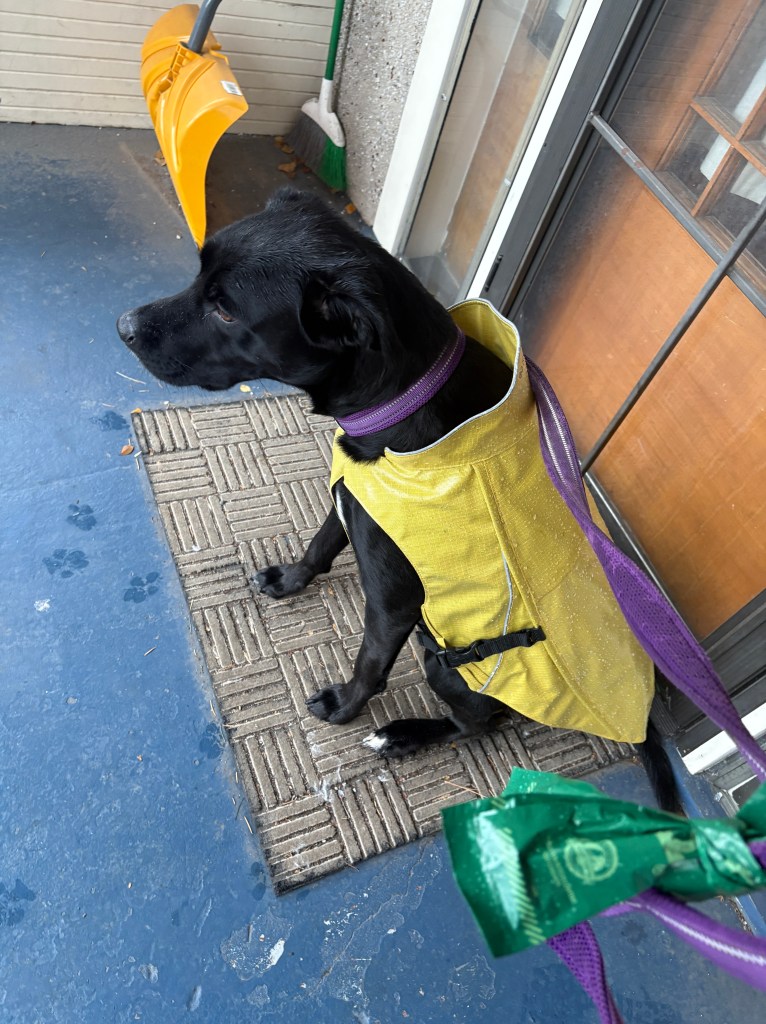
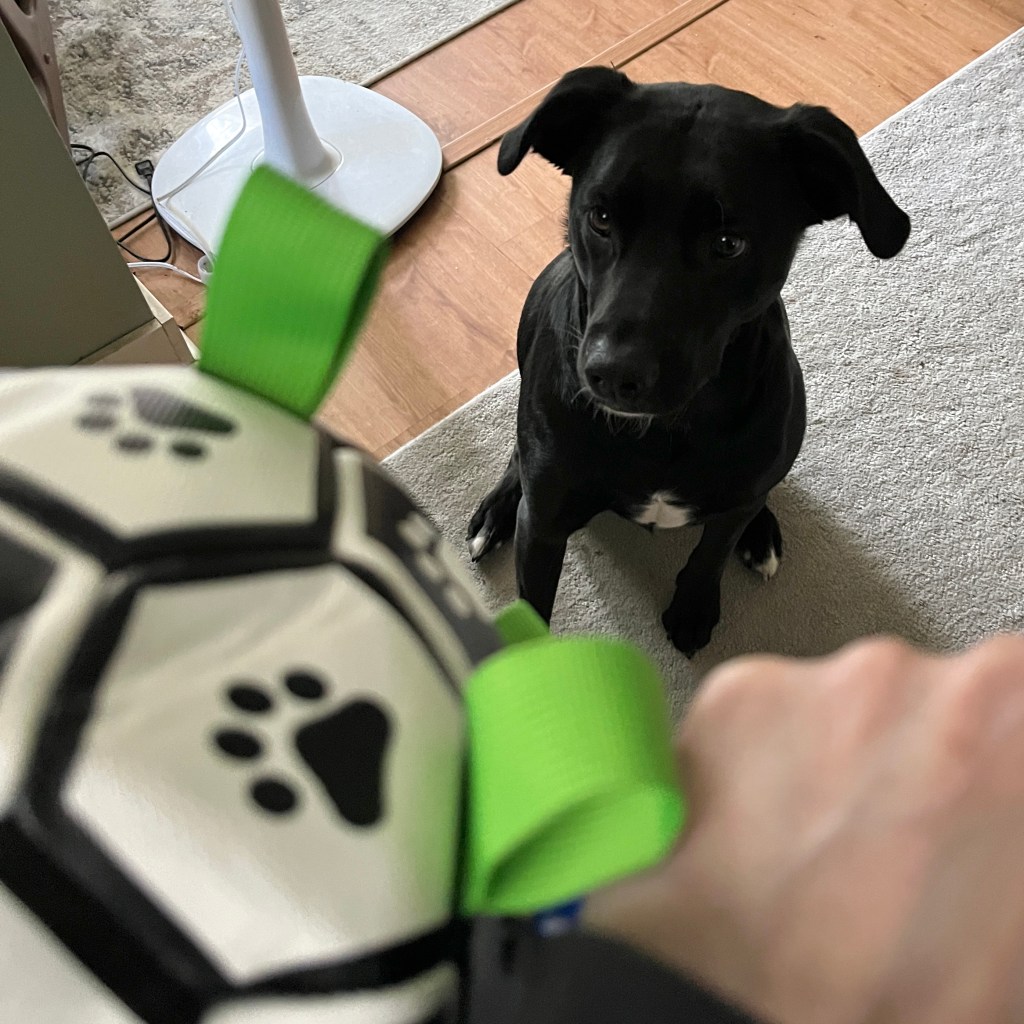
Photo of a black-and-white dog waiting (im)patiently for a new sportsball (small soccer ball with fabric tabs).
When you’re waiting (im)patiently for a new sportsball and your person is TOO SLOW.
Coding · Studenting · Thoughts about Stuff

Unlocking the Mysteries of the World

Last week I finished my last assignment for my last prerequisite course (we have four courses that have to make up 10 of our first 16 units). I enjoyed working with my classmates, appreciated the course content and feedback from my professor, and I got to do some interesting research.

Still, it was not my “cuppa,” and I’m glad to be done with it. (Of those first four classes, only one of them focused on what I would consider “my lane.” The rest were interesting and important, but kind of a slog.)

My next couple of semesters will be heavy on technology (yay!), light on group work (also yay!), and will include some marketing (we’ll see how that goes). I’m really looking forward to the next seven months.

This summer: MySQL. I worked with (Sybase) databases for many years as a user, and while I got very good at working within the confines of the existing interface, I never learned enough SQL to actually be able to work with the data outside of those proscribed activities. (These were amazing relational databases — elegant and thoughtfully designed — a testament to the positive impact of effective design thinking. In later years, they got kind of kludgy, but so did the organization’s thinking about the service, so … 🤷🏻‍♀️) I missed out by not learning SQL and diving into the guts of it. I could have learned a lot from that database and its developers.

It kind of reminds me of 4-year-old me. I don’t have many memories from early childhood, but I distinctly remember feeling like reading and writing was an adult conspiracy. I was just sure that meaningful information was being actively withheld from me, and if I could learn to read and write, I could unlock the mysteries of the world. Or at least my 4-year-old conception of the world.

SQL has become a later life version of that adult conspiracy for me. So this summer, I’m going to start figuring it out (for credit… it’s homework).

Let’s go!

mental health · Studenting · Thoughts about Stuff

That Time Calligraphy Saved Me

Photo from https://traderjoessignart.blogspot.com/ (lots of amazing signwork here!)

When I was an undergraduate getting ready to embark on a year-long writing project about an aspect of Ciceronian legal rhetoric, my advisor suggested somewhat strongly, but very politely, that I get a hobby.

Because it was September, and I was a mess of stress and anxiety.

So I signed up for a calligraphy class at one of the local community colleges. Every Friday morning, I gathered my large paper pad, pens and nibs, pencils, erasers and inks, and left my apartment early in the morning to catch the first of three buses to get to class. Three hours of class and lunch in the cafeteria later, I caught the first of three buses back to school.

I loved it. I loved everything about it, even the bus rides that took me away from campus for a little bit each week. I loved inky fingers and messy lettering practice. I loved the materials and equipment. I loved the history (I went to school at Reed College, in Portland, Oregon, home to a pretty well known calligrapher: Lloyd Reynolds. My teachers were a couple of his students, and they were — and continue to be! — very accomplished in their own right).

In some ways, it wasn’t the healthiest activity. I struggled with perfectionism… practicing calligraphy did not help with that. And I was looking for an escape, rather than a way to manage my anxiety, so in addition to fueling perfectionism, I was giving the experience way more weight than it deserved.

And then, when I was telling my mom how much I enjoyed the experience and wanted to learn more and maybe try to figure out how to do some of it professionally, she said, “ok, but how are you going to make a living with it?

I hadn’t thought that far ahead, and at that point I wasn’t considering it as a career — I was young, it was still an emerging hobby, and I was a long way from being able to earn bus fare doing it, let alone make an actual living. My assumption that you have to have everything planned out before you start, my lack of confidence in my ability to create something that worked, and that conversation killed it for me.

I continued practicing calligraphy for a few years after that (even served on the board of the calligraphy guild in NYC for a couple of years, and did some place cards). Then I got to do two years’ worth of typography when I studied graphic design (one of my instructors had us draw a different typeface every week: upper case, lower case, numbers, and basic punctuation. It was a lot of work, and I loved it).

That was a long time ago. These days I’m enjoying some Trader Joe’s sign writers on Instagram — they’re doing wonderful work, and it’s so fun to watch them create playful, colorful compositions that are supposed to be ephemeral. On the opposite end of that spectrum is John Stevens’s beautiful carved inscriptions.

Here’s the thing. There’s a place for beloved hobbies, even if they never become careers. I see so many talented actors, singers, knitters, bakers, horse folk, gardeners, and artists, who make their livings as teachers, admins, librarians, postal carriers. (One of the Trader Joe’s sign artists I follow is an abstract artist, and the sign work is steadier income.) Point is, everybody has to juggle something, and if you’re lucky, you get to choose what you juggle.

Also, I miss that part of my existence — not the perfectionism, but letterforms and the close observation of them. Maybe it’s time to start drawing letters again.

Studenting · Thoughts about Stuff

On a Random Monday

During our “spring break,” I wrote up the results of a group discussion topic, did a budget revision, prepped two case studies for discussion, and finished up scripts for 3 presentations (2 short presentations + a short subtopic) for another group project. (I recorded the presentations the following week so that our “production” person could stitch all of our efforts together to make a ~45-minute group presentation.) I also finished our taxes and got my hair cut. It was a very productive week; it was *not* a spring break.

And I did a bunch of it while camping out at my local branch library. It’s a recent thing for me… not every day, but it’s happening more and more. If you had told me even five years ago that the library would supplant a coffee shop as my go-to spot for getting work done, I would have laughed at you. But the pandemic broke me of my coffee shop obsession; I learned to make good coffee at home, and the library is usually a more pleasant alternative than most of my local coffee shops — it’s quieter, less chaotic, more spacious, and more comfortable.

The branch I have been visiting most frequently has robust programming for young children and their adults, so it’s usually not quiet (I’m not sure the recent renovation included much sound mitigation), but it’s lively. I settle at a table away from the joie de vivre, put in my ear buds and listen to some music or a podcast, pull out my laptop (or notebook and a pen), and get to work.

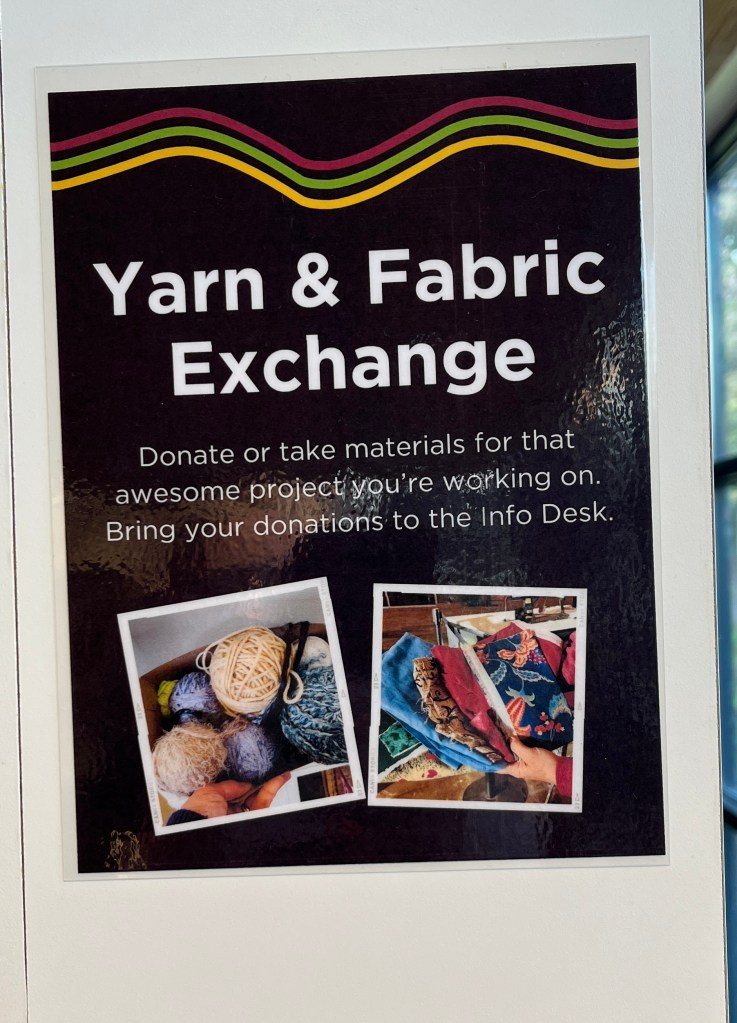
Some other highlights of a recent visit:

Anyone with a uterus can relate to the first; I can think of a few times when I would have benefited greatly from having access to free menstrual products, and I would have been profoundly grateful for them. The yarn and fabric exchange is just a great idea. I think I have some fabric (and probably yarn) I can donate…

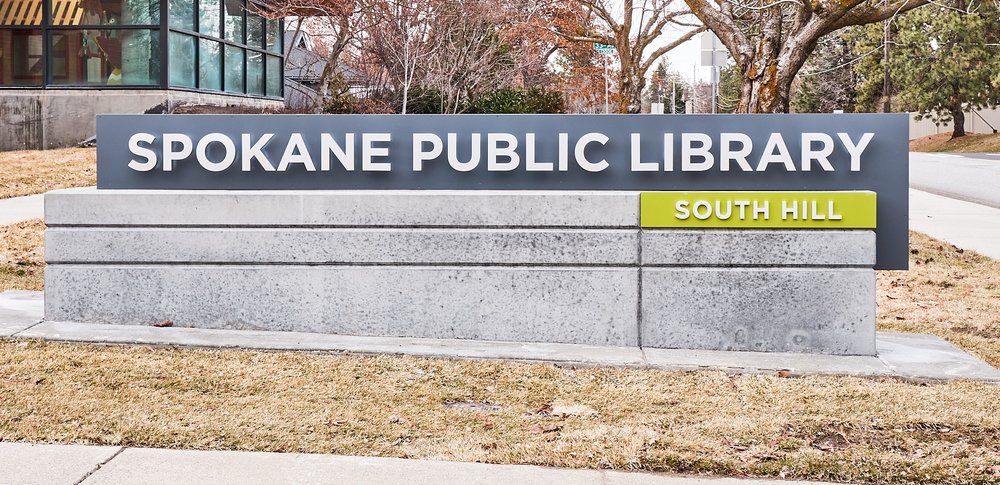
These, of course, have nothing to do with traditional libraries, but they’re really, really cool, and indicative of this library’s desire to serve its community in nontraditional ways. The class I’m starting to finish up this semester required some thought about how libraries are evolving to become more than repositories for books, and I see some of the initiatives I have been learning about in Spokane’s South Hill Library.

I am here for it.

[This is a branch library that serves one of Spokane’s older, fairly wealthy, neighborhoods. Spokane had a Carnegie library (that now houses an architecture firm), and the original Spokane City Library was on the land now occupied by the Central Library. The South Hill branch is one of five neighborhood branches. Spokane Public Library also supports two book kiosks, and a maker space.]

Studenting · Thoughts about Stuff · Volunteering

Happy Easter (?)

I did not realize that today was Easter until… last Thursday. The Thursday before Good Friday. Somehow the ubiquitous Easter Bunnies did not break through.

Oy.

But hey, I put pepper in my oatmeal this morning, so it’s safe to say that I’m generally turned around at the moment.

The primary reason: I’m knee-deep in a management course.

It’s one of six courses that everyone in this program (SJSU MLIS) has to take, and one of four we have to complete in the first third of the program. This one has been a challenge, because if you’ve ever met me, you’ll know that I’m both deeply distrustful of the idea of management as a discipline, and disinterested in engaging with it on any level (to put it mildly). I’m not opposed to capitalism as an economic system, though without guardrails it seems to become more about getting as much as you can before things go sideways than about investing for long-term (more modest) gain and stability. Management, as I’ve experienced it as an employee, is less about creating anything than it is about cutting costs and exploiting employees. The managers I’ve worked with who actually have MBAs… smart, smart people, with less interest in learning from observation than applying theory they studied in school.

Also, not a fan of group work. I think the people in my groups are great, and I have have deeply appreciated their feedback, but it is a lot of meetings, and between my two groups (for this one class) it means having to coordinate the schedules of eight people. If we worked in the same organization at the same time, it might be easier, but we’re students in a program designed for working adults, so…

Sorry Easter (and oatmeal), you’ll have to pardon my distraction, as I work through subjects like strategic planning, trendwatching, and budgeting. Planning — necessarily imperfect, but good! Responding to trends — unavoidable at the macro level, unsustainable at the micro level, particularly for orgs that aren’t “agile.” Budgeting… sigh. (Look, I actually think accounting exercises are kind of fun, like puzzles, but budgeting for staff cuts is awful on a few levels.)

And then there’s the investor pitch deck (first of two major projects). I enjoy research — the research part of this semester-long assignment has been a blast. Library lighting, and food-and-drink policy (my pieces of the puzzle for this group project) are actually interesting topics, when you delve into them — they both involve some engineering, sociology, and architecture (and trends!)… that’s all good. Spokane Central Library finished a $33-million renovation a couple of years ago, so I even have some recent, local, ideas to draw from. This week I’m finishing the scripts for my presentations, and next week, I’ll be recording my portions (x3: lighting, food and drink, space planning), to hand off to our group’s editors so we can finish this project a week earlier than the due date (or have time to deal with last-minute crises).

The last major project, which isn’t even on my radar until mid-April, is a research paper. I’ll get to it when the two papers that are due next week, and the presentation, are done.

Other shenanigans, at the Outdoor Learning Center:

  • Taking in a temporary, emergency placement Western Screech Owl (his person had some fire damage to her facilities, so we’re taking care of him until those are resolved). I got to learn to use pocket holes to prep his enclosure!
  • Replacing platforms that were starting to become unusable.
  • Working with first graders for the first time this year! (First time for me, not the OLC — I usually work with grades 3 – 5 in the spring.)

And one more, not at the OLC: dragging out the mini-chainsaw/tree pruner to take down limbs from a neighbor’s tree that are overhanging our roof. I’ll be using the rope chainsaw next week for the taller ones!

I need a nap, and the day has barely begun.