Studenting

Graduate School Group Work

I like most people. I’m not shy. I have anxiety, but when it comes to being around people, it’s more likely to be triggered by having to get to wherever I’m supposed to go than it is by the event itself.

And yet, as the most introverted person I know, I strongly prefer to work on my own. Collaborating is great, but when it comes to producing I’d rather work it out on my own. That’s not a knock on anyone I’ve ever worked with; it’s a personal preference.

Me, working from home, probably. Photo by Major Tom Agency on Unsplash

I’m taking a (required) class right now that’s about 2/3 group work. My colleagues are all super smart, observant, and engaged, and I’m learning a lot from their perspectives. For one of the projects, each conversation we have deepens my understanding of the project in important ways. So it’s going pretty well, so far. I’m lucky to get to work with these folks. I have no complaints.

I still hate group work. It’s a lot of meetings. When you’re working with two different groups of people, you’re having to figure out a lot of different schedules. We’re making it work, but I suspect it’s not easy for any of us.

In addition to all of the group work, this class is focused on library management. Budgets, planning, communication, management issues, case studies. Gross. It makes my head swim. Ugh.

That’s not to say that I think these topics aren’t important, or aren’t worthy of study. Management is an underrated skill that (I believe) most organizations really suck at. I’ve worked for a couple of stellar managers, but they’re rare. I’ve also had managers (and managers of managers) that have been really bad at it (they’re usually the ones that have been elevated beyond their skills — I got the sense that with some of them, they were elevated because senior management didn’t know what else to do with them). Really great managers possess talent and skill that is specific to that task. Subject matter expertise might be valuable, but management skills exist apart from it. Most of us not only lack the training to be good managers, we lack the talent. I suspect you can be a reasonable manager with training -or- talent, but not if you lack both. Being a good manager also requires a strong sense of self-awareness, and amazing communication skills. Skill, talent, emotional intelligence and communication skills… that’s a lot, and not many of us have that combination of traits… sad, but true.

The other bit of squidgy-ness I get from the topic is that I feel like the study of management attracts a certain personality, one that is really good at case studies. Problem is, case studies are not real life. Hypotheticals are so much easier to manage than reality. Newsflash: being good at working through case studies is not an indicator of your skill as a manager.

So yeah, sure, management issues are worthy of study, but it would probably be just as beneficial if we all went to therapy and figured out how to effectively communicate our situations, and then learned how to work together to figure out solutions that, while they are acceptable to everyone, may make very few people happy.

And also, learned to read a balance sheet, got a reasonable handle on employment law, and learned to treat our colleagues and subordinates as, you know, people.

So that’s that, for now. I’m looking forward to putting this class (the content, not the people) in the rear view mirror.

Otherwise, still doing bird things. Still working on figuring out where illustration and nature journaling fit into my existence. Learning ASL. Doing some yoga, cooking… you know, the usual.

Lucy the Pup · Studenting · Thoughts about Stuff

The To-do List that Never Ends

My mom texted me last night, “are you enjoying the break from school?”

Too busy.

Finished school (research paper + infographic + blog post)… I did not procrastinate this semester (unusual), and it still walloped me, because everything ended up coming due over the course of five days.

Fabulous and talented husband caught Covid. He travelled across the country twice this year, to spend time at big sporting events… nothing. Went to the gym after we got back from Portland after Thanksgiving… bam! Poor guy. It’s day 15 and he’s still in a mask at home. (We were both boosted in early October, so his course has been reasonably mild, if long lasting.)

Surgical procedure for me (after consulting with my doctor’s office about Covid exposure), involving stirrups and sedation… unpleasant, but done with (and no cancer!), so that’s good.

Taking care of the household and animals, and cooking and shopping, because somehow I have managed to avoid the Covid (for now, knock wood). Trying to keep up with this in the days after surgery was… challenging… because I don’t know if you know this, but anesthesia makes you kind of loopy, and the stress and anxiety leading up to it did not help.

Volunteering (independently, because for the first time in a while I’m not actively training someone), and a volunteer meeting (Zoom), and a subsequent follow up set of documents about handling new (to you) birds. A dentist appointment (after consulting with the office about Covid exposure). A haircut (in a mask). Christmas planning and shopping. Shipping Christmas gifts to family… catching up from having to ditch last week. My face-to-face appointments are done for a while (thank goodness), and I have one more meeting this morning (via Zoom), and then, maybe I can enjoy time off from school.

Or take a nap, and then enjoy time off from school.

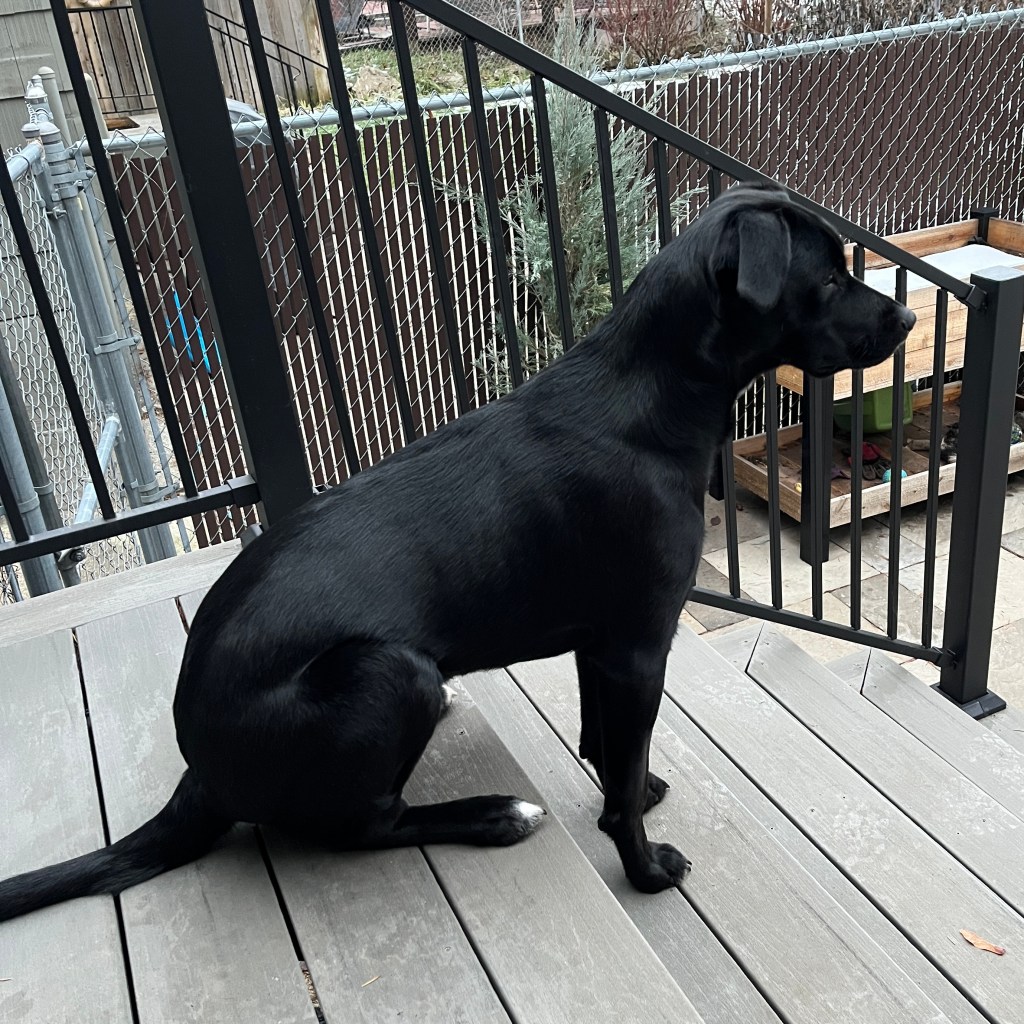
Maybe kick the ball(s) around with this bundle of energy:

Photo of Lucy, a one-year-old lab mix, sitting on the stairs. Her bum is on the top step and her front legs are on the next step.
Lucy hanging out on the steps… just waiting to find a squirrel being out of line.
AI · Raptors · Studenting

Being a “Mature” Student

I am what they call a “mature” student. I’ve been around the block a few times. I’ve done a lot of formal education-related activities. I’ve got a bachelor’s degree, a post-baccalaureate certificate and a graduate certificate… and I was something like six units away from an associate’s degree in the middle of all of that (I had to abandon it for a cross-country move).

And now I’m at the point where, as a graduate student, I still want to learn, but I’m not a fan of the trappings of school. I’m working on a project at the moment that I’m kind of excited about… and while I’m paying close attention to all of the rubrics, readings, and feedback, I don’t really care what my professor thinks about it. That’s not to say that I won’t make changes to it in accordance with feedback. I will, for sure, especially if that feedback helps to move the project in a direction I want to go. But I’m intrigued enough by the subject matter that I don’t feel the need to alter the trajectory of it, if that makes sense.

I guess what I’m saying is that I’m not really looking for my instructor’s approval. I’m interested in their opinions about how I can sharpen my argument, or strengthen my sourcing, but I’m not all that concerned about whether they think it’s an amazing piece of work. I think the subject is very, very cool, and that’s what matters to me in this moment, I think.

Hint: falconry, but not in the context of falconry. Falconry is what it’s about, sort of, but folded into an information science topic. (Image source: https://en.wikipedia.org/wiki/Hunting_with_eagles#/media/File:Kazakh-Mongolian_Eagle_Hunter.JPG)

This is kind of a new way of thinking for me, and likely comes from being exhausted from a lifetime of people-pleasing. The thing is, like most people, I generally perform better doing work I’m excited about, or at least interested in. Again, like most people, I *can* do things that don’t really interest me, but I generally don’t excel at them, and that’s fine.

So yeah, this week it was a 1700-word blog post, with photos, a video, and lots of references. Next week, a 1000-word essay about an information seeking-model that pertains to my topic. As I move forward, I’ll fill out my research with more peer-reviewed, academic work (newsflash: I’m currently working with 10-12 sources from the perspectives of archaeology, anthropology, ecology, and, of course, information science).

I’ve been thinking a lot about AI over the last several months, and I’ve concluded that there’s synthesis that happens when I’m researching and writing that AI can’t really help with. Maybe it’s because I’m a deliberate thinker (not all that quick on the uptake), and I need to puzzle ideas out for myself. Maybe it’s because I’m old(er), and I still like to read papers on paper, so I can make notes and mark them up. Also on the “mature,” front, I still draft longhand, occasionally, though I’ve been moving away from that (now I draft mostly in MS Word, so that I can save versions — once a graphic designer…). I’m sure at some point I’ll have to figure out how to work with AI, but at this point, I haven’t found a way for it to be useful for my process.

One thing I am not enjoying? Formatting references (resources… whatever). I’ve always been kind of bad at it, but now I’ve had to switch from MLA to APA, and it’s a little bit different, so… that’s going to take a minute.

But you know what? If I knew how to do any of this I wouldn’t need to be here. So I’m just going to continue to nerd out on my topic, and figure out the rest of it as I go along.

AI · Studenting

Academic Integrity

I’m so old that I started learning to type on my mom’s typewriter. (I was a child who thought that typewriters were cool, and I wanted to learn to use it. I’m not a particularly fast typist, so it turns out I was more interested in figuring out how it worked than learning to use it.)

When I started having to write papers for every class I took in college, I had a Mac, but I still took notes and drafted my papers longhand (only the first draft — every other iteration happened on the computer).

As a graphic designer, I used version naming conventions (052123_filename.indd, 052223_filename.indd, 052223_filename1a.indd…) for all my files, so that I could present different ideas, or step back if I needed to.

As I learn front-end web development, I’m getting a little bit more familiar with version control, using Git and GitHub.

I’m thinking about all of these practices as they relate to academic integrity in the age of ChatGPT. Teachers are trying to figure out how to prevent students from cheating. And we, as students, have to figure out how we are going to make sure that we can demonstrate that the work we are presenting is ours. In other words, as students, we need to develop a kind of “hygiene” to make sure that they we show the evolution of a project or paper.

(In other words, we all need to figure out how to avoid this sort of thing: Professor Flunks All His Students After ChatGPT Falsely Claims It Wrote Their Papers. )

In my case, I still tend to take notes longhand (I think better with a pen in hand); notes are artifacts, so that’s a reasonable start. Another thing I already do if I’m working on a group project is keep local files of the work I’ve shared (or with Google apps, I’ll make a copy of a file and share the copy) — not because I think my work is of higher quality than the group can produce (it is most assuredly not), but because it creates a situation where I can point to the part of the project I contributed to as an individual.

I think I’m going to start implementing version naming conventions for files if I’m working on a solo project. Also, I need to start getting better at getting to know my professors, so they have a sense of who I am, and how I approach assignments. (For online students, I think discussions are a good way to demonstrate that you’re engaging with the material in a thoughtful way, in your own style, in a less formal context.)

I’ve been pretty fortunate that most of my academic endeavors involve writing and project work, where you have to demonstrate progression of thought through the course of the work. It’s difficult to cheat that process (or the cheating involves so much more work and creativity than the assignment calls for that it should probably be lauded).

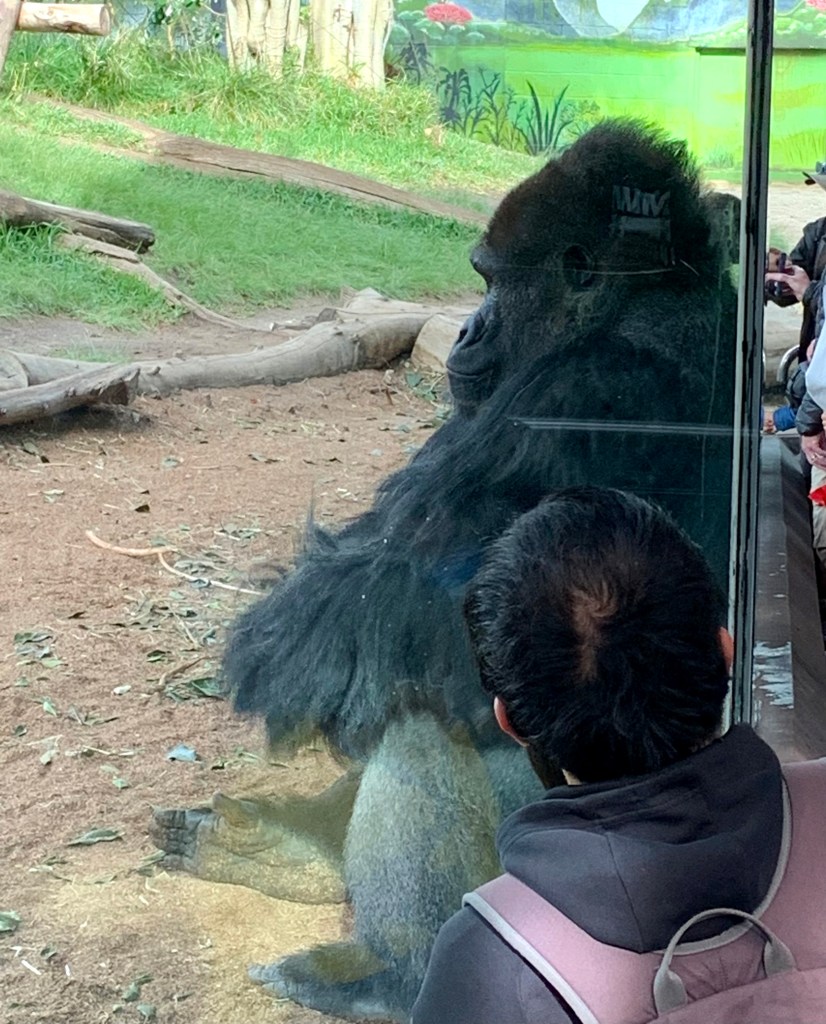
Photo offering of the day: this gorilla from the San Diego Zoo, who chose to walk right up to the viewing area, turn his back on all of us, and sit down. He decided that if he had to interact with us, he was going to do it in his own way. (Animals are capable of complex communication.)

We went to the San Diego Zoo on Christmas Day in 2021. This gorilla did an amazing job of letting us know that he was going to do his thing in his way, never mind the rest of us. I appreciate it when any animal has enough autonomy to express themself.
Studenting · Thoughts about Stuff

It’s been a week.

There are a couple of things I’m glad I learned during the pandemic, back when everything was closed because we couldn’t breathe on each other.

One of them is how to make coffee that I like to drink.

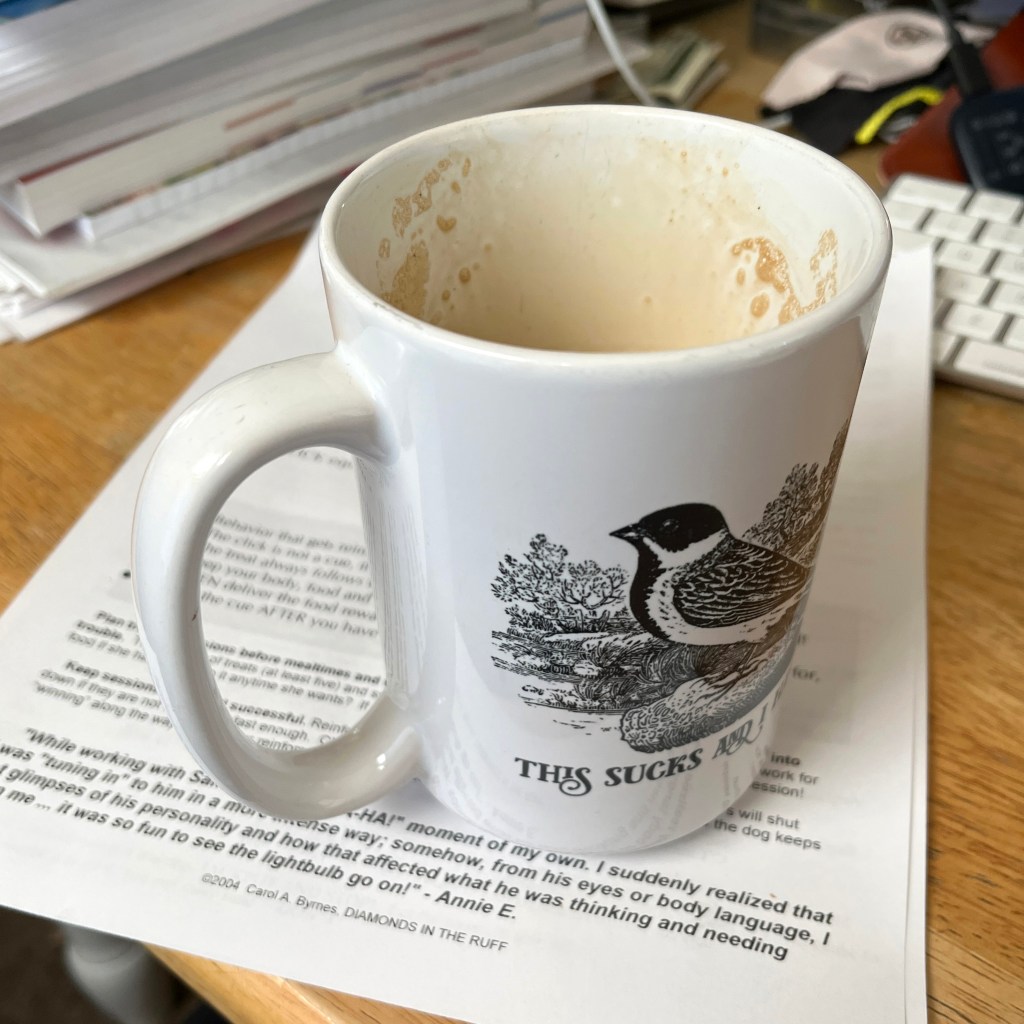
Mocha/latte in the commemorative pandemic mug (“This sucks and I hate it,” by Effin’ Birds.) Lu starts puppy kindergarten, part 2, today, and the document under the mug is for that.

Here’s how I do it: Moka pot coffee (High Drive roast, from Indaba Coffee, here in Spokane), with soy milk (agitated in a Bodum milk frother), and about 2tsp of chocolate syrup (Hershey dark chocolate syrup, to add a subtle chocolate flavor and cut the bitterness of the coffee with a little bit of sweet).

The coffee continues to be the highlight of every week. But this week was memorable for a couple of reasons:

I got my first black fly (Buffalo Gnat) bite of the season… on my face. (OK, that’s not a highlight, but it was significant.) Black flies inject you with a numbing agent and then saw a small, impressively round, hole in your skin. The wound bleeds, and then swells up like a mosquito bite and remains itchy for several days. Usually they get you on the hairline… this one is just to the front of my ear. I was bitten on Monday afternoon, and on Saturday morning, it’s still itchy and a little bit swollen. I’m pretty sensitive to bug bites anyway, but I hate black flies… at least their season is short. (Treatment: hydrocortisone cream and antihistamines (Allegra or Zyrtec — we probably shouldn’t use Benadryl anymore).)

I finished my first semester of graduate school. For our final project, my group had to rethink and redesign the navigation structure of a website, and we finished it on Thursday. I suggested the OLC’s district site, because it doesn’t (at present) adequately represent what the OLC does, how, or for whom.

(For what it’s worth, school districts generally don’t do a lot of great web development; funding is inadequate, and school employees don’t have time to maintain a complex site, because they’re, you know, teaching kids. It’s unfortunate, because there are significant information needs for students, parents, and the community, that are just not being met. And yes, I know, not all school districts.)

We got to do a card sort with the OLC staff, which was amazing. Card sorting is a really great way to get a glimpse into other people’s ideas about how the world should be organized. There are apps and orgs that allow you to do them online. We used index cards, which for a group hybrid sort, is an easy, tactile experience (nice after the teachers had worked with kindergarteners all day).

Since I’m the one who suggested it (and the OLC is where I live), I got to do some of the heavier lifting with the foundational pieces. I’m lucky the group had a tech person who could read my early drafts. It was a gift to have someone who could check to make sure she could visualize what I was describing. And then to be able to hand it off to writers and editors who could take our observations and ideas (~ 12 pages, at that point, with some photos and sitemaps) and create a cohesive report about the project. (It was quite a bit of work for 10 points.)

[5/14/23: We got full credit! Yay, us!}

I’m (still) not a huge fan of group work, but not for the reasons you might think. I enjoy collaborating with people, one-on-one or in small groups — different perspectives often makes for stronger work. And I was lucky to have landed in the group I was in; everyone was interesting and insightful, hugely talented, and wanted to be involved and get things done in a timely manner. That said, we all have lives outside of school that need to be attended to, and matching schedules and availability for project work turned out to be a bigger challenge than doing the actual work of the project. That’s a little too “real world” for work that has hard deadlines and offers no compensation.

I spent yesterday morning decompressing with a tropical smoothie. (Shakes and smoothies are like donuts to me. I really enjoy them… about twice a year. Anything more ends up being… too much.)

And now it’s on to the next semester. This summer I will be coding… a lot. I’m taking SJSU’s MLIS foundation front-end coding class, and working my way through a front-end coding certificate through the University of Washington.

(And hopefully, continuing to work with the Outdoor Learning Center on building out their district website.)

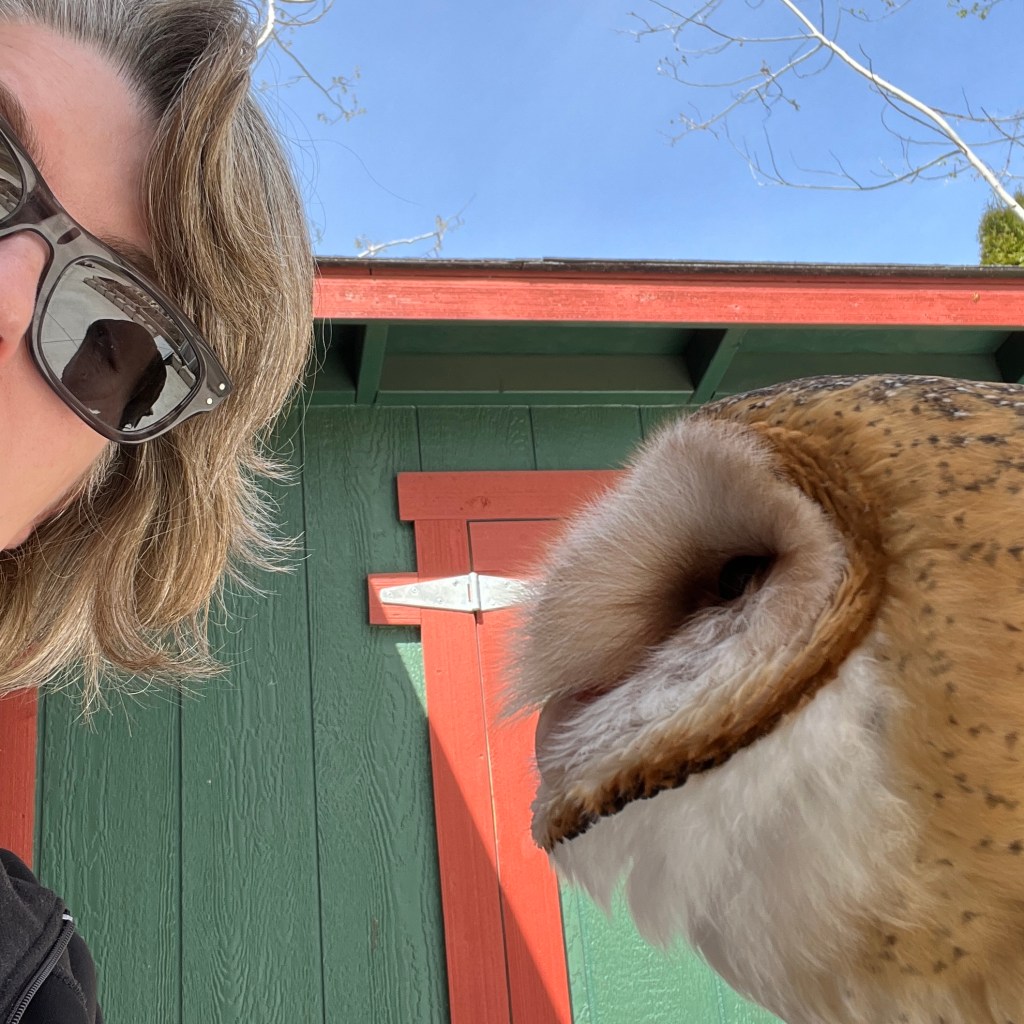
At the OLC with Ruby (the Barn Owl) last month, while the district guys were replacing the windows in the sanctuary. She spent most of the day in her crate, where it was dark and quiet, but we got to hang out in the shade for a little while in the afternoon.

Studenting

On Being a Noob

Welcome to Information Science, Beginner Edition

Yes, there are courses devoted entirely to the topic of information retrieval systems… that seems pretty specific, and yet, this course is actually very, very broad. We’re doing in a bunch of group work this semester, and still have a couple more projects to do before mid-May.

For this class:

  • We built a small database of things (pillows, in our case), made it searchable, and wrote rules to describe how an indexer would enter new information into the database. (Was it technically a good database? Consider that none of us are database designers, so… it was functional.)
  • We just finished creating a controlled vocabulary to describe a group of ten academic articles. (Super squishy, conceptually, but a few great conversations came out of it.)
  • Next up: a user research card-sorting exercise, using ourselves + family and friends as our sample group.
  • And finally, something about redesigning a website? Not sure what this will be, because we have a couple of other things to do before we get there. (We’re not designing or coding anything, so my guess is that this will be a written exercise addressing UX design?)

One of the articles we read for this class describes information science as a cross between the social sciences and engineering practice. In other words, it’s pretty technical conceptually, with the challenge of creating systems that make information accessible to specific user groups. There is always a user — apart from the designer/builder — to keep in mind.

The technical challenges are a thing unto themselves. I enjoy technology, so that learning curve doesn’t bother me too much, and I’m looking forward to doing a lot more development work (front-end and back-end).

Finding solutions that meet the needs of people will be a worthy challenge. Any human-centered system involves uncertainty, and some of that uncertainty will never be able to be solved for, or mitigated. Simply put, there isn’t one right answer that meets the needs of every member of a group.

One thing that I’m learning in other parts of my life, though, is that by seeking to address the needs of people who are marginalized, we end up addressing similar issues for others.

Take, for example, quiet rooms in schools designed to allow kids with sensory challenges to take a break from the chaos of the classroom or playground. Coincidentally, those spaces also meet a need for kids with anxiety, or any kid who’s feeling dysregulated (sometimes people act out when they feel overwhelmed… even neurotypical people). As a person who has struggled with anxiety for my entire existence, a space like this in, say, an airport, would be a game changer.

I think that, in situations where the goal is to meet the information needs of a community, I will look to organize my thinking around addressing the needs of marginalized people within that community.

BTW, I recognize that there are lots of ways that people can be marginalized: race, class, ability, gender, sexuality, socio-economic situation. This will be an imperfect quest, at best, but since the perfect solution doesn’t exist, having an organizing first principle seems like a reasonable place to start.

Thank you for coming to my TED talk. And now, have a dog portrait.

Photo portrait of Lucy, a black lab mix, with a bully stick hanging from her lips. She looks *really* OG.
Lu is such a rebel…
Studenting

Spring Break: Grad School Edition

My spring break is supposed to be next week. Originally, in early January, we had planned to go to Costa Rica…

… and then we got a puppy, who needed shots, and socialization, and puppy kindergarten, before we could even think about boarding her. So those plans went by the wayside.

Lucy (now almost 5 months old) is very cute, and smart, and delightful.

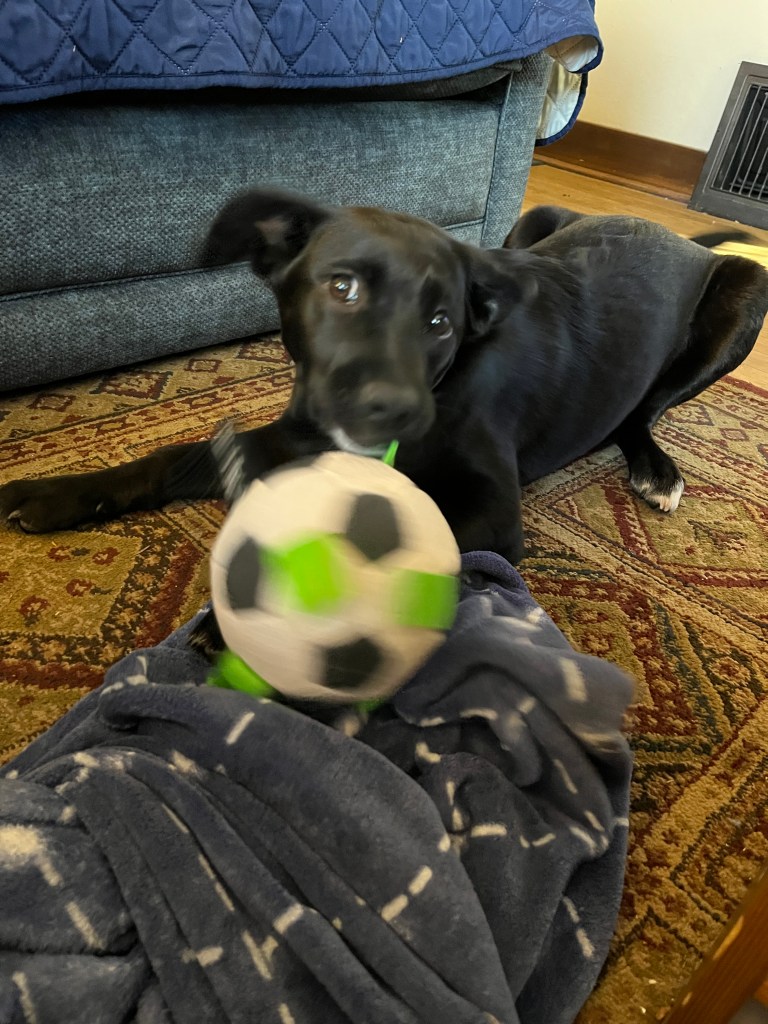
Photo of a black dog (with white accents) shaking a "soccer" ball that has fabric tabs sewn into it.
We have a couple of “soccer” balls with tabs sewn into the ball — they’re turning out to be really great toys for us. Lucy enjoys chasing them, carrying them, shaking them.
They’re proving to be good for training “drop it,” in addition to being wildly amusing, and we can (carefully!) kick the ball around outside. Perfect!
(We like Chuckit! ultra balls a lot, too — for all the same reasons —
though they’re not great for playing “soccer.”)

In light of postponed travel plans (which became apparent almost immediately after Lucy arrived), I was going to use the time to catch up on some of the “suggested” reading for my information retrieval class, and watch some video reviews for previous weeks to reinforce some of the more complicated concepts.

And learn some stuff about HTML5 semantic tags. (I was not kidding about learning Javascript, but I’m going through the front end to do it.) Y’all, it looks like we’ve come full circle from the bad old days of HTML3 when we were appropriating table tags to make web pages legible. These newfangled (kidding, they’ve been standard for ~10 years) tags have no bearing on appearance; they exist to delineate different parts of a document outline: header, footer, article, section, aside. (My graphic designer self is champing at the bit to get back to CSS already… I understand and appreciate the utility of semantic tags, but the semantic tags alone… in terms of appearance, which is not the purpose or goal of these tags… it’s like “1994 called, they want their home pages back.”)

Oh, and getting a better handle on Git and GitHub. (Confession: I haven’t used the command line in a L-O-N-G time.)

Anyway. You get the idea. I had plans! My plans had plans!

But no. It looks like, in addition to those things, I’ll be doing a bunch of reading to prepare (with my group) to put together a very small controlled vocabulary… a completely new concept to me/us. Right now it seems extremely complex — a “wicked problem,” if you will, in the sense that it does not have a single solution, because the decisions we make will depend on the needs of a specific user base. (A controlled vocabulary for an information specialist working in web design will be a bit different from a one working as a youth services librarian — there will be some overlap, for sure, but their information needs are likely going to be a bit different.) We’re meeting about it on Friday morning, preparing so we can hit the ground running after “spring break.”

In the meantime, I’ll be getting a haircut on Friday (right after the meeting), doing a Women in Stem open house at the OLC on Saturday morning (might use the time, while chatting with folks, to make some new jesses for the birds), finishing up our last puppy kindergarten class (!) on Saturday afternoon, and hopefully (fingers crossed), attending a webinar on creativity on Friday the 31st.

What’s that saying, life is what happens… ?

Studenting · Thoughts about Stuff

The Value of Critique

I took a class this winter, in a subject I have no experience with. It was gloriously fun, but very challenging. It moved very quickly, and there were a lot of deadlines. My goal with this class was to develop a greater understanding and appreciation for the topic.

I produced a lot. I learned a lot. I am not now, and may never become, an expert, but it was a good experience.

I just had a final critique with the instructor.

It was brutal. She was not unkind, but she was not shy about letting me know many of the ways my project was lacking.

She was not wrong. It was a good critique (good critiques require quite a bit of skill). It was illuminating, and I have some better ideas — from an expert! — about how to approach this kind of project going forward.

But here’s the thing: critique can be hard. When you’ve invested a bunch of time and work in something, it’s hard to hear all the ways it doesn’t measure up. It hurts the ego; it can bruise the heart.

But it is important to be able hear it and accept it — or at least to listen to it, and decide what you want to take away from it.

I’m not sure I could have done anything better or different with this project, so even though some of it was difficult to hear, I am a beginner at this — I am not capable of greatness, at least not yet (and there were a few other life circumstances going on in the background, so even if I was capable of more, I might not have been able to bring it to the table) — and my goal for this class was to finish.

So I will let this experience sit for a minute, digest the advice I have been given, maybe do some drawing for fun and find an approach (slower, more methodical, more iterative) to this kind of work that makes more sense to my brain.

And then I will try again.

Studenting

Technology IS FUN

This is my mantra today, as I work on group work (I get why it’s important, and I like all the people in my group, and it’s fun to meet and figure things out, but I still don’t care for group work… IYKYK) with a database platform that does not allow you to build a submission form using currency values… even though you can build a *data table* with fields that use the data type “currency.”

Thanks to date night on the couch with my husband and a couple of laptops (sexy!), I got something to work — for the purpose of demonstration only. I had to find some javascript, and figure out how to plug it in, in order to use it… it feels kludgy, but it provides some validation that wouldn’t exist otherwise.

(Note to self: learn javascript.)

I’m sure there’s a reason for this, but whatever it is is likely over my head and above my pay grade.

It (mostly) feels good to flex my (not all that impressive, but existing) data muscles again, even if it’s for a class about designing information retrieval systems.