Uncategorized

Nature Journaling FTW

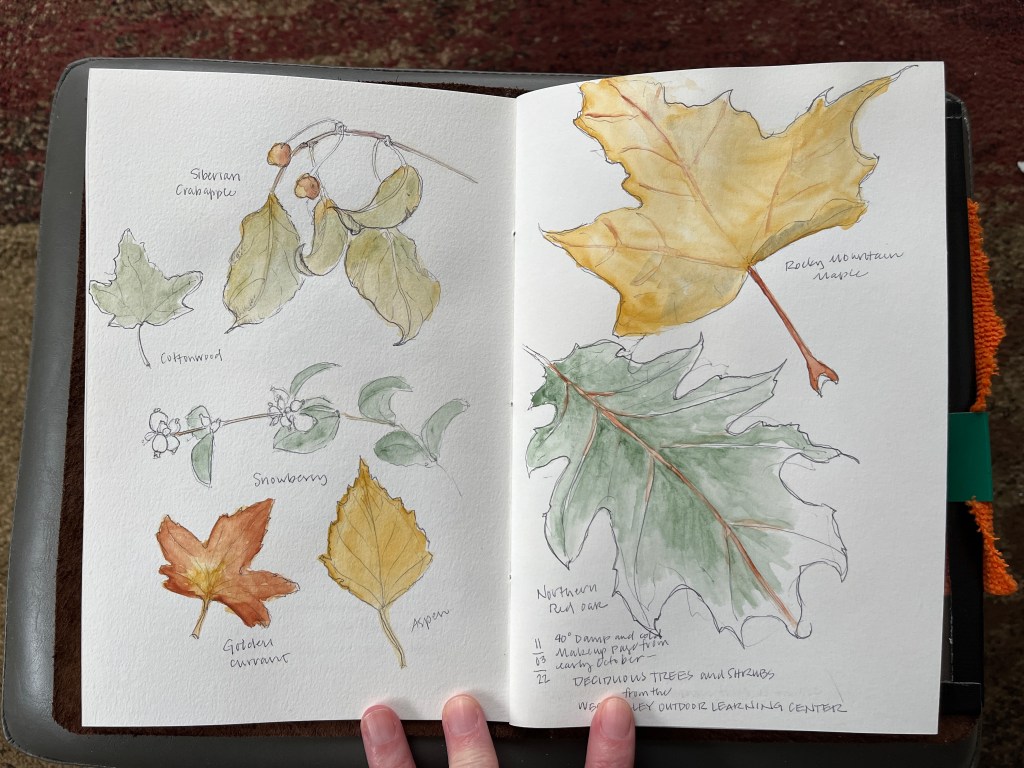
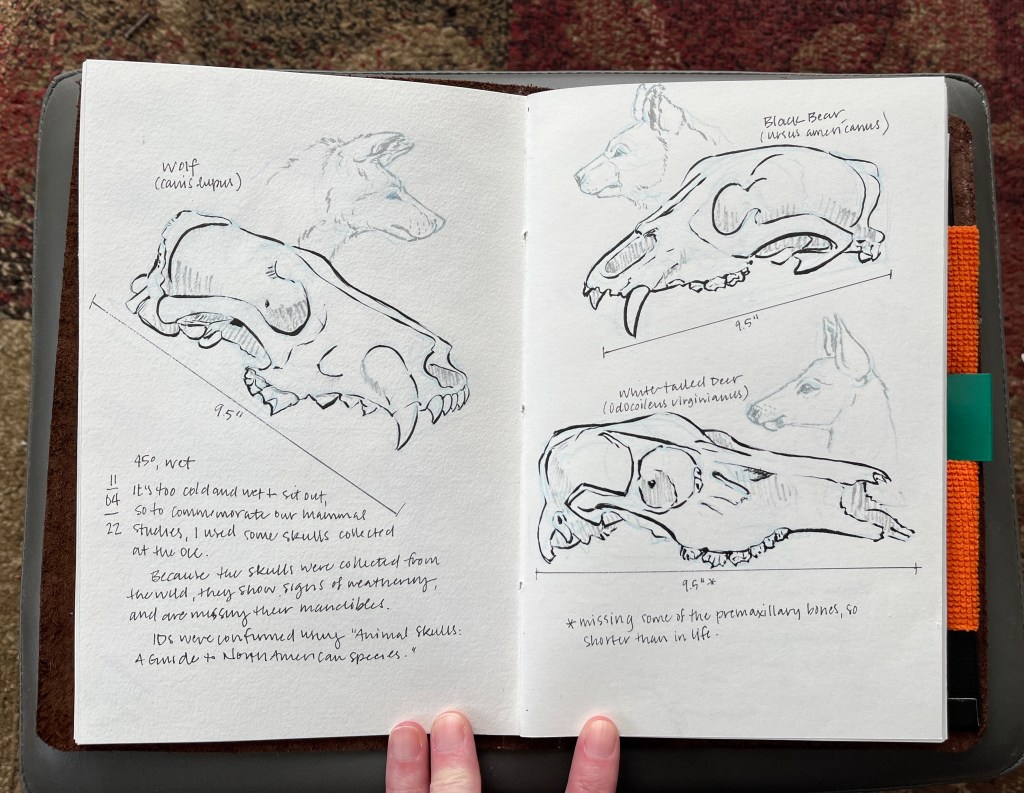
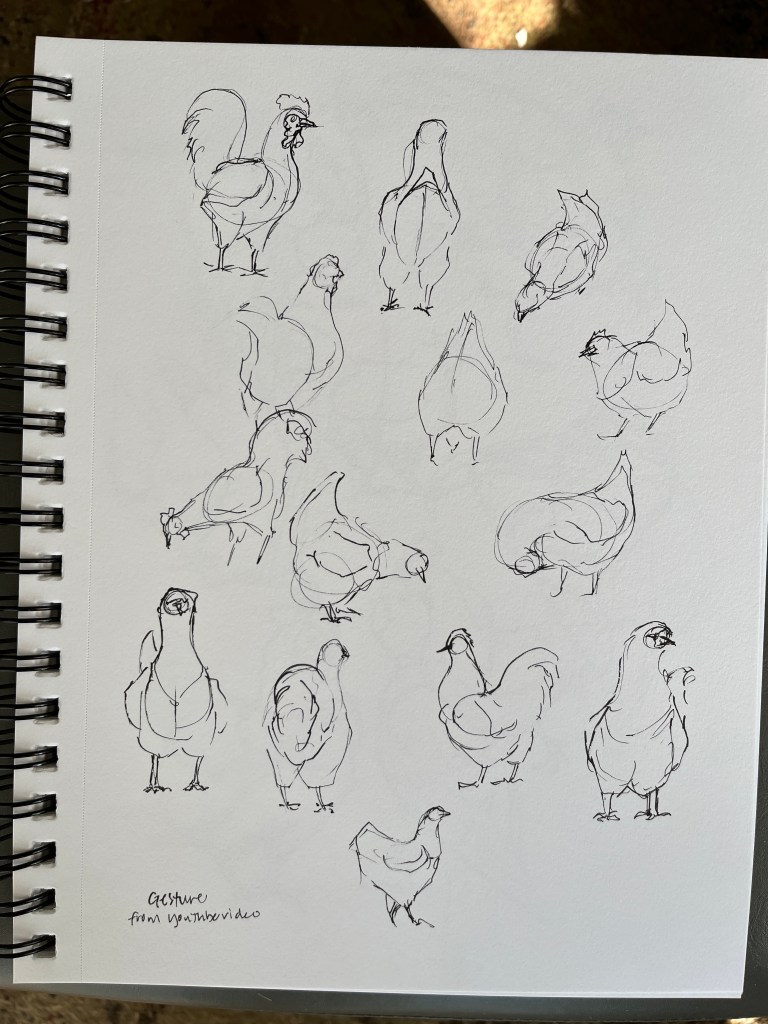
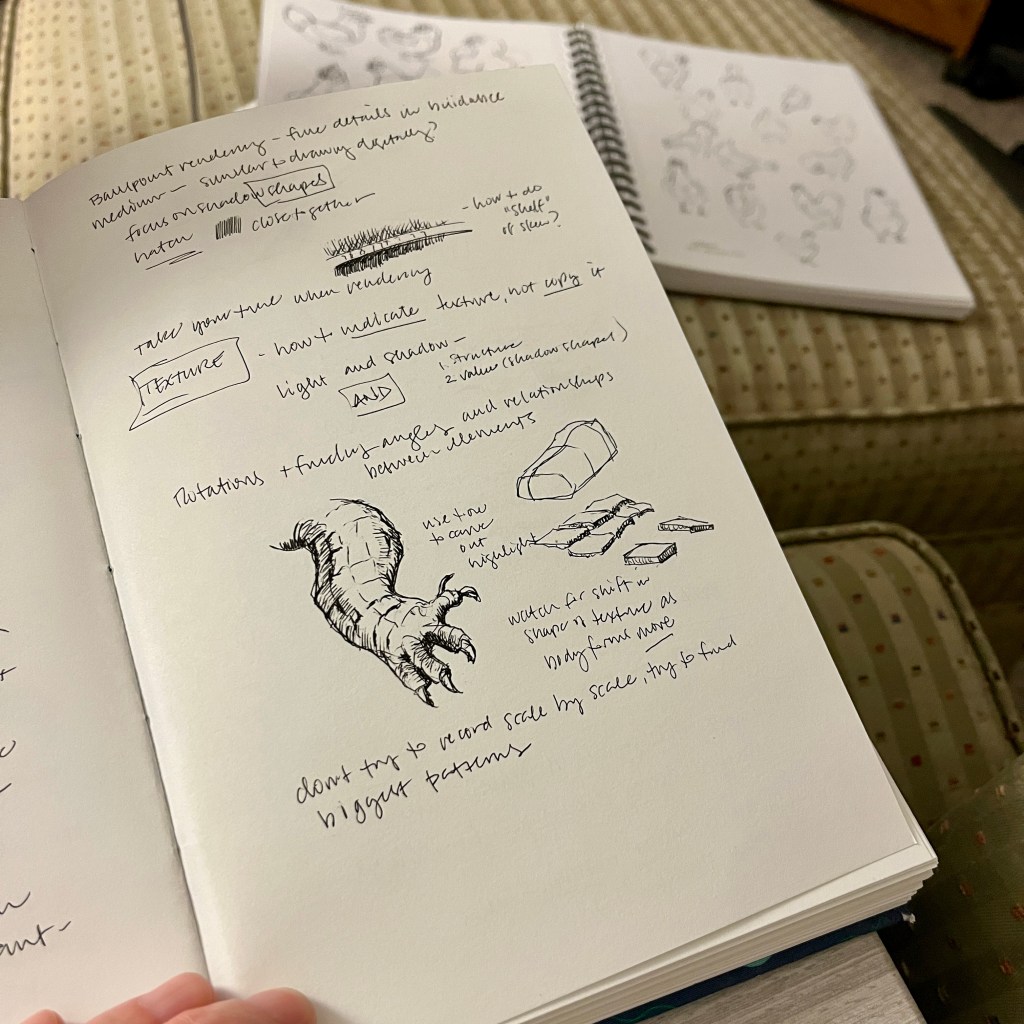
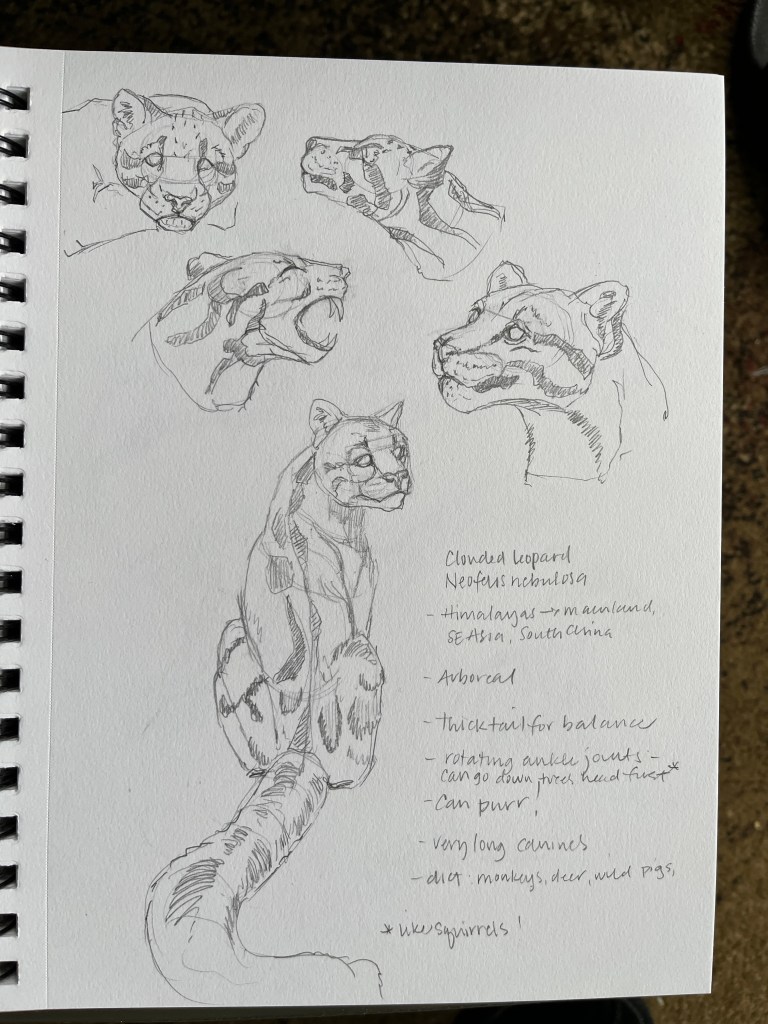
For the master naturalist class I’m taking, one of the assignments was to do some nature journaling… it’s one of the reasons I took this class in this format. One of the other reasons is that this course was 12 weeks long, so I had an opportunity to sit with the information after it was presented.

Here are some of my favorite entries.

We covered A LOT of ground in 12 weeks — birds, plants, fire ecology, mammal tracking, mushrooms, biogeography, geology — frankly, it underscored how much there is to learn, and how little any one of us knows.

It has been an amazing experience.

Uncategorized

Apropos of Nothing…

I wrote an entire post about narcissism this morning, and then decided I probably shouldn’t post it.

Years of social media have turned my brain to mush, in some respects. Look at me, out here, thinking I actually have something important to say about something I’m not remotely qualified to talk about. I have a narcissist in my orbit, and that’s a situation that requires careful navigation, but generally speaking, I can’t speak with authority or certainty about it. So probably best not to wade in those waters.

And frankly, I don’t want my little, tiny corner of the internet to be devoted to other people’s bullshit. There are *plenty* of other spaces devoted to that kind of thing.

So here’s what I’ve been doing lately:

Going to the Bluff

The bluff is my little natural spot for my Montana Master Naturalist class, so I’ve been spending a little more time there, among the Ponderosa Pine and the spotted knapweed (boo!).

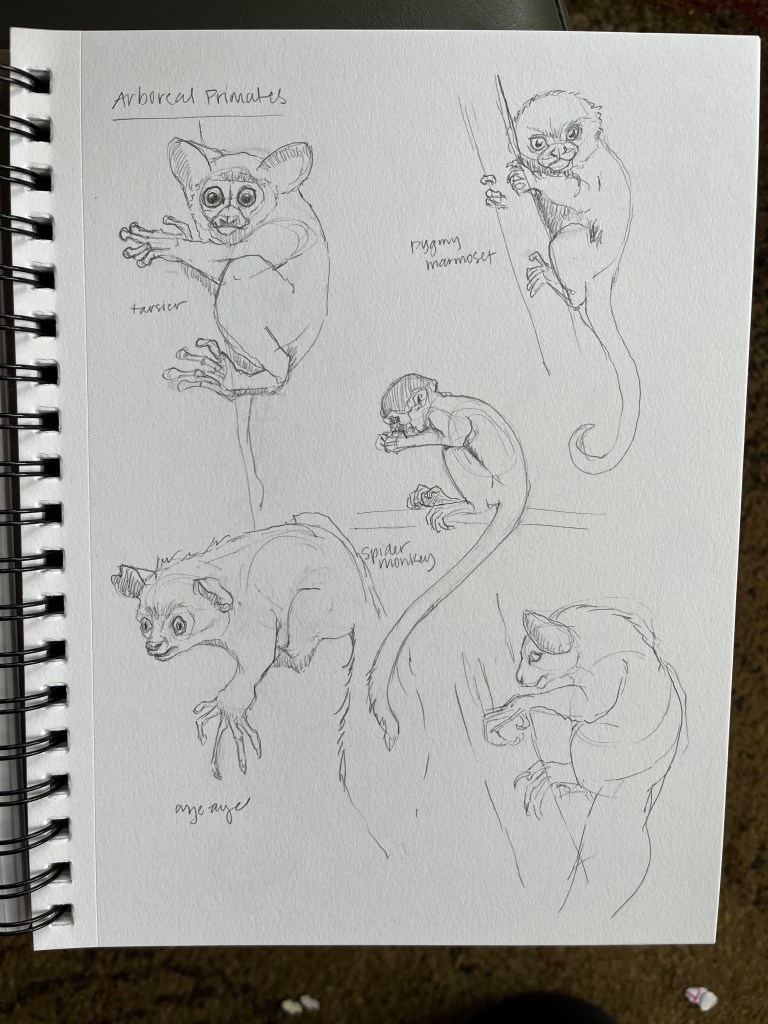
Drawing Animals

I’m taking an animal sketching/creature design class — beginner — on Sunday afternoons. It is super fun, even if I’m not great at it. I love it.

Learning a smidge of ASL

My grandmother lost almost all of her hearing as she aged (both my grandparents did), and times being what they were, she tried to ignore it as long as possible and avoided wearing hearing aids (which, admittedly weren’t all that great to begin with). Her hearing loss became a barrier to social interaction in her later years, which exacerbated her depression and anxiety.

Near the end of her life, she developed a form of dementia, and while her hearing loss likely didn’t cause it, it may have contributed to some of her struggles with it.

My hearing is still good for a person my age, although because of injury or infection, I have tinnitus (and some hearing loss) in my left ear.

This is a start. I don’t know if I’ll ever be in a position to converse in ASL, but I’ll at least know some fingerspelling.

The self-paced, online course is from Ashley Clark Fry, and it can be found here: https://signedwithheart.teachable.com/p/fingerspelling101

(She has a neat Instagram account, too.)

I was awake very early this morning, and to occupy my mind until I could fall asleep again, I practiced fingerspelling animal names… a-l-l-i-g-a-t-o-r… b-i-s-o-n… slowly and haltingly.

We’ll see where it goes.

(And yeah, I’ll be making use of whatever assistive devices are available to me as I need them. Goal for 2023: hearing test and consultation with someone who knows about these things.)

Uncategorized

Halloween 2022

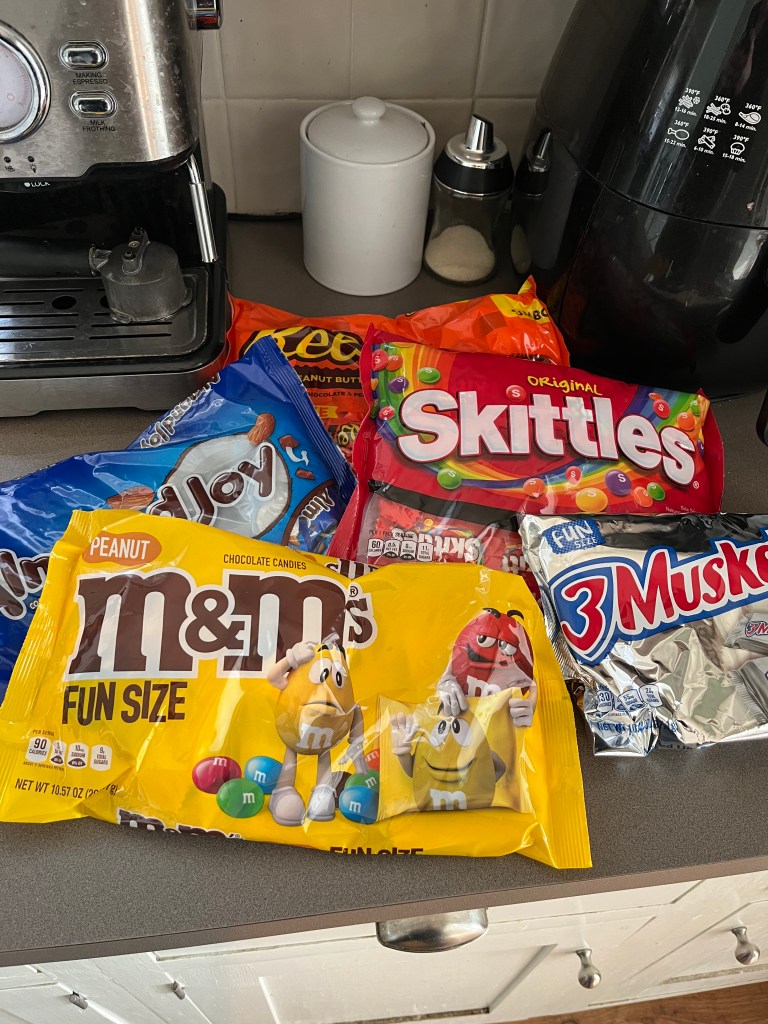
Before:

I try to get the kind of candy I enjoyed seeing in my bucket when I was a kid… and Skittles, for people who don’t like/can’t eat chocolate. It was enough to fill our fruit bowl.

… and let’s face it, the Almond Joy is for me, because I like them. Whatever is left by Halloween will get “shared” with parents, I’m sure.

After:

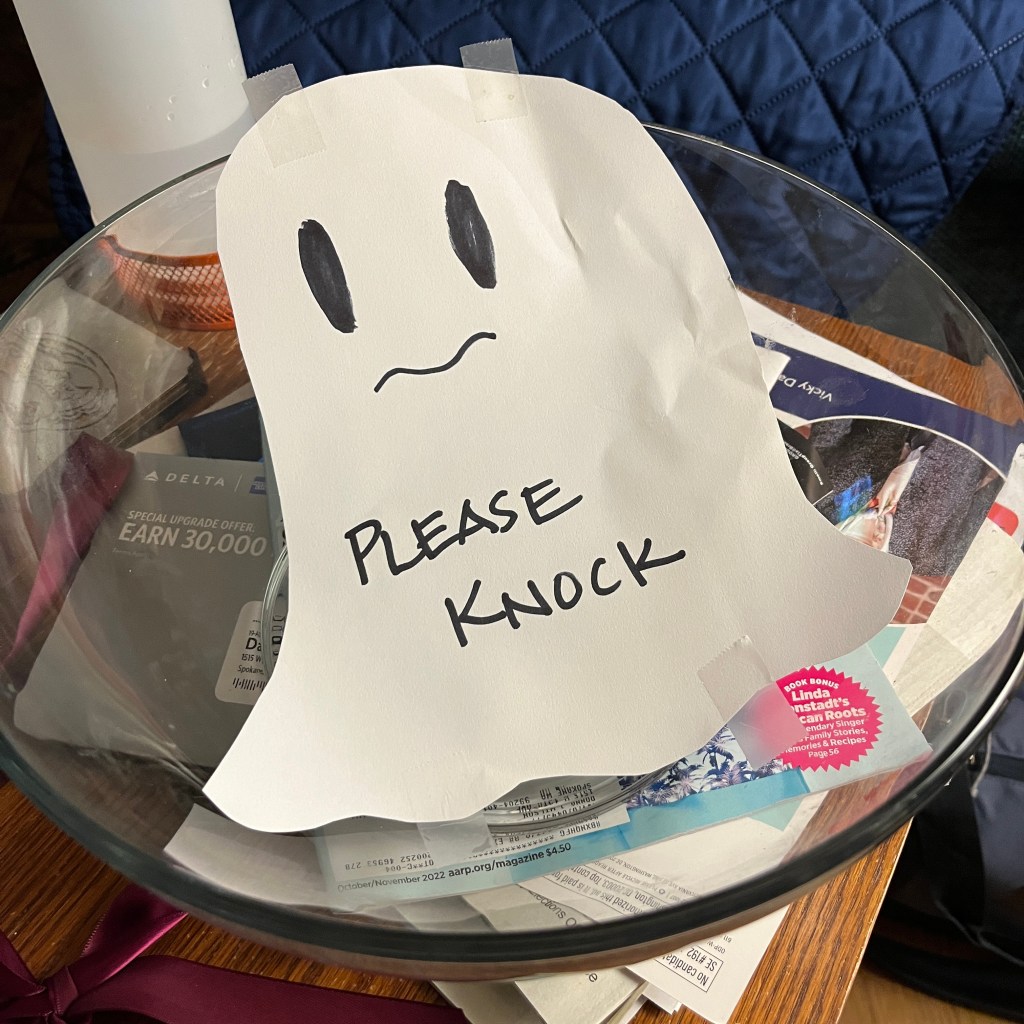
We shut down at 8p, because that’s when our parrot quiets down for the night and we don’t want lots of interruption after then (because irritated parrots are a little bit like tired small children… miserable). It rained a bit during the day, and our block isn’t very active on Halloween, so we weren’t sure we’d get any visits at all. It turned out to be a fairly light night, but the costumes were amazing, it was good to see some parents and dogs along for the ride, and everyone got a decent handful of candy.

Until next year!

Uncategorized

Selfie with a Bear

No. Just… no.

I am seeing or hearing about people trying to get close to wild animals — to make friends or take selfies — often enough that I find it truly disturbing.

Grizzly and black bears. Mountain goats. Moose. Bison.

I’m guessing that many of the people engaging in this behavior will tell you they’re afraid of spiders, or bees. But there’s something happening here if you think you’re in less danger from a moose than from a wolf spider.

For the record, I’m not talking about encounters that happen on the trail. In that case, it’s important for us to understand whose habitat we’re in, and how these animals live their lives, so that we can prepare to mitigate this kind of contact (by singing, or carrying bear spray, or knowing how to behave if you come across a moose).

As for the other thing — random people trying to get good phone photos with megafauna — people seem undeterred. I do not understand it.

Any of these animals will kill you, without hesitation, particularly if they feel threatened. Humans are grizzly-sized snacks. Prey animals will stomp, or gore you. It seems like a terrible way to die.

We even see this kind of human hubris — to a much lesser degree, because the animals are smaller and already working with humans — with birds like him:

Oroville, a Barred Owl who has been in captivity for most of his life. He injured his wing while he was fledging — barbed wire was the culprit — and cannot fly.

I kind of get it with Oroville. He’s small, and fluffy. He has giant dark eyes. He kind of looks kind of like a muppet. We’re programmed (by puppies and kittens) to be drawn to cute animals. And Oroville is nothing if not cute — he is adorable.

But.

He’s designed to kill small animals with his feet. His beak is for tearing flesh.

He’s sassy.

Also, he’s a wild bird.

If he feels like you’ve invaded his space in the wrong way, he won’t hesitate to convey that to you.

A few years ago, after picking up some poop from his floor I stood up right in front of him. I was facing him and he was near a corner — my lack of awareness in that moment led to those mistakes.

Oroville jumped off the perch and hit me in the face.

Was it his fault? Absolutely not. I should have moved more toward the center of the mew before I stood up. I should have turned my back so that I didn’t create the impression that I was trying to ambush him.

Was he trying to hurt me? No. He was trying to get me to go away, or at least to create space between us.

Did he hurt me? Yes. He hit the bridge of my nose and gave me a minor black eye. I hadn’t ever experienced being smacked in the face like that… it’s surprisingly painful. I teared up as my brain processed the blow, and it took a few minutes to stop seeing stars.

This is an animal I’d known/been around/handled for years. This bird is habituated to the presence of people. It was not my intention to make him feel threatened.

But he is a wild bird, and living in human care doesn’t change anything about that, except that he is more bored by our presence than fearful of us… unless we act in ways he thinks are unpredictable when we’re close to him.

When adults ask if they can pet him, I point to my glove, remind them that I signed a waiver, and ask if they like their fingers (that’s a bit hyperbolic… while it’s true that he is a biter, he’s not a parrot).

Moral of the story: wild animals are wild and will behave accordingly. Big enough predators are a threat to us; we are a threat to prey animals and smaller predators.

Defensive behavior is aggressive and can cause harm to people who find themselves in the way of it. (This is true with any animal, including humans.)

Most healthy, well fed wild animals don’t want much to do with humans. An injured, sick, or malnourished wild animal likely doesn’t want much to do with humans either… but desperation has the potential to lead to some dangerous situations.

Here’s the thing: you may not be able to tell by looking that a wild animal is under environmental or physical stress. And I *guarantee* that even if you are an interested observer, you do not have special insight into any individual’s potential response to your presence.

Let wild animals be wild. Learn how to manage wildlife encounters for your safety, and for the safety of the animal.

If you want a close up view of a majestic creature, take up photography with a long lens, or support your local wildlife photographer.

Otherwise, it should be everyone’s goal to give wild animals enough distance to make choices that don’t involve us.

Uncategorized

Social Media Says What?

I am — or rather, I was — a huge fan of Twitter. I follow a diverse group of scientists, birders, artists, pastoral folks (mostly pastors and rabbis, and a couple of Sikhs and Muslims), lawyers, activists, and a couple of politicians I like. I try to make sure that I’m following people who don’t look like me, who don’t necessarily believe the same things I believe, and people who have different areas of expertise.

The world is huge and interesting, and, at its best, Twitter is a good place to get a glimpse of some of the many people, projects, and perspectives that make it so huge and interesting. I don’t agree with all of them, and sometimes I just don’t understand where a person is coming from. But here’s the thing: not one single person on this planet actually needs my agreement or approval to live a full, remarkable life.

I also try to remember that engagement on Twitter is not always real-life engagement. Most of the time, my opinions are not relevant to the discussion, or I don’t have specific knowledge of a topic. I have, occasionally, commented negatively on a specific politician’s obtuseness, or cruelty, or act of bad faith… but I’m getting better at keeping that stuff to myself, because at least some of the time, these folks are just out here trying to get a rise out of the masses. It’s cheap, meaningless, and unserious — my input on Twitter does nothing to change that.

And then there are the trolls, groups of small, petty people who like nothing better than to wait in the wings with a “well, ack-shull-ly…” They offer no insight, add nothing to the conversation, and are just generally unpleasant. Also, many of them seem to enjoy being asshats.

And because there is no accountability on Twitter, it seems to breed this kind of dipshittery.

But, see, here’s the thing: I don’t need to put myself in the way of disagreeable, unpleasant folks on Twitter. I can choose to spend time elsewhere.

So, at least for the next few weeks of Election season (ugh.), I will be taking a break from the socials… mostly… because there’s really nothing better than dog reels on Instagram…

Enjoy this plant.

This is Yarrow. It volunteers in my yard, and I do nothing to stop it,
because a) it’s native, and b) it’s medicinal.
Uncategorized

The Best Homework

Montana Master Naturalist homework is the best homework.

I said what I said.

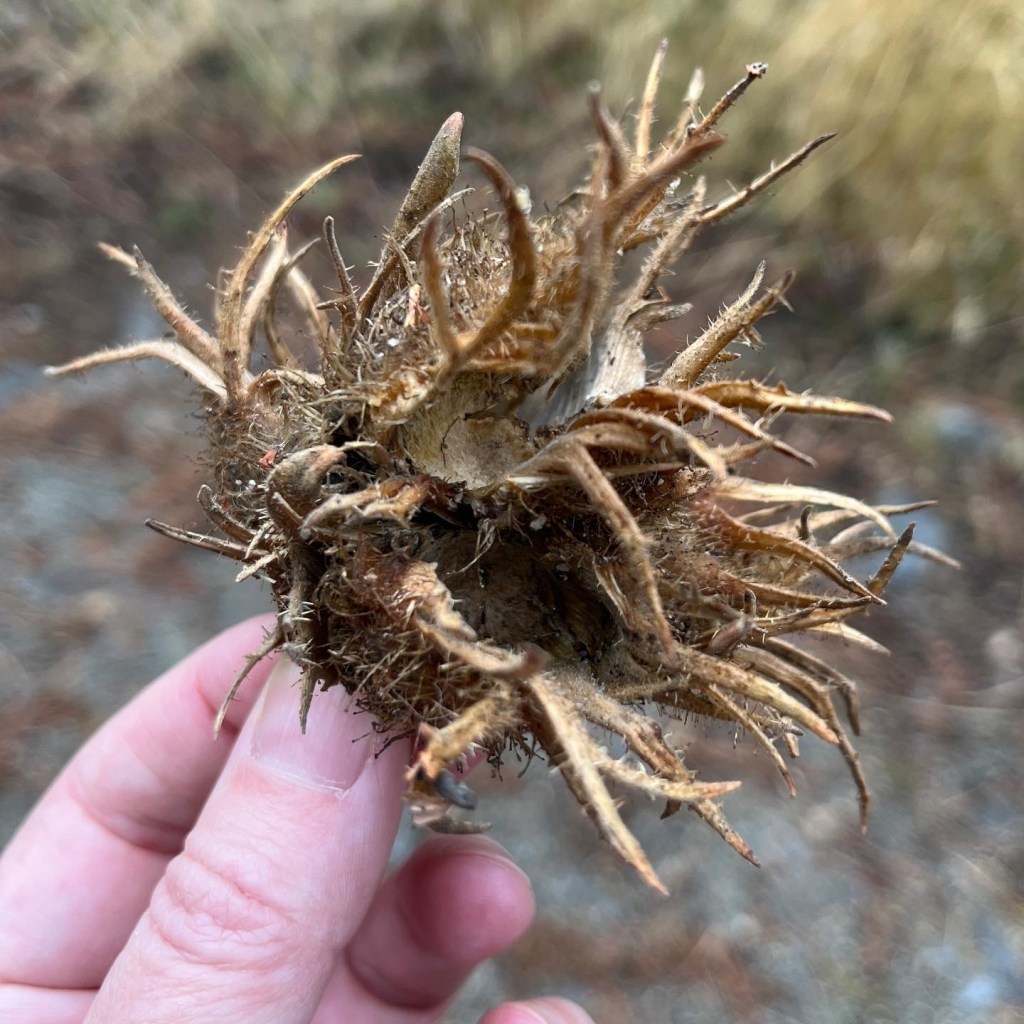
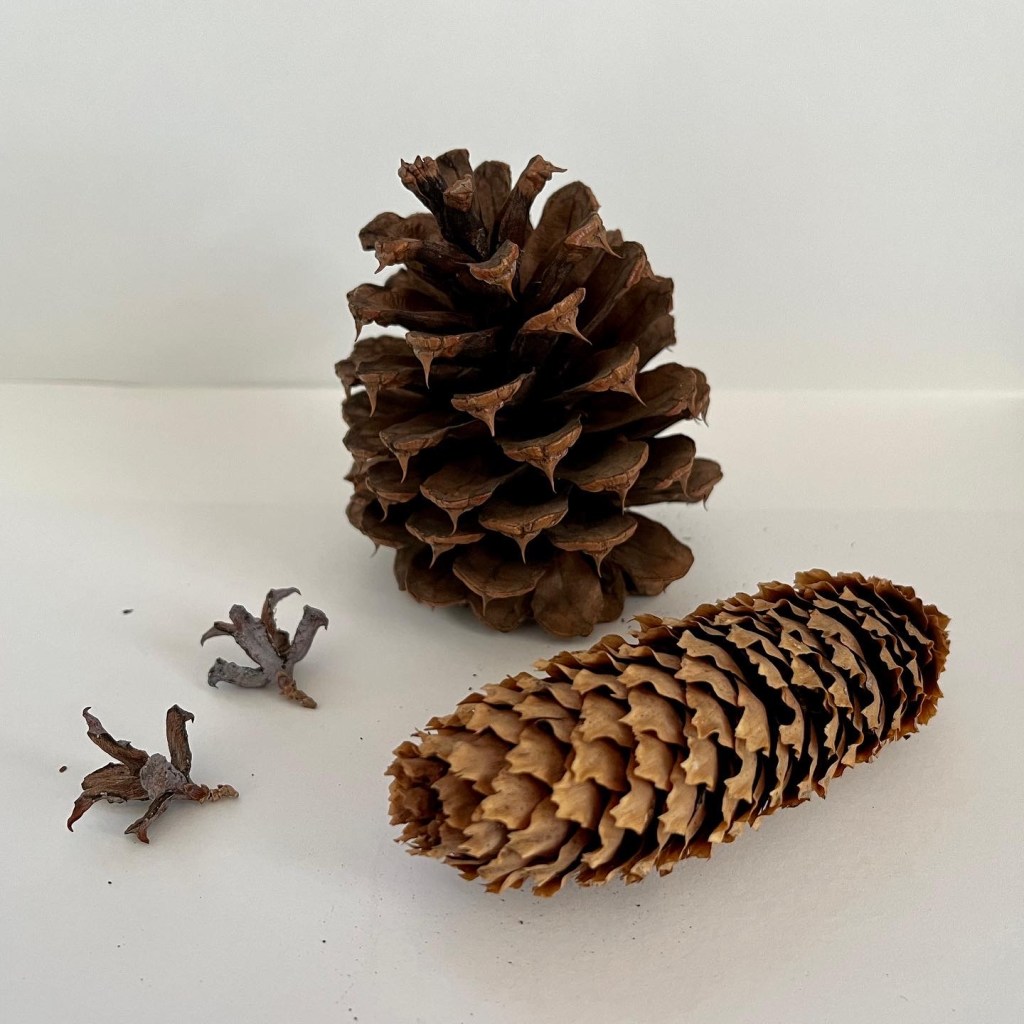
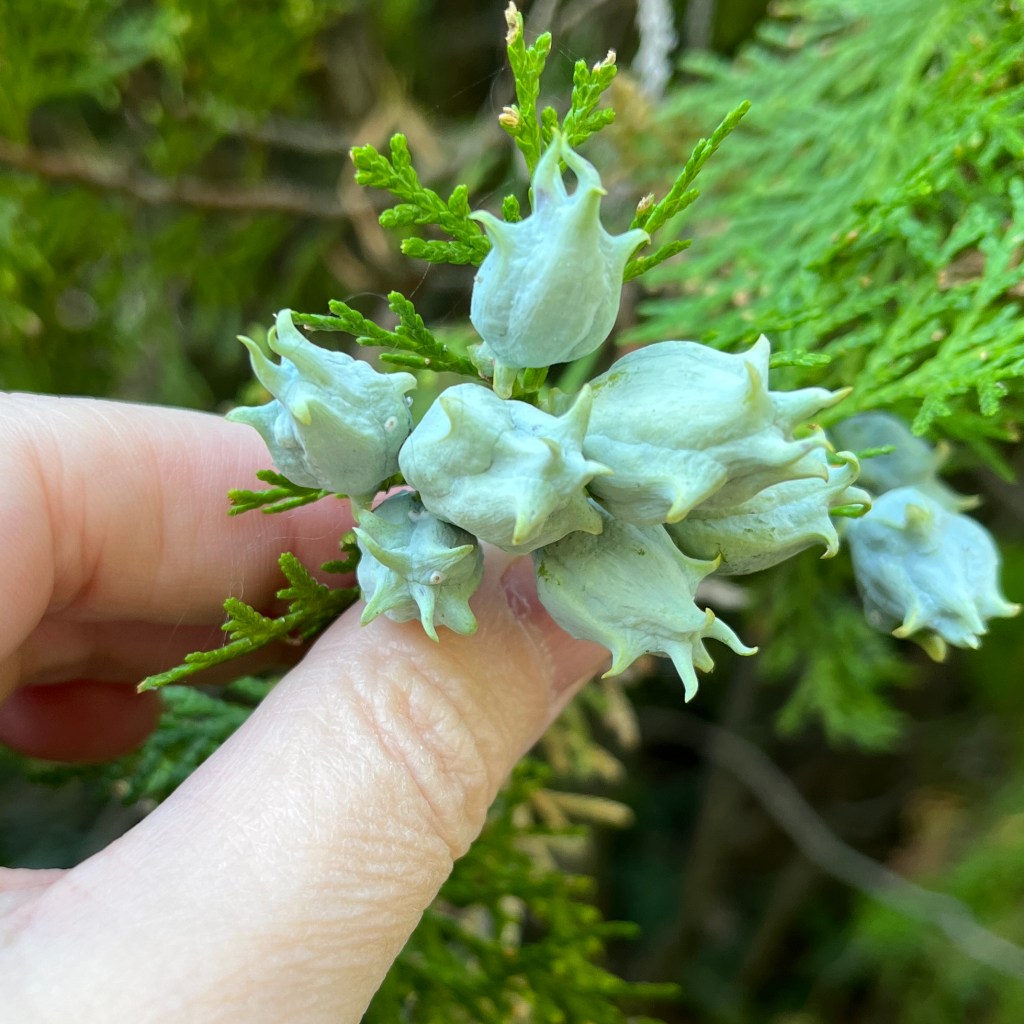
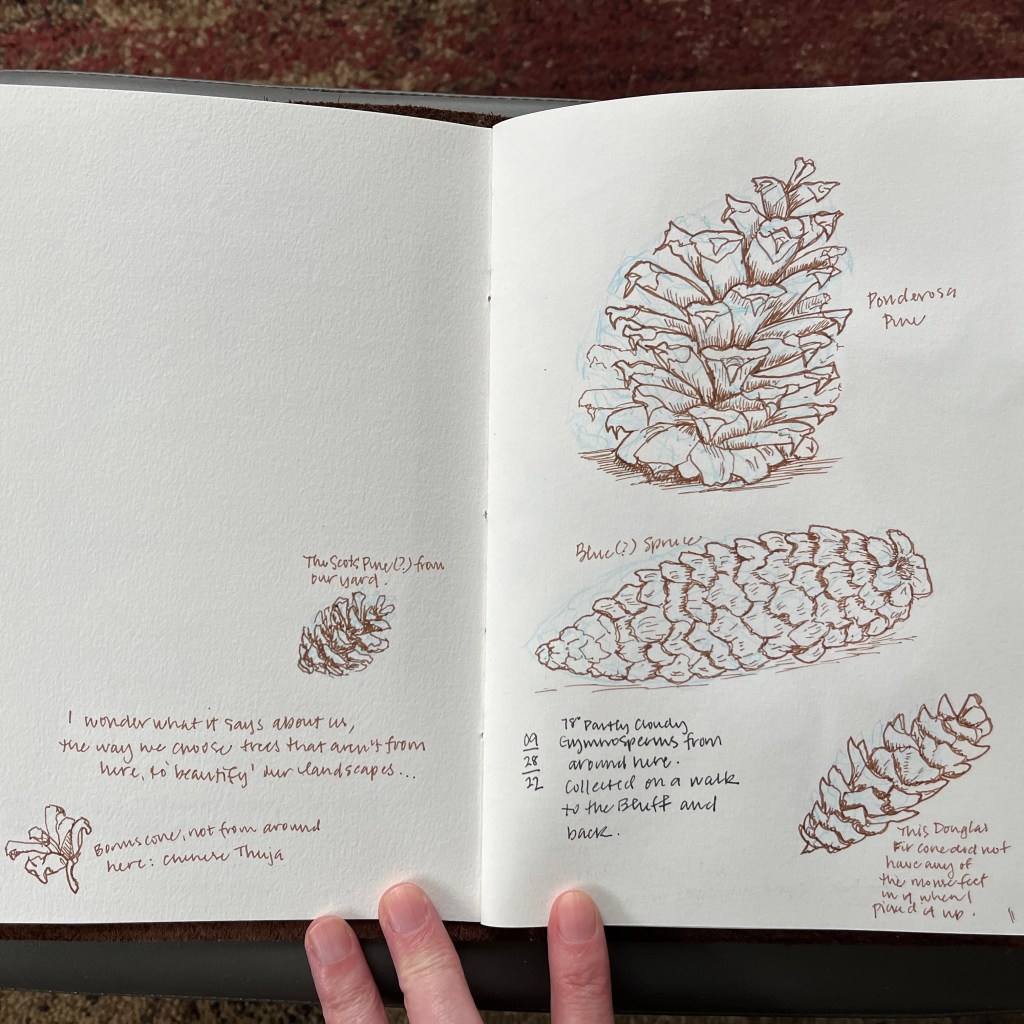
Cones foraged from a walk. The top is from a Ponderosa Pine, the lower right from a spruce (likely Blue), and the ones on the left are from a Chinese Thuja, an ornamental landscape plant that has some really wild cones.

Like a lot of folks, I suffer from plant blindness. It’s not that I can’t see them, it’s that I choose not to, and it’s a bummer, because native trees can tell you a lot about the soil/weather/fire conditions of a place.

Also, what doesn’t belong (because it’s invasive, or pretty in the landscape) can tell you about the relative health of the ecosystem and/or the values of the people who live in a place.

Chinese Thuja has distinctive cones — apparently it’s a member of the cypress family, but the only species in the genus Platycladus (binomial is Platycladus orientalis). Really not from around here, but apparently somewhat popular as a small landscape tree in my neighborhood.

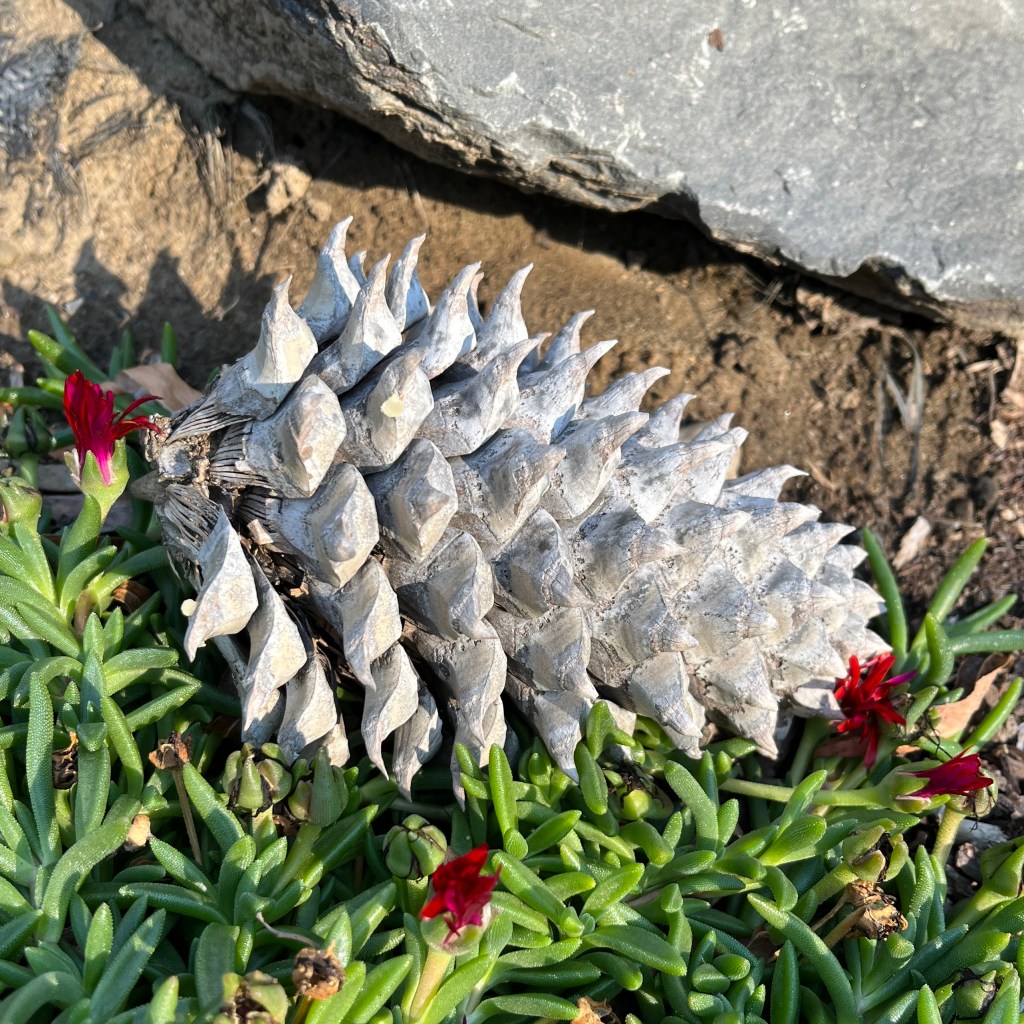
The Towani pine (Pinus sabiniana, aka gray pine, ghost pine, foothill pine) is also very much not from around here. I was walking by a house in my neighborhood and saw the cone in one of their flower beds. I couldn’t find the tree that it came from and it was the only one I saw (is it a decoration?), so I took a photo and moved on. (The Picture This! app says this cone is very dry, and the tree it came from might be dead.) Very cool cone, though, right?

So anyway, I’m trying to change the plant blindness situation… it’s going to take a while.

(P.S. I only take cones that have fallen from trees that I can identify nearby, and only if I can reach them from the sidewalk or trail. You don’t have to worry about this crazy lady foraging for interesting seed-bearing structures in your yard or park.)

I’m working on a nature journal page of interesting cones, and these are my models… not bad. Add a Doug fir (another super common tree in the area, and a sugar pine cone (not from around here, but I have one on my mantle), and I’ll call it good.

Last week we talked about fungi and lichens… another couple of cans of worms that are huge and interesting, and that I now still know nothing about, but understand why people might find them endlessly fascinating.*

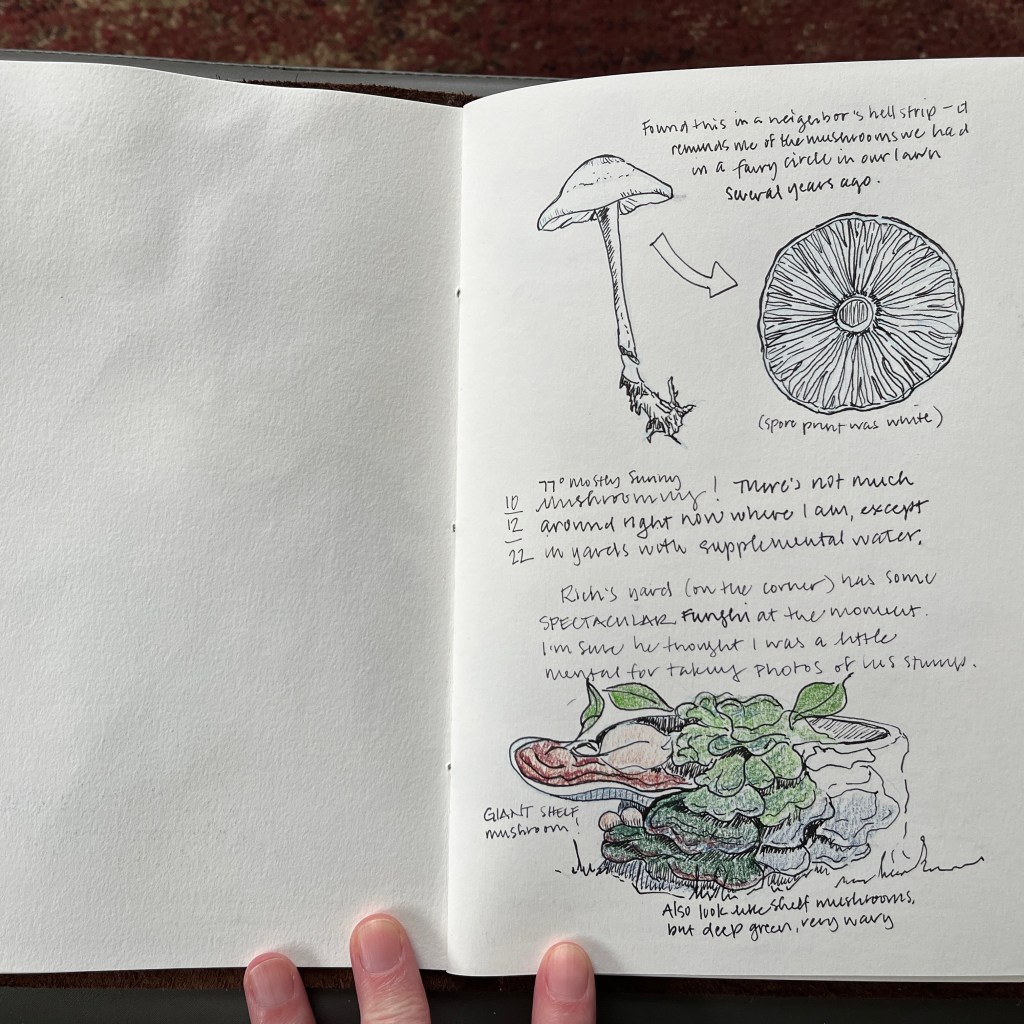
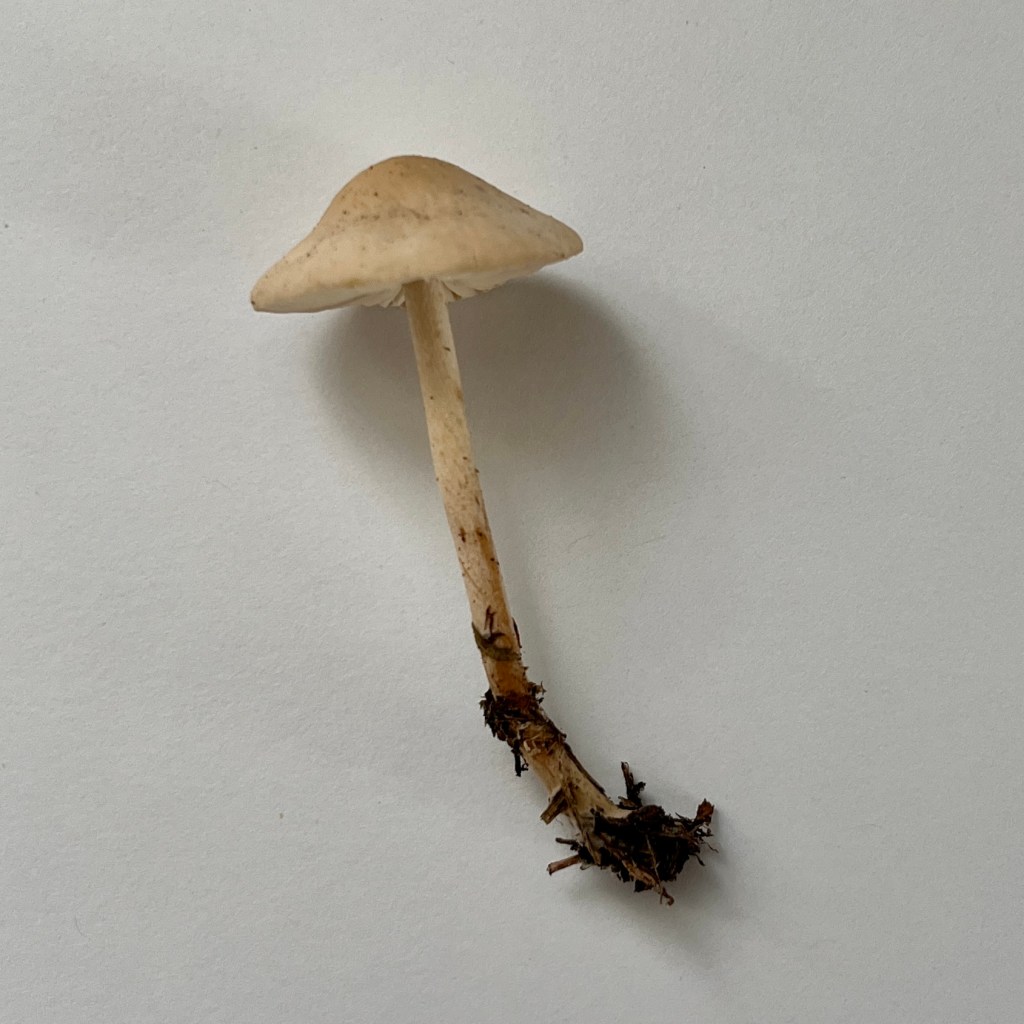
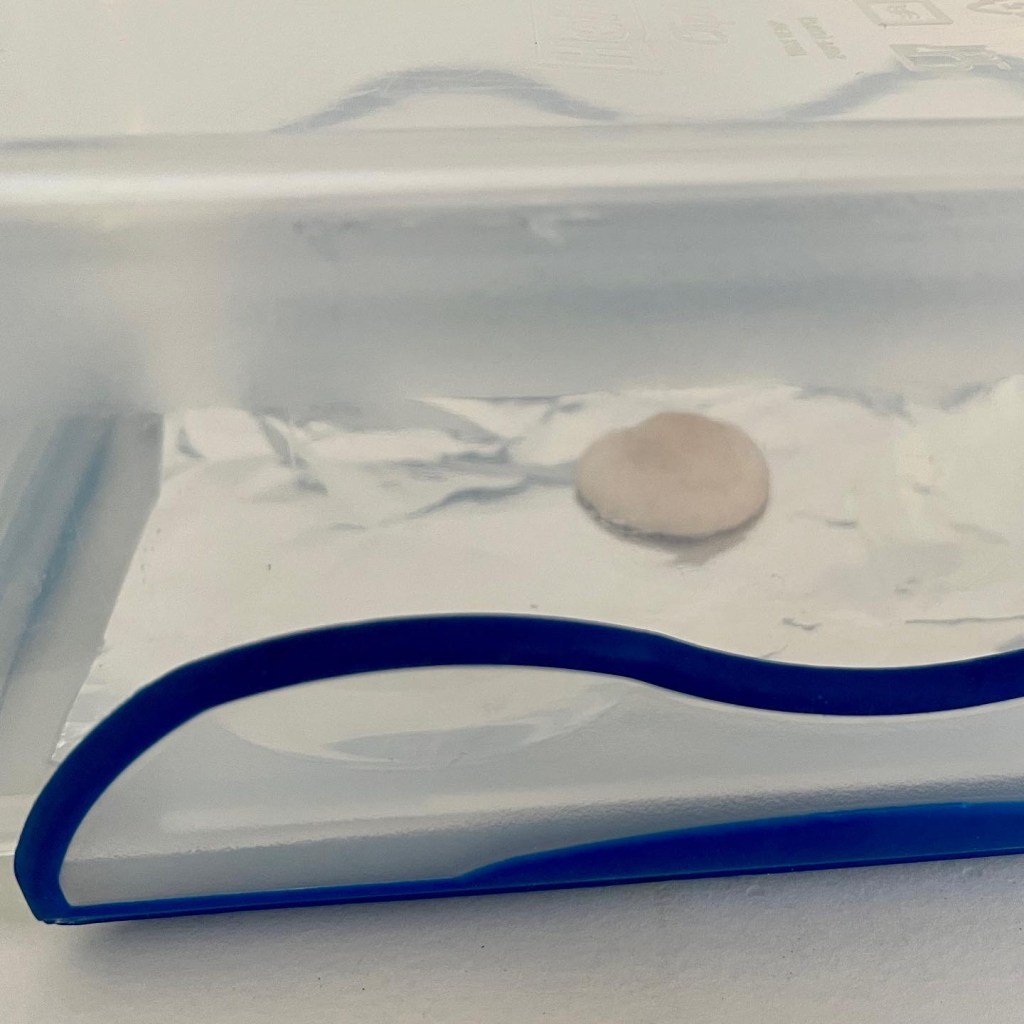
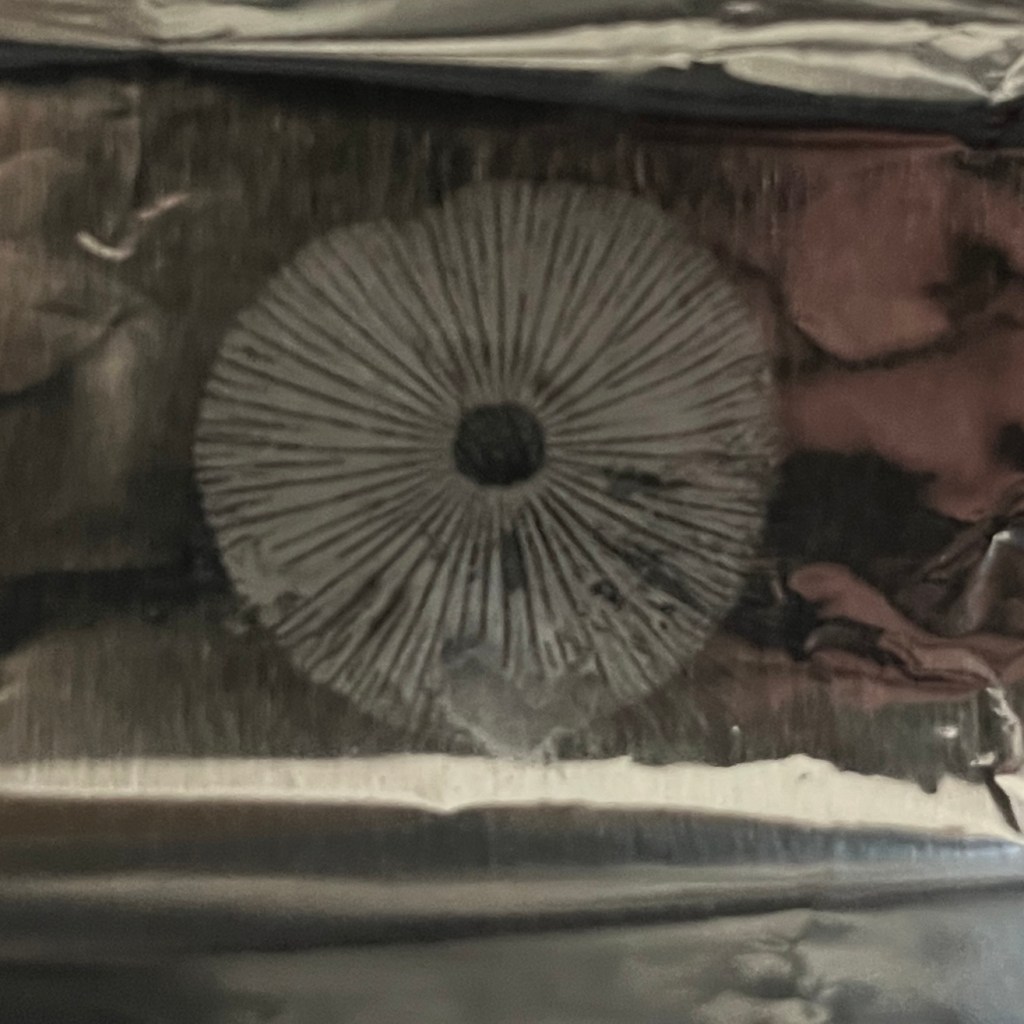
I have no idea what kind of mushroom this is. We’ve had a very dry couple of months here, so the places I would normally expect to see fungus… it’s either not happening, or the fruiting bodies are too mature to take a spore print. I was disappointed, because we actually have some shelf mushrooms (like Turkey Tail mushrooms, but I’m not going to hazard a guess that they actually are Turkey Tails) growing from willow stumps in one of the mews at the Outdoor Learning Center, but I couldn’t get a spore print from it.

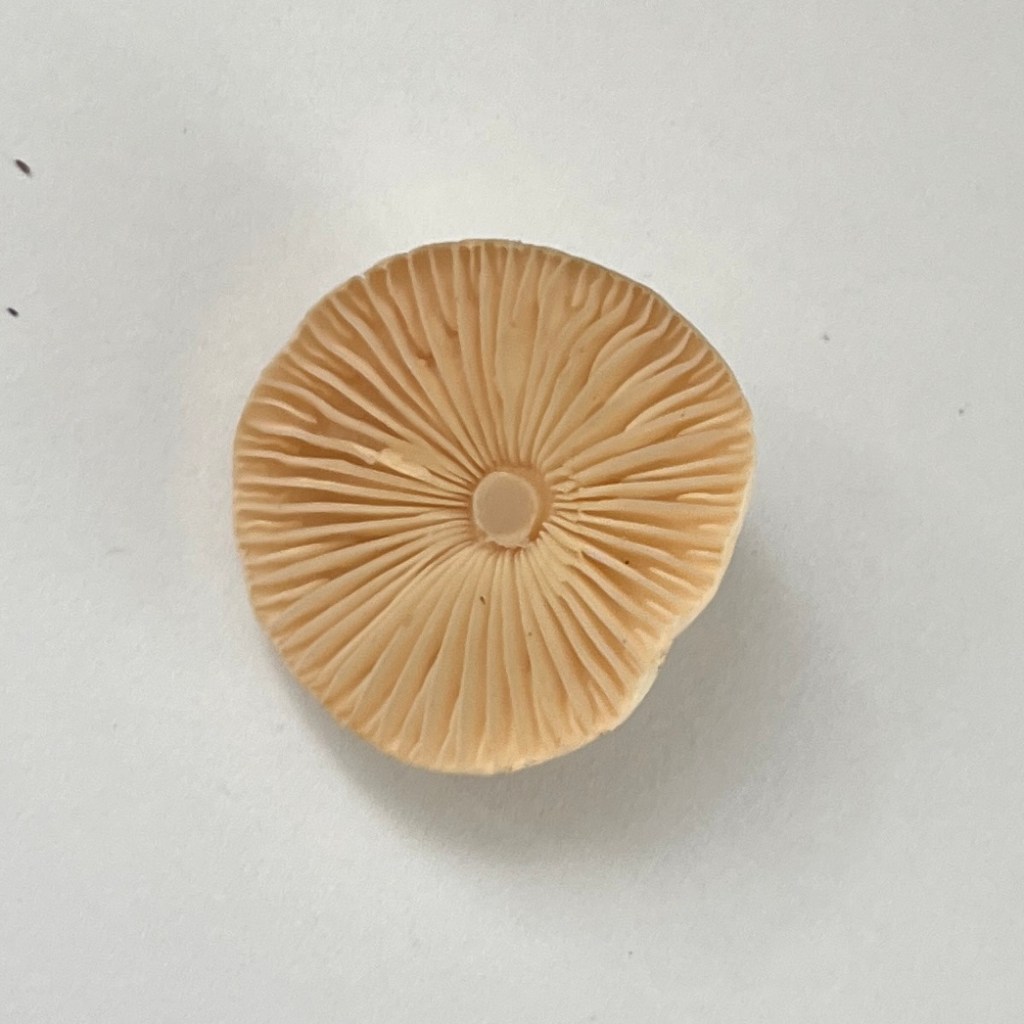
This mushroom was foraged from a neighbor’s well hydrated hell strip. The substrate: grass and the soil that supports it. (I bet we had these when we had a fairy circle in our front yard many years ago.) I made the spore print on aluminum foil in case it turned out white (good call on my part), and was excited that I actually got something… this was my third attempt (with different mushrooms).

I’ll have to sit down with a key and see if I can figure out what kind of mushroom this is.

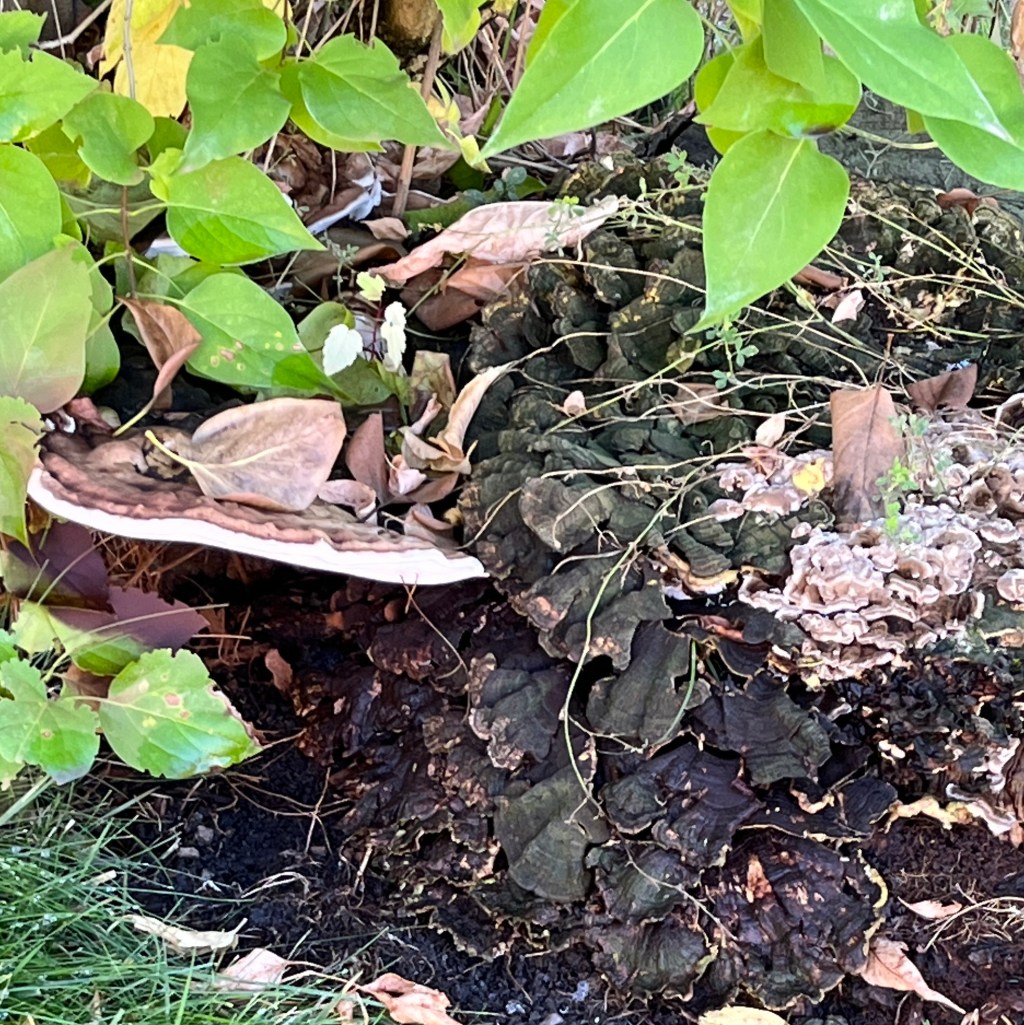
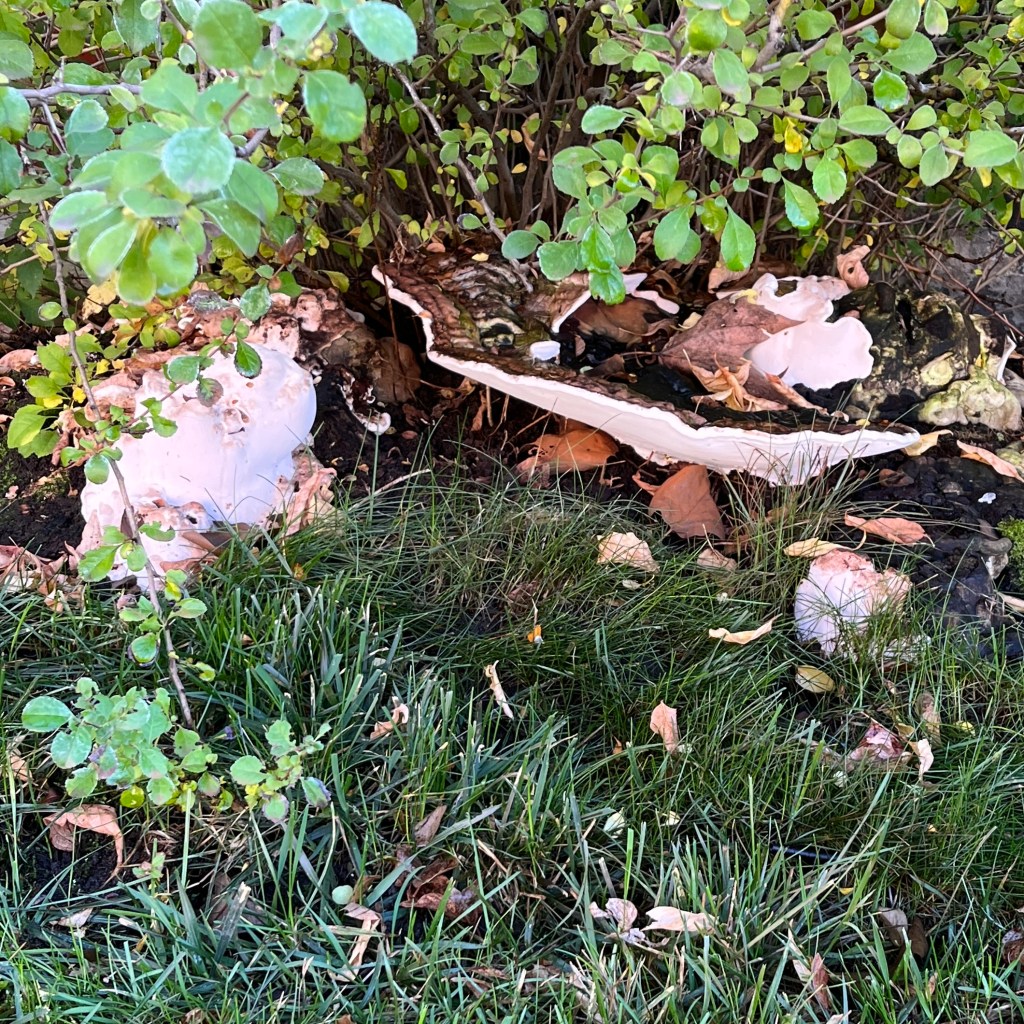
There are actually some really impressive fungi in my neighborhood, but I’m not going to forage my neighbor’s yard to get to them (at least not without asking first). These are growing from stumps in a yard that receives supplemental irrigation.

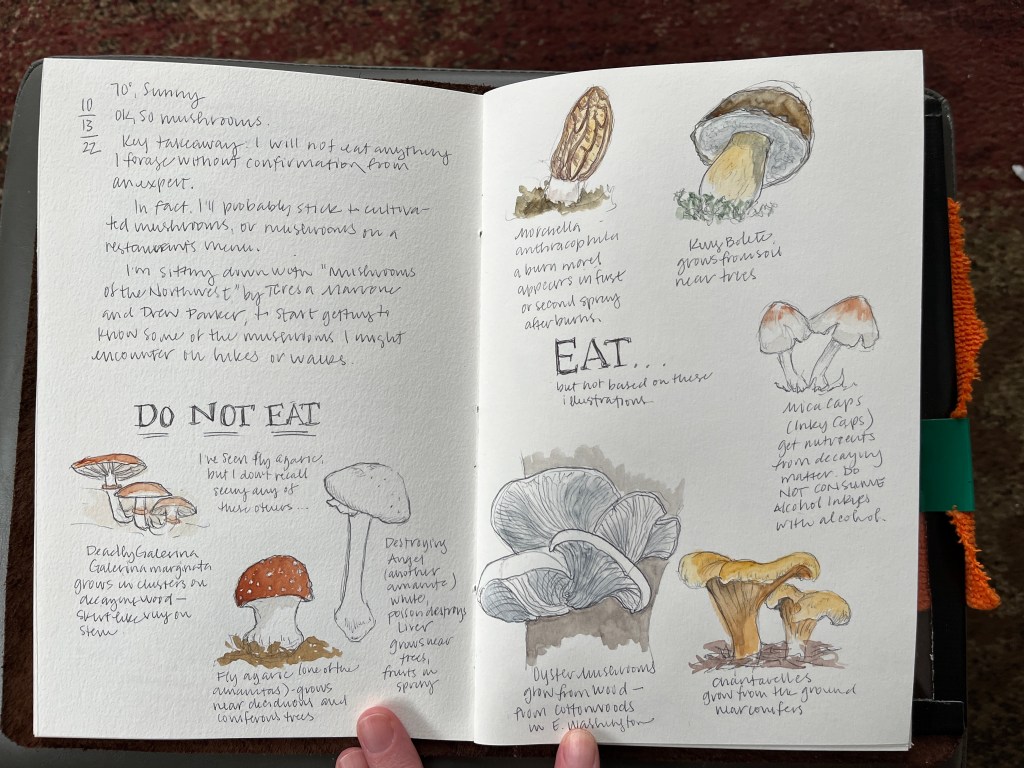
Here’s the main takeaway from our mushroom class: I’m not going to eat any mushrooms I forage without first consulting with a mycology expert… absolutely not. In fact, I will likely stick to cultivated varieties (or morels on a trusted restaurant’s menu).

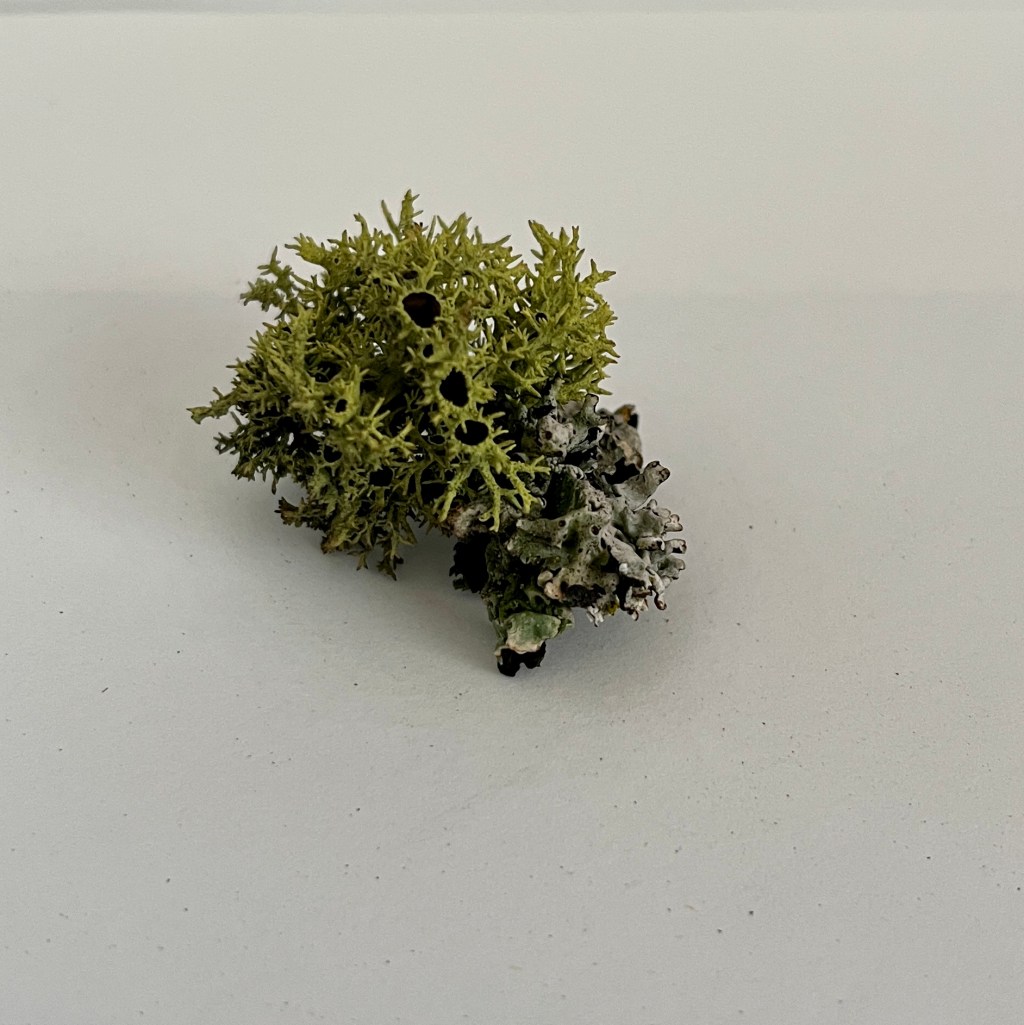
Lichens are endlessly fascinating as well. Again, we’ve been pretty dry in an already dry summer region, so most of the lichens I’m seeing are of the crustose variety, low growing on rocks and bark. This little sample fell into my lap (or rather, in front of my feet), though, and I scooped it up to look at at home:

Don’t know the species, but do see some foliose structured lichens near the bottom right,
and a fruticose structure just above it.

I have to make some time to look at this through my loupe, because no doubt it is exquisite up close.

Are lichens organisms or ecosystems? That is the question. They’re made of fungi (sometimes more than one!), algae, and sometimes, cyanobacteria (what?!). Weird and wonderful.

And apparently, Montana is a hotbed of lichens and people who study them. (Go Montana!)

I love this stuff.

* I think this is the purpose of a master naturalist class — to be exposed to a lot that you won’t actually know much about at the end, but to create an understanding of why these subjects are important, introduce the idea that there are experts in all of these topics, and instill some empathy for people who are very excited about these subjects.

Uncategorized

Goofy Garden Plant

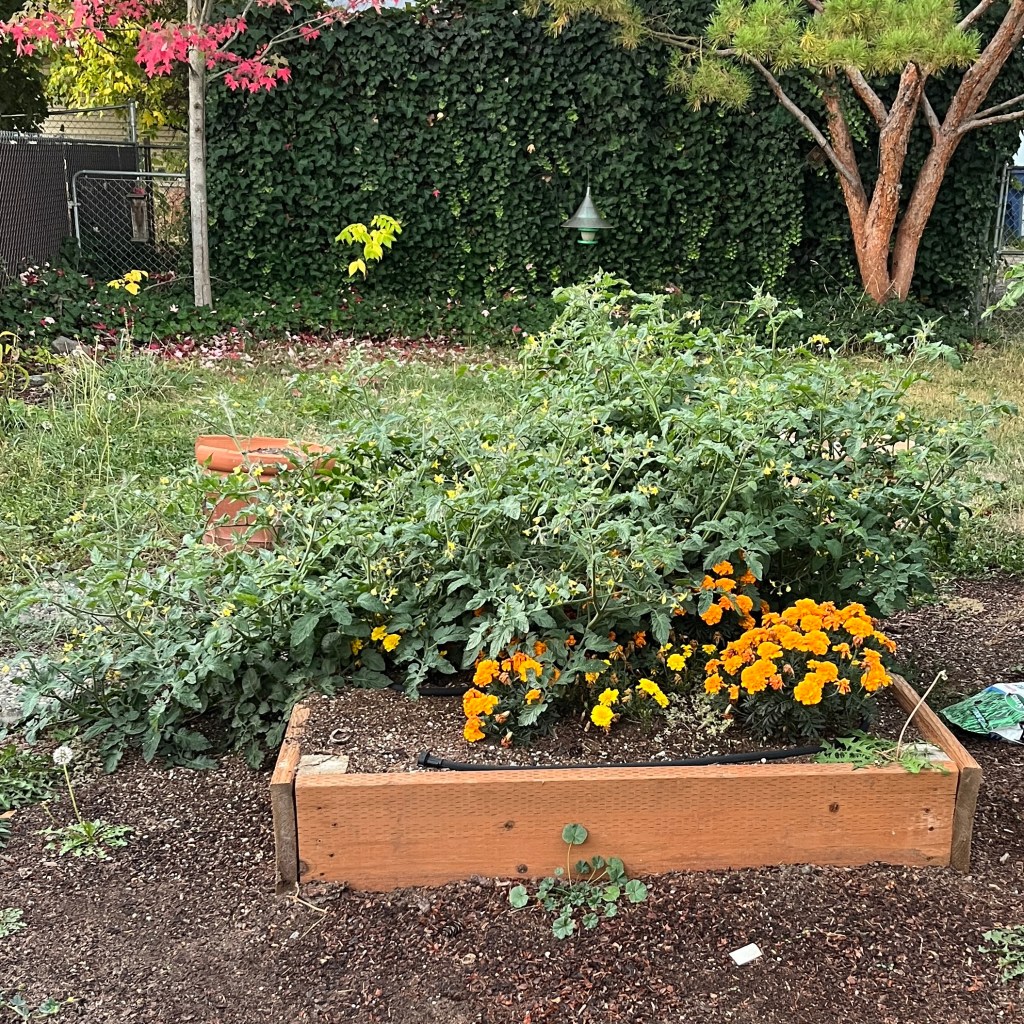
When I looked out to the backyard this morning, I was struck by our volunteer tomato plant.

Yep, that’s a mass of tomato plant… it volunteered this year.

It started coming up pretty late, and we didn’t put it there. This bed is mostly empty this year (except for a couple of pepper plants and some marigolds) and frankly, we didn’t think it would actually do anything.

And really, it hasn’t, except dwarf the pepper plants (which provided a smidge of shade in the hot afternoons, and helped the bed retain some moisture). It fruited, producing a few — not pleasantly edible — rock-hard tomato “berries.”

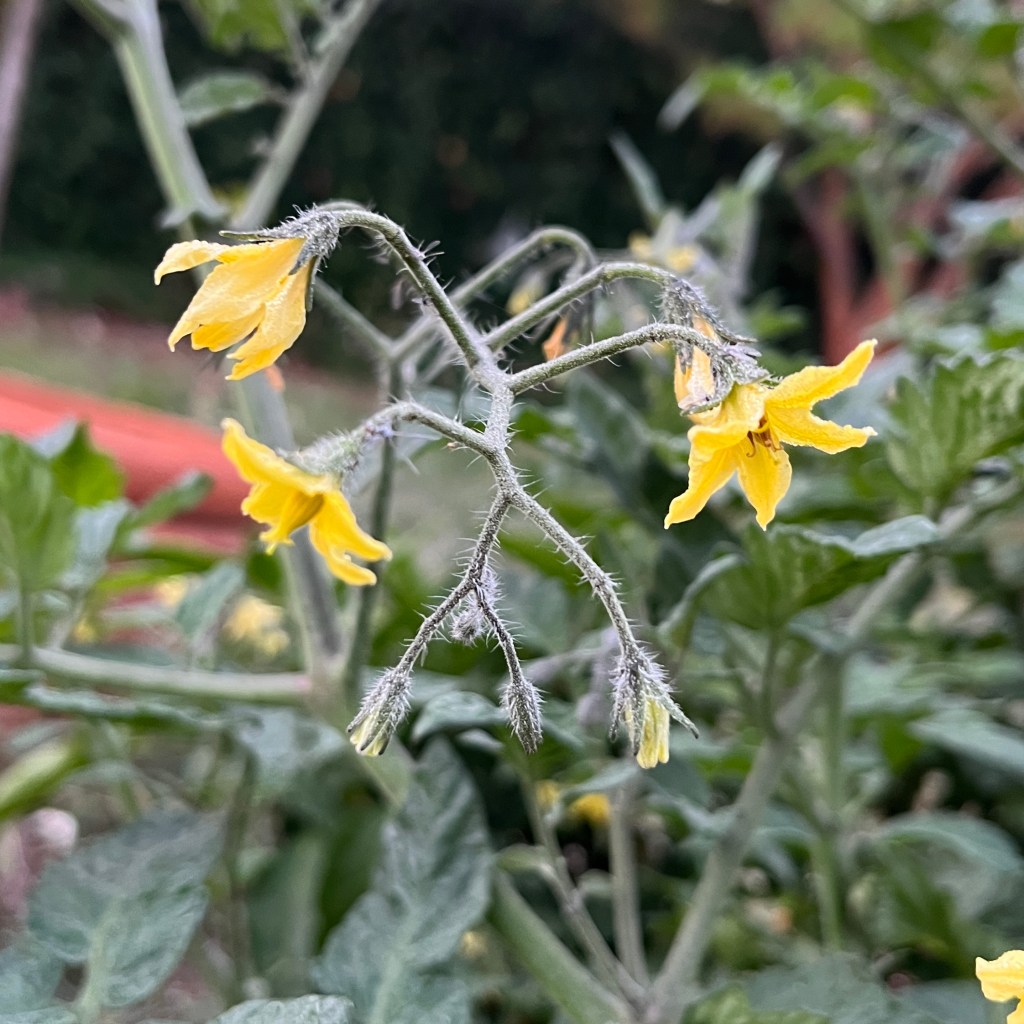
But it is the middle of October, and it’s still doing this:

Uhhhh…

I haven’t seen any bees in the last week or so, and this plant is still pumping out flowers like it’s on a mission.

I mean, I suppose it is… a very desperate mission, at this point.

I’ll be taking out the garden plants over the next week (it’s taken this long for our daytime temps to get below 75 degrees), but I’m pretty amazed at the tenacity of this rough-and-tumble volunteer tomato.

Uncategorized

Explosion of Cuteness

Dinosaur Edition

I have a collection of plastic animals. It started when I was studying natural science illustration, because an instructor recommended using small plastic animals for research — not because you get an idea of what the animal actually looks like or how it lives, but because:

  • the toys can provide a cursory idea about how body masses exist in proportion to one another in a side view,
  • you can rotate the toy to get a cursory understanding about how the body masses exist in relationship to one another in perspective, and
  • they’re good to sketch before you encounter the live animal so you have a sense of how the animal is structured in three dimensions.

Also, they’re fun to collect. (You probably won’t be surprised to learn that I am not alone in this endeavor, although I have not — yet — built shelves dedicated to my collection.) I have quite a few mammals, reptiles, birds, and even some dinosaurs.

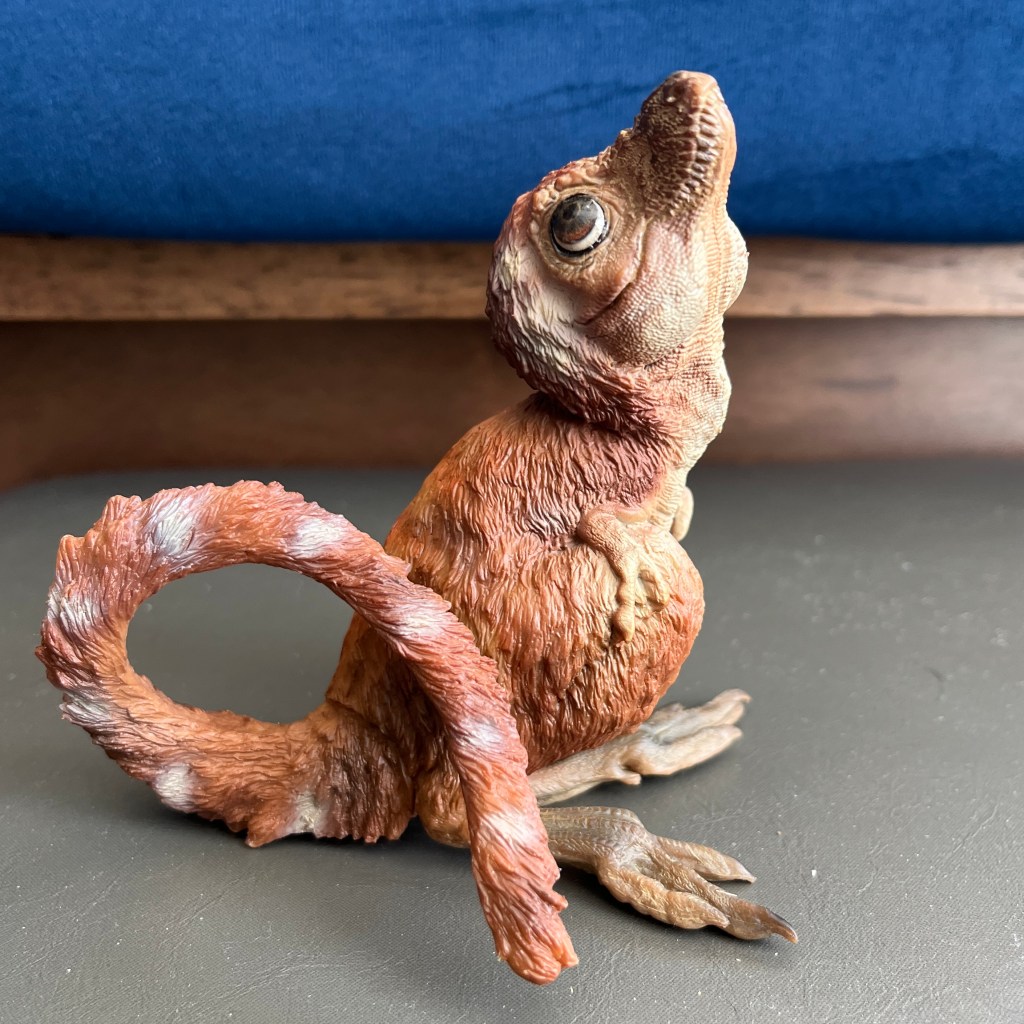
I ran across these online, and I was intrigued…

… because they’re cute babies.

They’re from a company called PNSO. I found these models at Amazon.com, but I’m sure they’re available elsewhere. One of the lovely things about these is they come with an informational brochure, so you can get some insight into how the model was created, what design choices were made and why:

I appreciate that these little ones have gestural qualities in the way they’re posed, but they don’t lose the basic structures of their bodies. And they have some of the hallmarks of cuteness that we all recognize: round bodies and large eyes.

These are delightful additions to my collection. As I continue to explore animal and creature anatomy, I think they’ll be really fun to work with.

Uncategorized

Some Personal News

As a young child, I was convinced that being able to read and write was an adult conspiracy to keep the kids down. I felt that if I could crack the code on those two skills, I would be made in the shade.

And then, thanks to patience of family and teachers, and mostly normal childhood development, I did. I learned to read and to write, and it. was. glorious.

I couldn’t get enough of either.

When it came to (hand)writing, I became a pen and paper snob. Hardcore. Still true to this day. If I have to write for any academic purpose, I draft long hand, on paper. I have so many sketchbooks and journals (and it’s only gotten worse since I started making my own)…

As for reading, I spent a whole bunch of time in my school and public libraries.

Guys, they let you take books home, and you don’t have to pay for them! Any books you want! And then… you can bring those books back and GET MORE. (And now, you can even get movies.)

Libraries were made for kids like me, who appreciated a little bit of order and some peace and quiet.

The librarians of my childhood were some of my favorite people. I could go to them with any requests for subjects (dancers, mysteries, biographies…) and they had recommendations for me, and almost always, they were very good recommendations, even when I was like, “I want to read about a smart kid who nobody gets… and I want the story to have a dog in it.”

I volunteered in my middle school library at lunchtime, shelving books, working the desk, doing easy office work. The space was quiet and felt safe. And I felt like I knew what I was doing (that part may be debatable, but it was a nice feeling for a 7th/8th grader).

Over the years, learning to navigate the library for information became a source of personal pride, and power. The more I used the library, the better I got at using the library. The more I explored how information is structured and shared, the better able I was to navigate that world.

By the time I got to college, I could navigate libraries — any libraries — with ease. It was back in the old days — as libraries were transitioning to digital — when card catalogs were still a thing, when publication indexes (I really want to say indices here, but whatever) were printed volumes, and when interlibrary loan was the way books and articles were shared. ILL was my research lifeline, and I used it happily and often.

When I started working after college, I moved into networked information sharing (the internet was around, but not as widely used as it is now), and I got to work with some really elegantly designed databases. A good database is beautiful, and powerful, and supremely useful. (A poorly designed database is a pain in the ass. It takes enormous skill and a lot of practice to make a robust, elegant database.)

While living in NYC, I investigated an MLIS, which would have taken me back to a library of some kind, but a) I would have had to quit my job, and b) I would have had to take out massive student loans. I couldn’t afford to do either, so I shelved the idea. It was the right decision at the time.

Fast forward to now. My graphic design “career” is on ice (killed by a combination of my loss of interest, a bunch of interesting volunteer commitments, and pandemic response), online instruction has gotten a lot more refined, some graduate programs have started catering to people who already have lives, and a few of them have dropped the GRE requirement.

I found one of those. In January 2023, I start the MLIS program at San Jose State University. Completely online (since 2009!), fully accredited, no GRE requirement, and I won’t have to take out loans.

It’s bittersweet, because although I will be a librarian at the end of it, it is unlikely that I will work in a traditional library. Libraries are perpetually underfunded, and the cultural expectations for librarians — as substitutes for social workers — are wildly inappropriate. (Social workers have skills and training that librarians do not. Like librarians — and teachers, and nurses — they are also under-appreciated, under-resourced, and underpaid.)

And while I would love to be as influential for some kid as my school librarians were for me, schools don’t hire MLIS grads much anymore — many school librarians are paraprofessionals these days. (This is not a knock on paraprofessionals in any way, but working as a school librarian with an MLIS is less realistic than it used to be — you’re more likely to be in management outside of the library).

So I hope to combine my experience with my interests, and work with information in digital spaces. There will probably be some programming, and maybe some of my design experience will come into play. I would love to find a way to combine my interest in climate change mitigation/natural resource conservation/naturalist experience with this new endeavor. The world is big, and exceptionally diverse — there have to be points of connection somewhere.

I’m excited. I share interests with a lot of people who can’t be fenced in — they need to be outside, or teaching, and some of them want to be in the back country. I may be able to do what they don’t want to do; sit still long enough to share information and data. Maybe we can help each other out.
Uncategorized

Day in the Life of a Volunteer

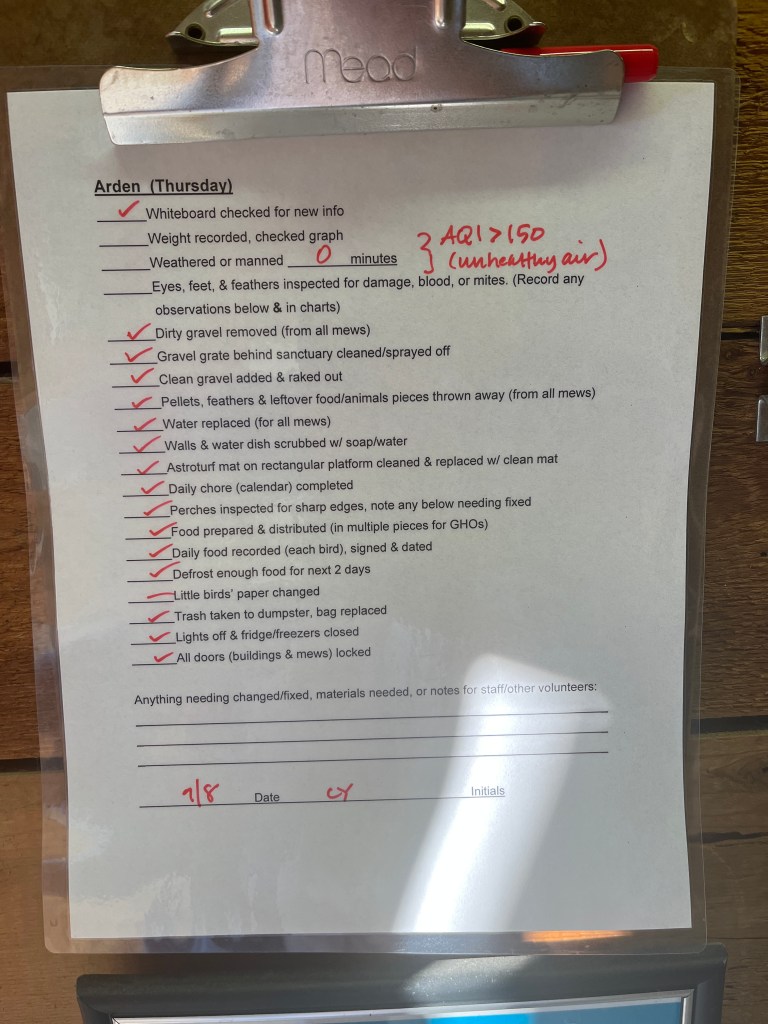
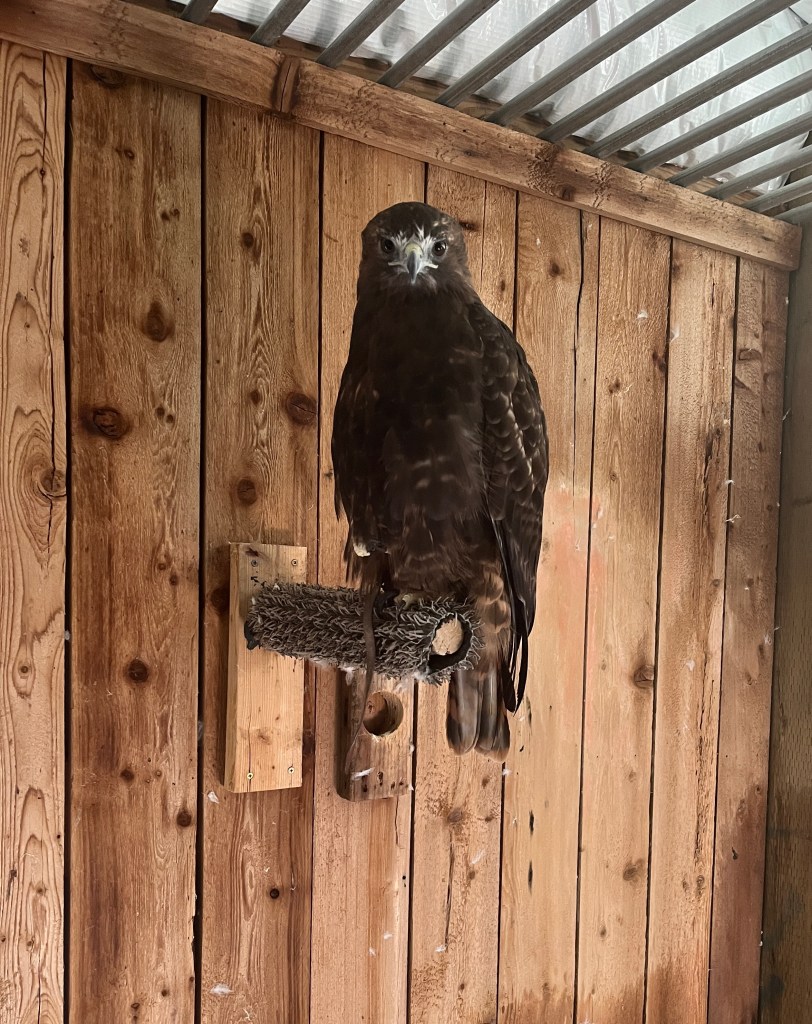
I am a volunteer. My choice of volunteer work: being a raptor docent. I love birds… in particular I love these birds. And I think the work that they do (and, by extension, at their direction, I do) at the West Valley Outdoor Learning Center is important.
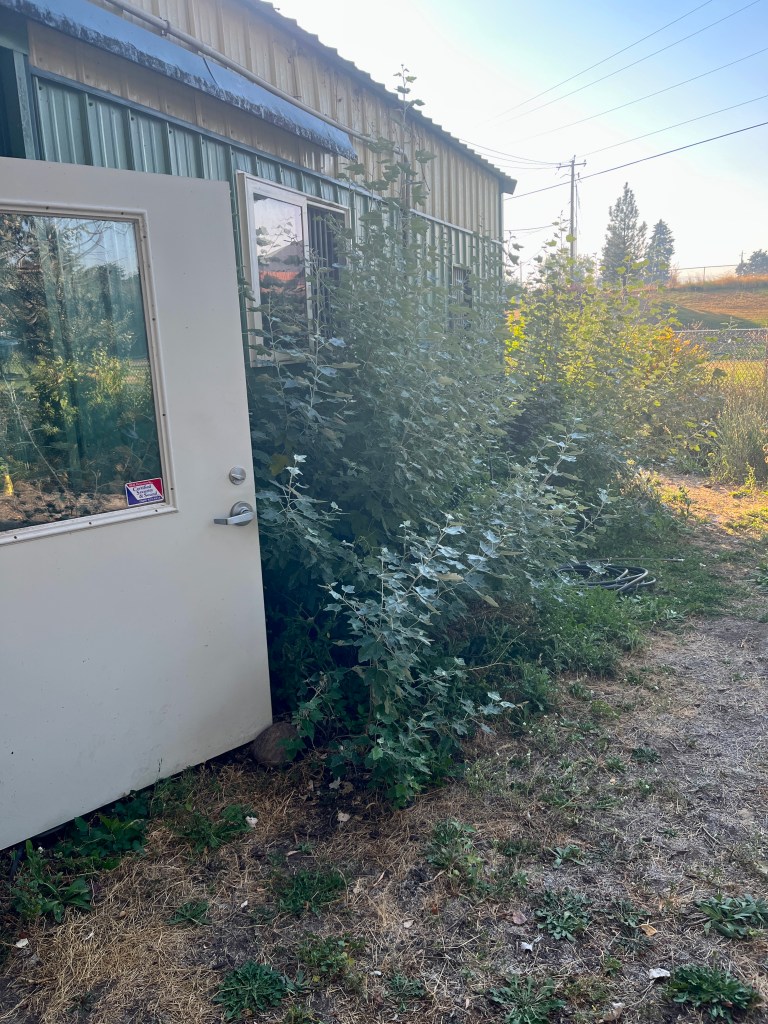
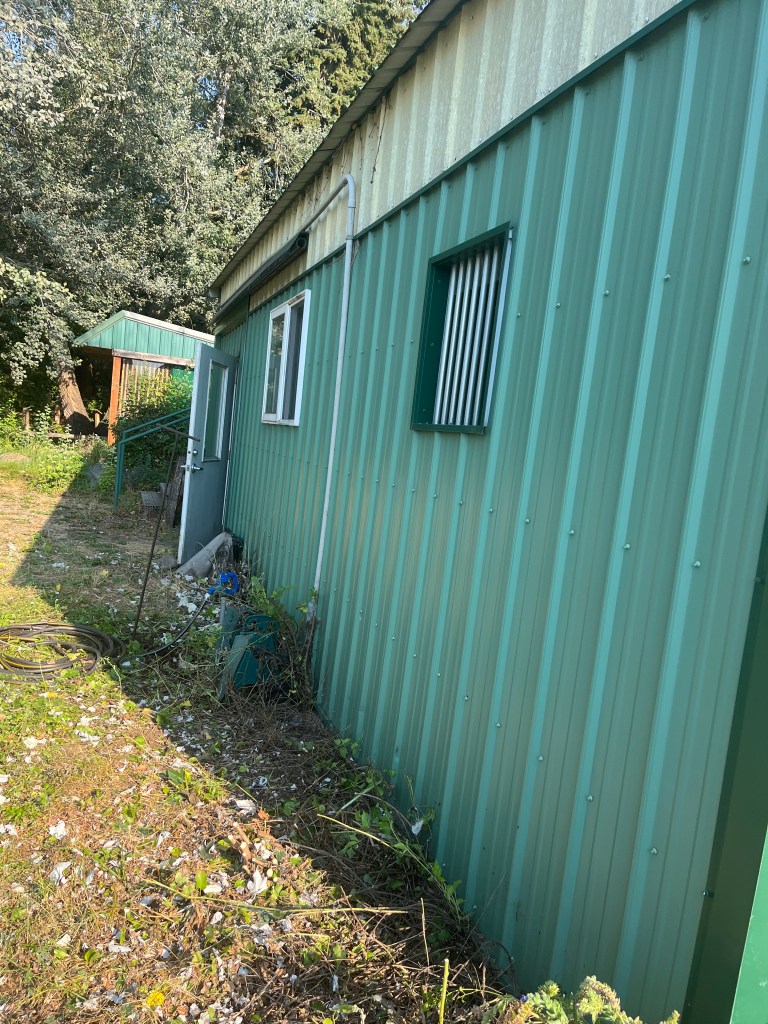
Mostly it’s basic chores: cleaning, watering, and feeding.

Today, it was also maintenance to the building.

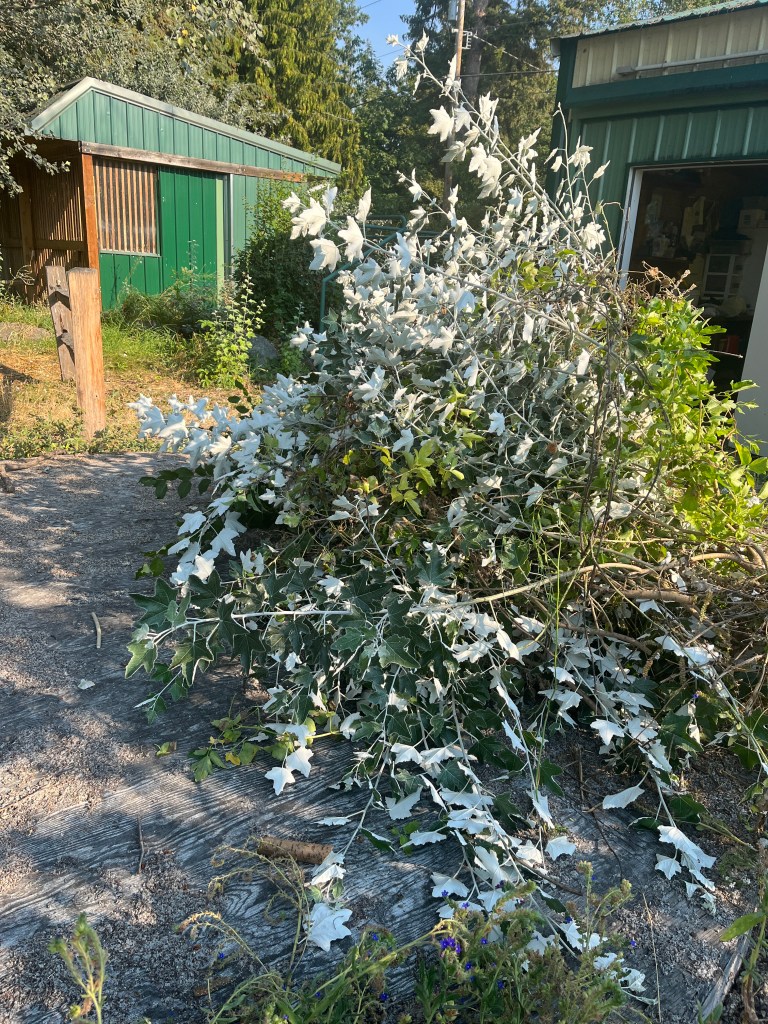
We’ve got some pesky cottonwood starts that someone who knows what they’re doing needs to take care of, but until then, we cut them way back in the fall. (Unfortunately, they’re kind of nice in the summer because they provide a smidge of dappled shade, but they’re difficult to work around in the winter.)

Some Boy Scouts are coming on Saturday to help with grounds maintenance, and the concern is that there will be a lot of noise and activity that some of the birds will find vexing. So today I cut back the vegetation by hand and put it in a pile a little bit removed from the structure.

There’s still more to do, on the south side and north side, but it’s a start.