Coding · Studenting · The Personal Project · Volunteering

This summer sucks.

Confession: a big part of that is on me.

[I am in a mood today, and I feel like screaming into the void. (Sorry, not sorry) This post is even more skippable than most.]

I mean, for a little bit of context, am I the one snatching legal residents from the streets of Spokane? No.

Am I causing uncertainty in the markets by threatening/misusing tariffs, defunding the Corporation for Public Broadcasting, “re-appropriating”(?) funds to spiff up a “free” jet, and building a $200M ballroom at the White House? Also no.

Am I sending congressional propaganda email polls to my constituents in WA-5 (do you think the US should bomb Iran, or should Iran be allowed to build nuclear weapons unchecked? Oh, I see, those are the only options in that situation…) and chirpy weekly newsletters about how I’ve met with three constituent groups and explained to them that the Big Beautiful Bill is the best thing that ever happened to America? LOL, most definitely not.

[Quick aside, though, to Congressman Baumgartner (Harvard, ’02*): given the demographics of our district, you’re going to be re-elected for as long as you want to hold the office. How are you going to manage your next term, after that bill starts limiting access to Medicaid in earnest, given that our district will be one the most impacted in the state? “Waste, fraud, and abuse” are rampant at the federal level (see “free” jets, ballrooms, firings/hirings, and paying people not to work), and your party has given over the power of the purse to the executive. You enabled (funded!) secret police to indiscriminately snatch people off the streets. And, um, you might want to steer clear of talk of high moral character. So, Mr. “fiscal conservative” who campaigned on economic responsibility, protecting the southern border, and family values… what’s your plan?]

Ok, off the soapbox, and back to business. Yes (waves arms), all the things are a monumental buzzkill. But here’s the thing: I don’t actually have any control over any of that. So when I say that this summer has been icky, I’m not talking about all the things. I’m taking about the fact that I made a couple of dicey choices:

  1. I took two graduate courses this summer (because I need to get through this degree before it either goes away or becomes too expensive to continue — another set of circumstances I preemptively blame Congressman Harvard* for). In my defense, one of them was a one-month, one-unit seminar on copyright law. It might have been manageable, if I hadn’t added the second course. Where I really messed up was taking a web development class — a 15-week spring/fall course that was compressed into a ten-week summer semester. BIG. MISTAKE. (It’s a good class, and I know way more about CSS inheritance and precedence, grids/flexboxes, and media queries than I did before, but I would have gotten more from it, had an easier time of it, and enjoyed it more, with a little bit more time.)
  2. And then, to add insult to injury, I took on an additional weekly volunteer shift. Ugh. By the time I realized how messed up that was, it was too late to back out of it without creating a lot of work for a few other people. (It would not have been advisable, or fair, for me to say “whoops, my bad” when I volunteer for a small, heavily volunteer-staffed, environmental education organization whose few employees take a much-needed quasi-break during the summer.)

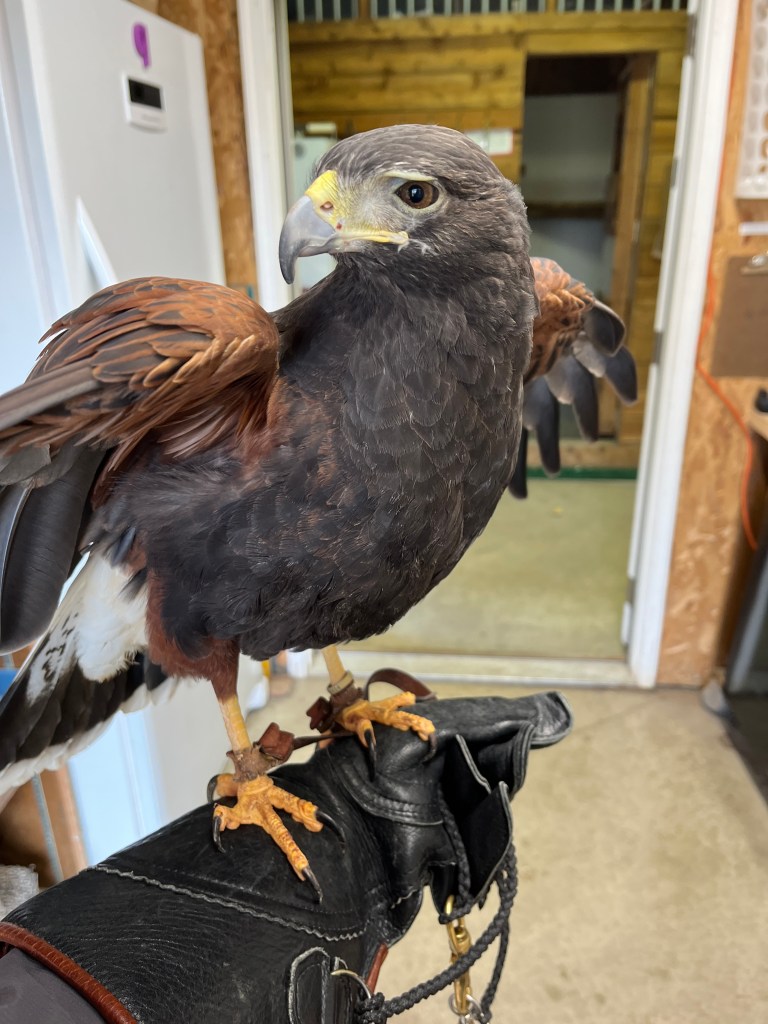
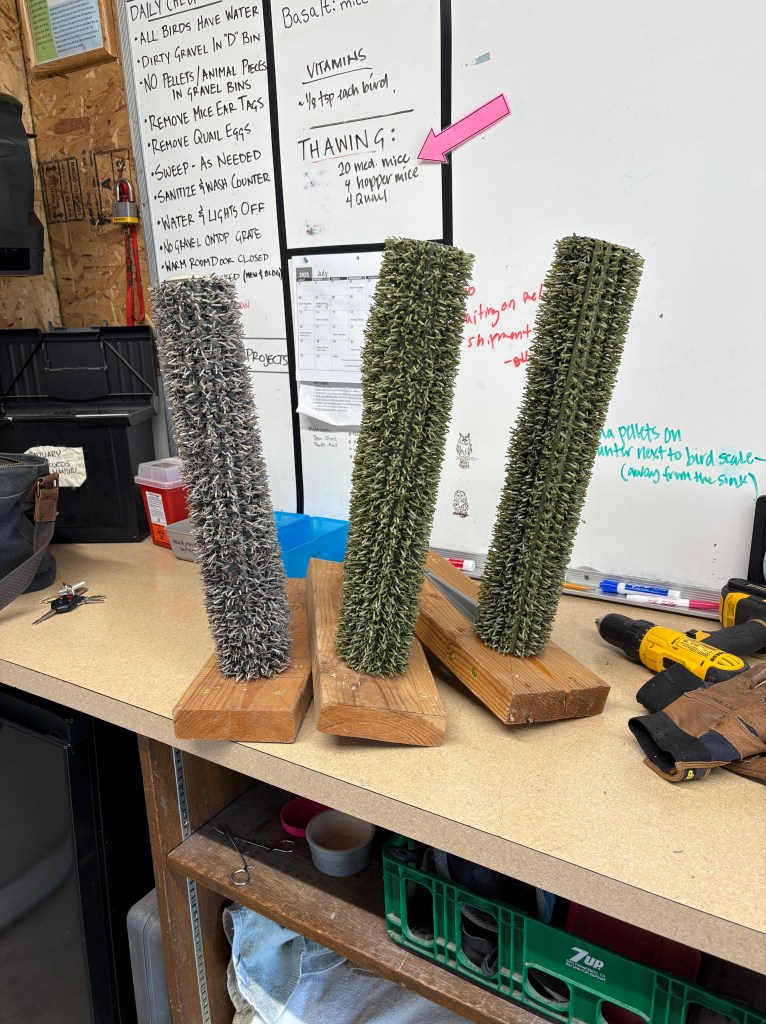
Any one of those choices would have been doable. But all of them together? Not great. Don’t get it twisted; even in the midst of (waves arms) all the things, I did it. I finished my final assignment last night at 9:30p; both of the classes were interesting and worth taking. I haven’t missed any of my volunteer commitments (I have 3 shifts next week); the OLC’s birds (and sometimes other critters, depending on the day and what the rabbit’s enclosure smells like) are fed and cared for, the raptor gravel piles have new markers, and the Harris’s hawk has three new perches (because power tools are a delight).
But it has not been easy, or pleasant. I’m in charge of the meal planning in my house, and that’s not going well (although it is also summer, when my coffee is cold brew, my morning toast is store bought, and we often have “snacks for dinner” so I can avoid using the range — no one is going hungry, but it is… inelegant). I have no hobbies at the moment, and very little social life. The only extracurricular reading I have brain space for is rom-coms, for 30 minutes before going to sleep — think spicier Hallmark stories (at least they’re from the library). My TV time has been largely limited to replays of WNBA games (League Pass, FTW).

But I also haven’t had a lot of time for social media, and maybe that’s a good thing.


* Congressman Baumgartner (Harvard, ’02) used a not insignificant amount of space in one of his weekly newsletters to parrot the administration’s anti-Harvard shenanigans. I gather, from the newsletter, that Harvard is elite, they’re not sending their best, and they need to be taken down a notch. I could have told you that, Congressman Harvard, but how are you the exception?

Nature Journal · Studenting · Volunteering

Education: Spring 2025

Today is MLK day. If you’re interested in reading one of King’s speeches, might I recommend his Give Us the Ballot speech, delivered at the Prayer Pilgrimage for Freedom on May 17, 1957 (text courtesy of Stanford’s Martin Luther King, Jr. Research and Education Institute). (H/T to Andrew Weissmann for the suggestion via his Substack newsletter.)

I’ve got a big semester coming up. Okay, so not any more intense than usual (I hope), but I think it will be both engaging and useful. Topics of courses this semester: data visualization, and instructional design. For the instructional design class, if the textbooks are any indication, we will be exploring information literacy, a topic most of us could learn a bit about and from.

Photo of three textbooks: "Designing Information Literacy Instruction," "Information Literacy Instruction, Second Edition," and "Now you see it" (a book about data visualization).
The textbooks in question…

I volunteer in an organization where I do a bit of community outreach — mostly with adults and families, but sometimes I get pressed into service to work with kids on field trips. I do raptor talks, or insect talks, or (very occasionally) nature journaling, so I work very much in the realm of things that can be observed first hand. That said, I hear a lot of assumptions about wildlife, in both kids (which I expect, because most of them are young enough to lack a lot of context), and their adults (which can be indicative that there’s a concerning lack of education in very basic biology and ecology), that are… incorrect… and sometimes dangerous, for both the animals and the people.

In the realm I work in, these assumptions tend to be variations on themes of “tameness” and training (which, again, is somewhat understandable, given that most of us don’t — and shouldn’t — have actual relationships with raptors), or human supremacy/dominance (in other words, because we exist, we have something to offer animals that we think they need, or we need to bring them to heel).

For most of us, our experience with animals is primarily with domesticated animals, like our pets. The understandable impulse is to apply our experience with our pets to other kinds of animals… which doesn’t work, and can be very dangerous, for everyone.

Take the ideas of tameness and training. These birds (who are unreleasable/cannot survive in the wild) are trainable, with consistency and a lot of practice, but they are not tame. They are not pets. Generally speaking, unless they are nesting or migrating, raptors are solitary. Stan is the possible exception, because Harris’s hawks live and hunt in small family groups in the wild. On the flip side of that, Stan, because he was raised primarily by people, turns into kind of a jerk when he’s looking for a girlfriend (he still has strong feet with sharp talons).

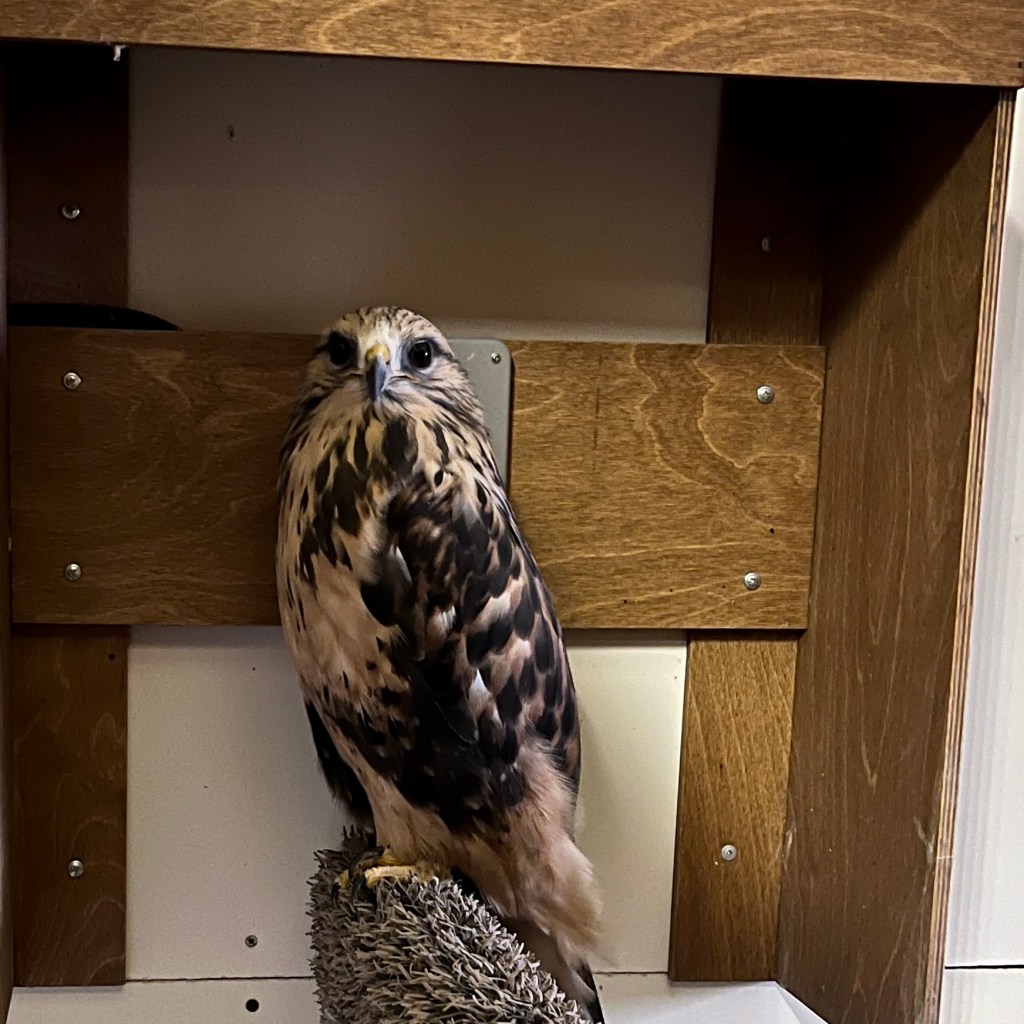
But Pants (rough-legged hawk) and Whoolio (Western screech owl)… definitely solitary — if they never saw any of us again, they would be fine. (I mean, they wouldn’t survive because their disabilities render them unable to hunt, but our absence wouldn’t leave them in any kind of emotional distress.) It’s difficult for us, as social animals, to understand that solitary animals do not need or want company; they are not lonely, and the presence of others often puts them at a competitive disadvantage.

And as for the other thing, the human supremacy… I’m not sure how to deal with that one, except to say that humans are bear-sized snacks, so if you are in bear habitat, you would do well to consider yourself a potential prey item and act accordingly. Interacting with moose, or bison, or Canada geese, is always a bad idea, because they don’t like us, and it would not matter if they did, because humans are predators and they do not want us in their spaces. A bison or moose that feels threatened could easily kill you and not think twice about it.

Even if we’re top of the food chain, the animals around us will do what they can to survive in our environment if we move into their habitat; coyote will do what they can to survive, including taking animals you may not want them to take. Same with owls. And raccoons (avoiding raccoons is tough; we live in a suburban area, and our dog treed two of them recently).

So yeah, having an opportunity to think about information literacy will be interesting. What is information literacy? How to we acquire it? How do we pass it on, in ways that people can ingest? If your thoughts about your interactions with animals are based primarily on vibes/your experiences with your pets, how can I introduce you to a way of thinking that’s more inclusive of wild animals and their habitats — in a way that is factual, and respectful/compassionate?

On another (very much related) front, I have to do some continuing education to maintain my Montana Master Naturalist certification. In past years, I’ve done nature journaling coursework, or seminars about ecology topics around the West. This year, I’m changing it up a little bit and working on introductions to topics that are more foundational, like ecology, climate change, and fire ecology (which, if — like me — you live in the Western US, is a topic you’re already probably more familiar with than you would like to be).

One of the reasons I love the internet is that you can learn just about anything. So, for ecology, I’m taking a Coursera Course: Introduction to Biology: Ecology (offered by Rice University).

Screenshot of Coursera dashboard, focused on a course named Introduction to Biology: Ecology.

I’m enjoying the content. It’s very basic, and the stakes are low. But it’s informative for a person like me, whose education has been mostly liberal-arts based, and who is interested in being exposed to a new and different topic.

I’m using this course to develop a little bit of foundational knowledge on the broad topic of ecology, and then using that foundation to inform some investigation into the topics of climate change, and fire ecology.

And hopefully, I’ll be able to bring some nature journaling into all of it.

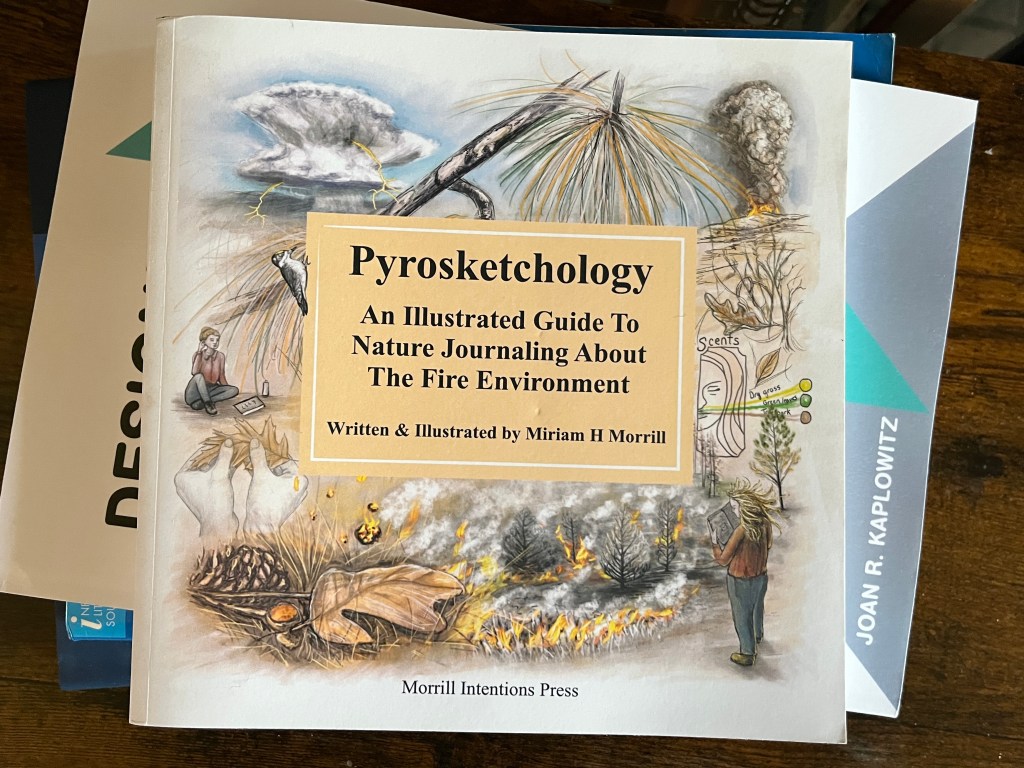
This looks to be an excellent book. I’m excited to delve into it while I learn more about fire ecology. (Bookshop.org link)

So, yeah, much to do this spring. I’m looking forward to it.

(Today will also include making a loaf of beer bread and some lentil soup for dinner.)

Nature Journal · Outdoor Learning Center · Volunteering

A Grand Experiment Gone Wrong

Or at least not entirely right…

I love nature journaling. I don’t get to do it as often as I’d like, particularly these days. My school load, volunteer work, and home life mean my schedule doesn’t have a huge amount of flex time for finding a “sit spot” and… you know, sitting.

Some animal skulls from 2022.

When I was asked to lead a nature journaling workshop at the outdoor learning center where I volunteer, I was excited, because I think it’s a perfect crossover.

Nobody signed up. (Might have been the topic — or the teacher — there also may have been some marketing issues.)

Still, I thought the idea had merit, so I suggested we do something shorter (1.5 hours instead of 3), less formal (drop-in without a prior sign up), tie it to an open house (both the timing and the theme), and see what happens. October’s open house was a Halloween theme, featuring animals that are perceived as being “creepy.” (For the OLC, that’s the resident rats and insects.)

The challenge: insect activity is low in our area right now, because it has gotten cold at night. We had a bunch of bumble- and honeybees until about 3 weeks ago, and water striders in the ponds, but everything has gone quiet. The spiders have gone into hiding (though we’re starting to see some webs in the raptor sanctuary, so maybe they’re finding food in there). We probably could have found some pill bugs, with some effort, but yesterday morning was going to be more comfortable inside. (I don’t know about anyone else, but my brain stops working when my feet get wet, and I lose too much coordination in my hands when I’m wearing gloves.)

With all that in mind, I gathered supplies:

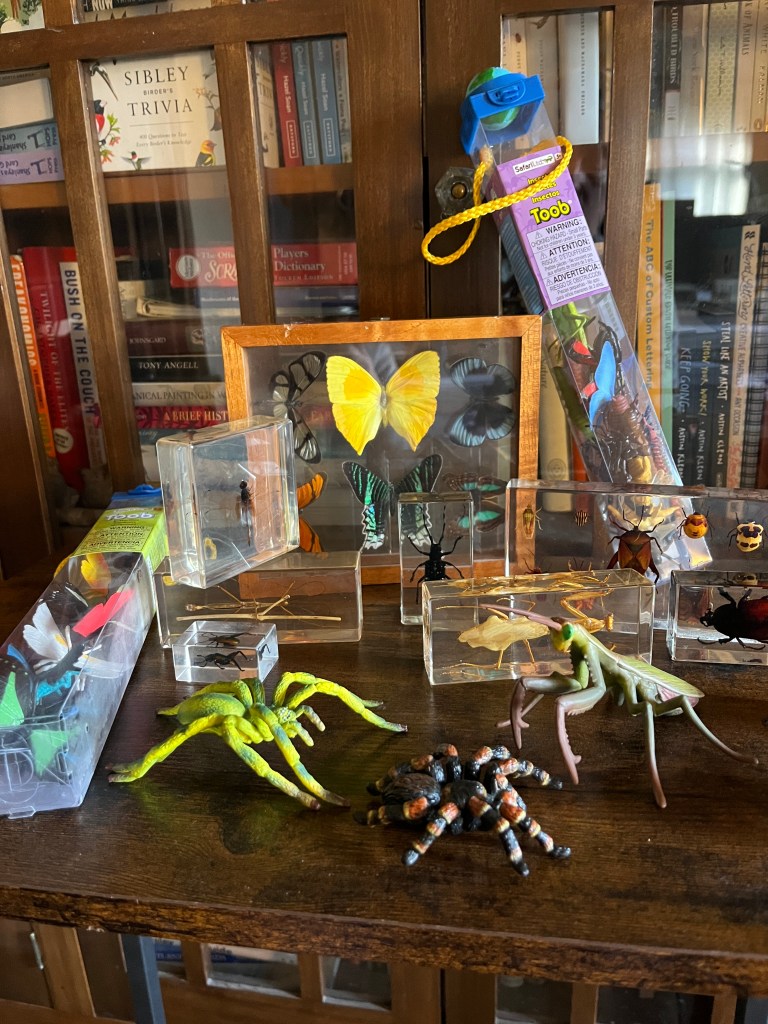
  • insects preserved in resin (difficult to draw, and not like living animals, but a good way to see some of the finer details of limb and wing structure, eye placement, and overall shape and size.)
  • plastic models (also not great representations of live insects, but a) they don’t move around, and b) it’s a good way to see the body plan, and how the masses of the body relate to each other)
  • I “borrowed” some of the live insects from the classroom: a roach, a couple of beetles, a couple of small stick bugs, and some mealworms.
  • sheets of 90lb watercolor paper (not precious, but sturdier than printer paper), and clipboards for stability
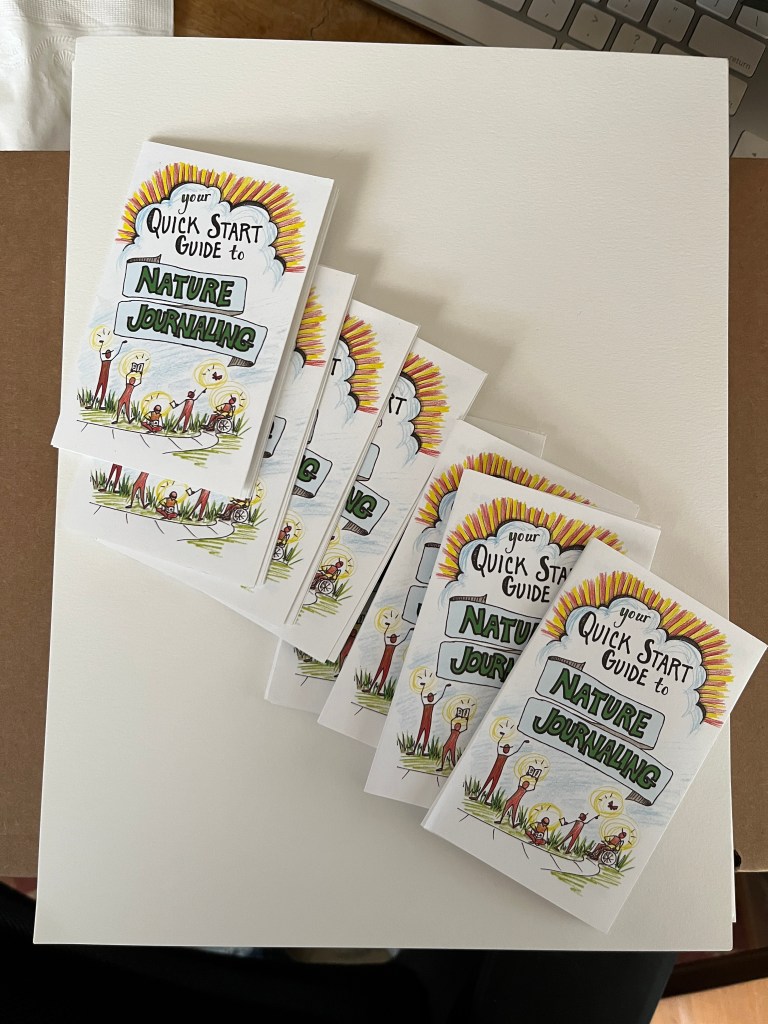
  • zines about nature journaling (available from the Wild Wonder Foundation)
  • some reference books about insects
  • colored pencils, number 2 pencils, and some watercolors

I spent some time this week making a “focus flyer” — a one-page intro with tips about how to approach nature journaling insects. (I made it with Procreate on the iPad — simple black and white so it could be photocopied.)

Everything got used, for sure, but I ended up spending most of the time chatting with small children and their parents about bugs (yes, for the record, I know that all bugs are insects, but not all insects are bugs — it’s the sucking mouth parts in bugs that make the difference — and that arachnids are their own thing, and so are the myriapods).

And hey, there is nothing better in the world than when a second grader sidles up to the table and says (something to the effect of), “let me tell you something I know.” To which I love to reply, “I’m all ears, friend.” If we’re dealing with insects or dinosaurs, it will probably be new-to-me information. In this particular case, after my education, we got to puzzle out whether a praying mantis’s forelimbs are legs, or something else (they’re counted in the leg count, even though they can be functionally different).

So yeah, it ended up being a lot of fun, even though it wasn’t nature journaling. There was no writing, very little counting, and no drawing (I think I got so far as to lay in the very first initial pencil-in of a long-horned beetle). I had planned on working with 5 – 8 (maybe?) people, ages 12 – adult, for 30 – 45 minutes. At one point, in the 90 minutes I was active, I think there were 25 people in the room (both kids and parents), and it got very loud.

I still think that nature journaling can be a great activity for kids, but unless they’re ready for it and intrigued by it, it’s going to feel more like a chore for most of them… and most kids already have plenty of obligations. The OLC’s open house wasn’t a great fit for a strictly defined nature journaling activity.

But it was still a good learning experience, and, as I am not a big bug person, a brain-stretching exercise. In the future, if the OLC is interested in a quasi-educational, quasi-artsy experience available at open houses, I think we should go a different way… perhaps a “coloring corner,” with nature-journaling-style worksheets. (I’ve been sitting with this idea overnight, and the longer I sit with it, the more I like it. Also, how fun would it be to design those worksheets?!)

Outdoor Learning Center · Studenting

Jack of All Trades

First, have a bird:

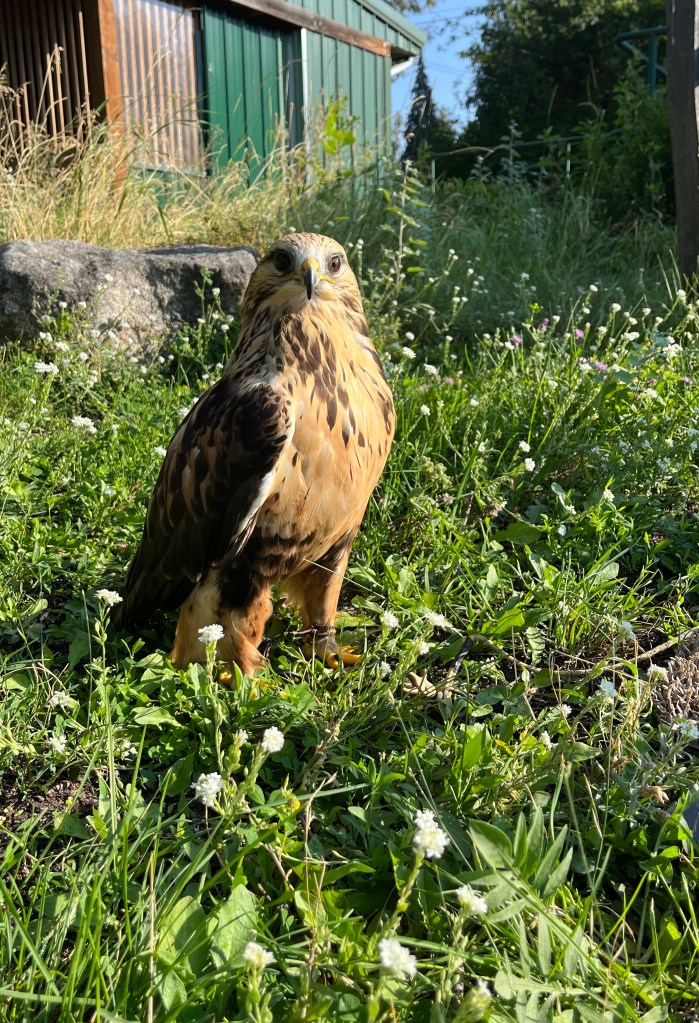
Pantalones (aka Pants), a mostly caramel-colored rough-legged hawk, standing amongst the wildflowers (aka weeds). She is a beautiful bird.
Pantalones, aka Pants, a rough-legged hawk at the
West Valley Outdoor Learning Center, enjoying some outside time.
Summer 2024

Pants has a partial wing amputation with significant tissue damage on her right wing, which, on top of the amputation, is missing both primary and secondary flight feathers. She is quite elderly, at 24+ years, and has arthritis. She has personality to spare, and in addition to being really pretty, she is quite sassy.

She had a near miss with Nelson, the OLC’s 80lb tortoise, the other day, and afterwards she seemed remarkably unbothered. She’s a champ.

Okay, down to business. I’m doing a skills inventory right now, and here are some of the skills I have listed: project management, database management, GIS, natural science illustration, graphic design, basic carpentry (power tools: *chef’s kiss*), raptor daily care and maintenance, research and writing, working at a coffee bar, community outreach.

Point is, you would not be wrong if “Jack of all trades, master of none” came to mind.

It is some comfort that one version of the “jack of all trades” quote goes something like this:

“Jack of all trades, master of none,
is oftentimes better than a master of one.”

(A Wikipedia article on the topic says that the couplet isn’t actually the original version, as many online like to claim, but I like it because it feels a bit less… awful? I’m not going to be able to solve the crises of the world, but I can make you a coffee?)

Believe it or not, even though my skills inventory looks like it’s all over the place, there are some through-lines:

  • I’ve worked on a few different newsletters, working on both writing and production — digital and print.
  • I enjoy engaging with technology: for database work, graphic design, and front-end web coding.
  • I’ve never been a teacher, but I have done a fair amount of training, teaching, and community outreach.
  • I gravitate toward environmental education and conservation.

It’s turning out to be an illuminating exercise. It will be interesting to see where it goes.

Outdoor Learning Center · Raptors

Sweet Boy: Oroville (2011 – 2024)

This is an appreciation for a barred owl who hated us with almost comical intensity. There is sadness in it, but also gratitude.

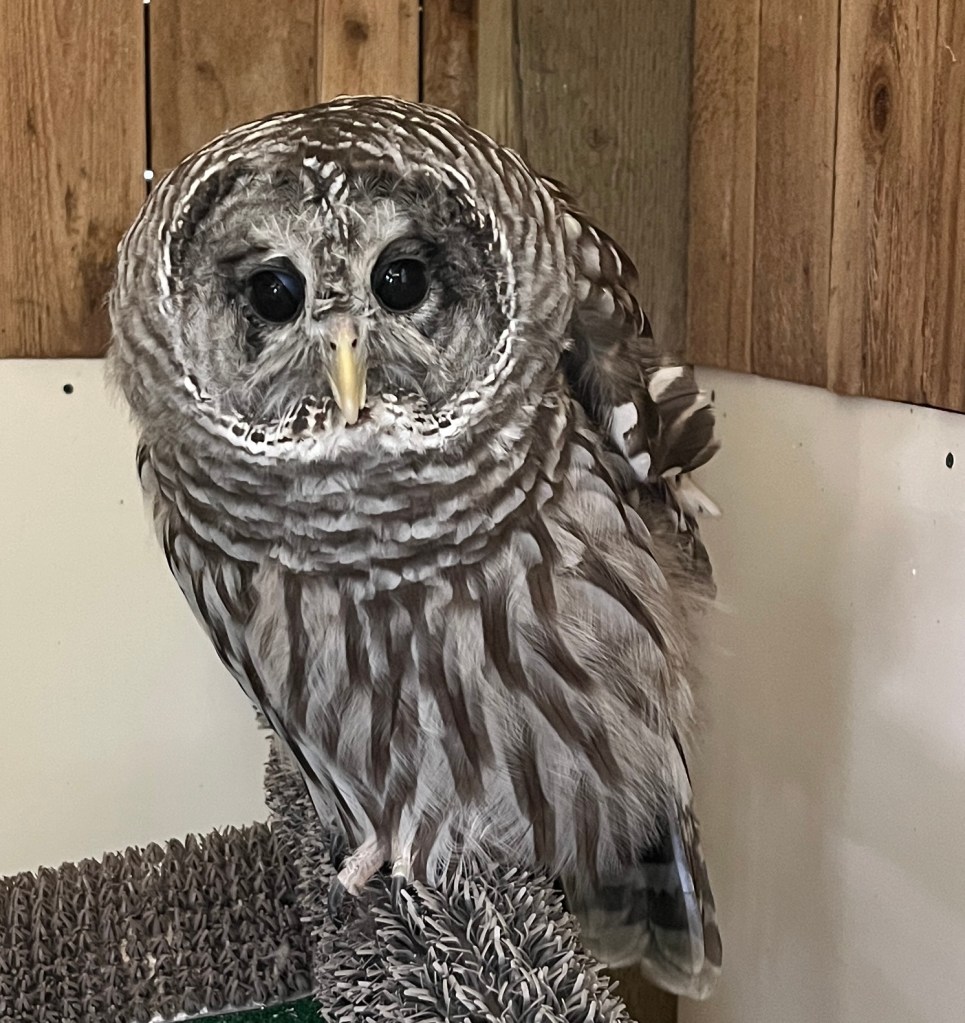
This was Oroville:

Murder muppet and professional crankypants Oroville.
(He was going through kind of a rough molt when this photo was taken.)

Oroville suffered a severe patagial injury to his left wing when he got caught up in some barbed wire as a fledgling. It rendered the wing useless for anything but balance.

He came to the West Valley Outdoor Learning Center in, I think, 2011. (I started in early 2012, and he was in a starter mew then.) He could not fly, but by every other metric, he was a classic barred owl, which is to say, he was deceptively aggressive. Got too close to him? He’d jump at your head. Stand up too quickly near him while cleaning? Jump at your head. Try to retrieve cached mice in his mew? Lunge at your hand. Collect him on the glove? Gnaw aggressively at your hand. Trimming his beak? Snap at your fingers. (The only black eye I’ve ever had came from one of Oroville’s launches.)

These were not character flaws, or lapses in training. Oroville was a wild barred owl who was being asked to live in circumstances that were completely foreign — and unnatural — to him. It wasn’t bad, but it wasn’t normal for a barred owl. He was free-lofted (as in, not tethered) in a large mew with two windows and perches at different levels. He had daily access to fresh water and food, and was weathered regularly. He was protected from the elements, but we left one of his windows partially open all winter so he could feel the wind and snow on his face. He was heat intolerant; he didn’t do events during the summer, and spent most of his time sitting under a fan.

It’s important to note for people who don’t have a lot of experience with education raptors: the alternative to this life was not freedom. It was death — because he could not fly, he would not survive in the wild. He was not a pet; keeping him required both state and federal permits. The compromises we asked him to make were extensive, but he helped to educate thousands of people about how owls fit into our ecologies, and the challenges owls face in the wild, over the course of his life.

This week Oroville developed some weakness in his right leg. And then he stopped eating. (Both of these are big red flags in raptors, but combined, they can signal a very bad situation.) Yesterday I drove him to WSU to the veterinary hospital to see our (amazing) avian vet, Dr. Marcie Logsdon, for X-rays and bloodwork.

As it turns out, his heart was enlarged, and so was his spleen. It looked like the situation had been developing for a while, but owls are both 1) stoic, and 2) good at hiding signs of illness. Until this week, Oroville’s behavior had been his feisty normal, and he had been eating/maintaining his weight, so we had no idea about this underlying condition. By the time we got to WSU, he was very ill, and had the OLC chosen to pursue treatment, his final days would have been spent receiving treatment that was best case, intrusive (worst case, invasive), but not curative. After consulting with the OLC’s director, the decision was made to euthanize him.

In addition to being an avian vet, Dr. Logsdon is a falconer, and she works with the WSU raptor center’s education birds. Working with education raptors requires walking a narrow path, ethically, and she has some good experience with it, which is really helpful to us. (Some vets know how to treat birds, but don’t have a lot of experience actually working with them.) I loved that she consistently referred to Oroville as our “friend” (even though considering the concept of friendship with Oroville would make anyone who knew him giggle).

Another thing I appreciate about Dr. Logsdon is that she is not a vet who goes to euthanasia as an early option, but if it’s important to consider, she’ll put it on the table. She did not pressure us. She told us what our options for treatment were and that she would support our decision to continue treatment, but she did not shy away from the fact that Oroville’s prognosis was very poor, and his quality of life would not improve with time or treatment.

Sometimes the worst decision is not the hardest one to make.

It’s easy to say, but it does not diminish the sadness of packing an empty crate into the car. I am sad, and I will miss him.

Oroville at an event at Turnbull National Wildlife Refuge.
Studenting · Thoughts about Stuff · Volunteering

Happy Easter (?)

I did not realize that today was Easter until… last Thursday. The Thursday before Good Friday. Somehow the ubiquitous Easter Bunnies did not break through.

Oy.

But hey, I put pepper in my oatmeal this morning, so it’s safe to say that I’m generally turned around at the moment.

The primary reason: I’m knee-deep in a management course.

It’s one of six courses that everyone in this program (SJSU MLIS) has to take, and one of four we have to complete in the first third of the program. This one has been a challenge, because if you’ve ever met me, you’ll know that I’m both deeply distrustful of the idea of management as a discipline, and disinterested in engaging with it on any level (to put it mildly). I’m not opposed to capitalism as an economic system, though without guardrails it seems to become more about getting as much as you can before things go sideways than about investing for long-term (more modest) gain and stability. Management, as I’ve experienced it as an employee, is less about creating anything than it is about cutting costs and exploiting employees. The managers I’ve worked with who actually have MBAs… smart, smart people, with less interest in learning from observation than applying theory they studied in school.

Also, not a fan of group work. I think the people in my groups are great, and I have have deeply appreciated their feedback, but it is a lot of meetings, and between my two groups (for this one class) it means having to coordinate the schedules of eight people. If we worked in the same organization at the same time, it might be easier, but we’re students in a program designed for working adults, so…

Sorry Easter (and oatmeal), you’ll have to pardon my distraction, as I work through subjects like strategic planning, trendwatching, and budgeting. Planning — necessarily imperfect, but good! Responding to trends — unavoidable at the macro level, unsustainable at the micro level, particularly for orgs that aren’t “agile.” Budgeting… sigh. (Look, I actually think accounting exercises are kind of fun, like puzzles, but budgeting for staff cuts is awful on a few levels.)

And then there’s the investor pitch deck (first of two major projects). I enjoy research — the research part of this semester-long assignment has been a blast. Library lighting, and food-and-drink policy (my pieces of the puzzle for this group project) are actually interesting topics, when you delve into them — they both involve some engineering, sociology, and architecture (and trends!)… that’s all good. Spokane Central Library finished a $33-million renovation a couple of years ago, so I even have some recent, local, ideas to draw from. This week I’m finishing the scripts for my presentations, and next week, I’ll be recording my portions (x3: lighting, food and drink, space planning), to hand off to our group’s editors so we can finish this project a week earlier than the due date (or have time to deal with last-minute crises).

The last major project, which isn’t even on my radar until mid-April, is a research paper. I’ll get to it when the two papers that are due next week, and the presentation, are done.

Other shenanigans, at the Outdoor Learning Center:

  • Taking in a temporary, emergency placement Western Screech Owl (his person had some fire damage to her facilities, so we’re taking care of him until those are resolved). I got to learn to use pocket holes to prep his enclosure!
  • Replacing platforms that were starting to become unusable.
  • Working with first graders for the first time this year! (First time for me, not the OLC — I usually work with grades 3 – 5 in the spring.)

And one more, not at the OLC: dragging out the mini-chainsaw/tree pruner to take down limbs from a neighbor’s tree that are overhanging our roof. I’ll be using the rope chainsaw next week for the taller ones!

I need a nap, and the day has barely begun.

Healthcare · In the Kitchen · Lucy the Pup · Thoughts about Stuff · Volunteering

Spitballing before Bed

Not sure I’ll publish this, or that any of it actually needs to be said, but it’s 9:22p (and, now that I’m old, nearly my bedtime), and I’m thinking about the holidays, expectations, and how to deal…

My fabulous and talented husband is just not into the holidays. Like me, he grew up with a single parent, and for their family, there were more pressing priorities most years.

My family was very into the holidays, but mostly as a performance art. There was church, a tree, a big meal, presents, the whole nine yards. There was also an enormous amount of stress, particularly for my mother, because the expectations, particularly for a single mom raising two children while working full time (and going to school, for a while), were unrealistically high. None of us were much help, so it was hard for her. (Time has dramatically changed the composition of our family — and as grown people, my brother and I contribute a lot more — the holidays are much smaller, and in many ways simpler.)

I actually like Christmas. I like evergreens and lights, red bows, giving presents, making a nice meal and sharing it with whomever. Over the Covid years, I put up lights and trees before Thanksgiving.

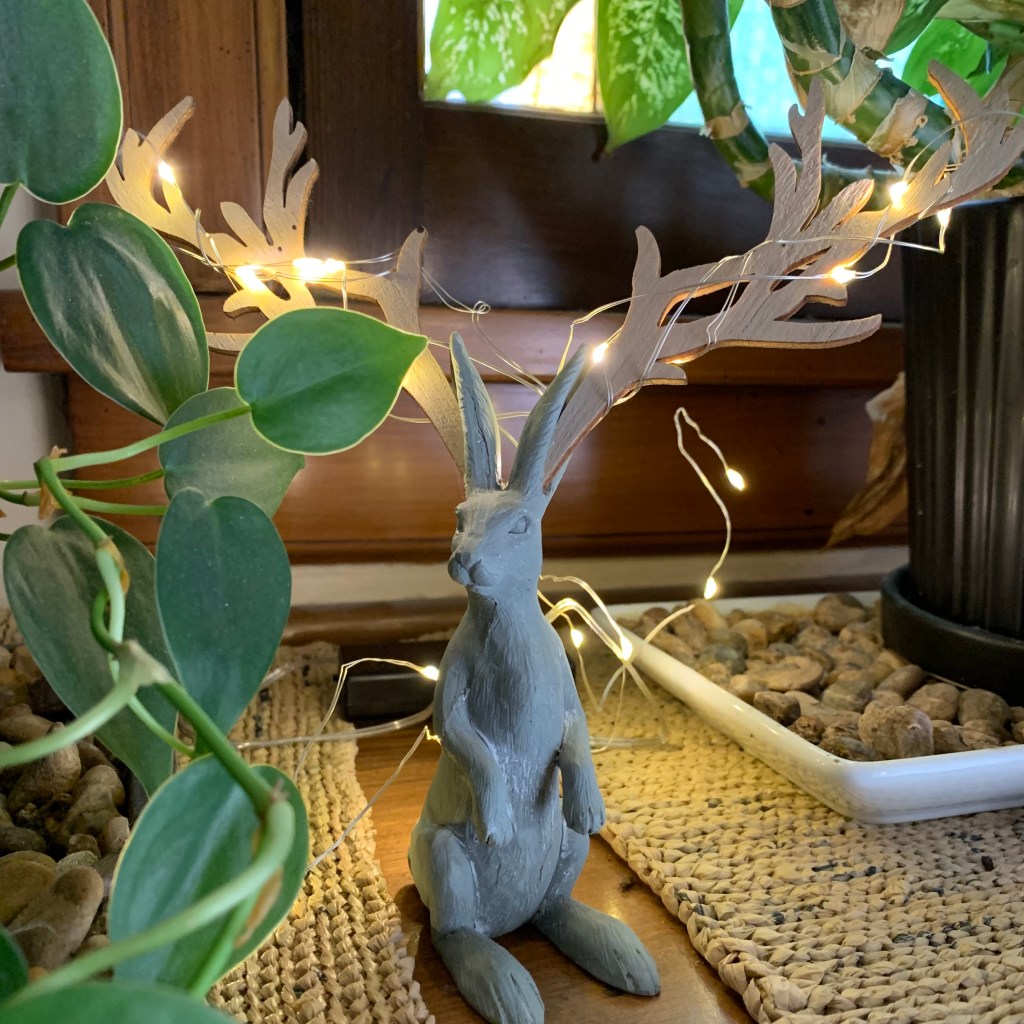
If your jackalope isn’t wearing fairy lights, do you even *have* a jackalope?

This year, not so much. 2023 has been a long haul — mostly it was good, but kind of intense. I wasn’t feeling great for a big part of it — not sick, thankfully, but in some pain and generally feeling meh. Add a couple of big-ish procedures and a round of icky medicine, and I’m ready to not see my doctors for a while.

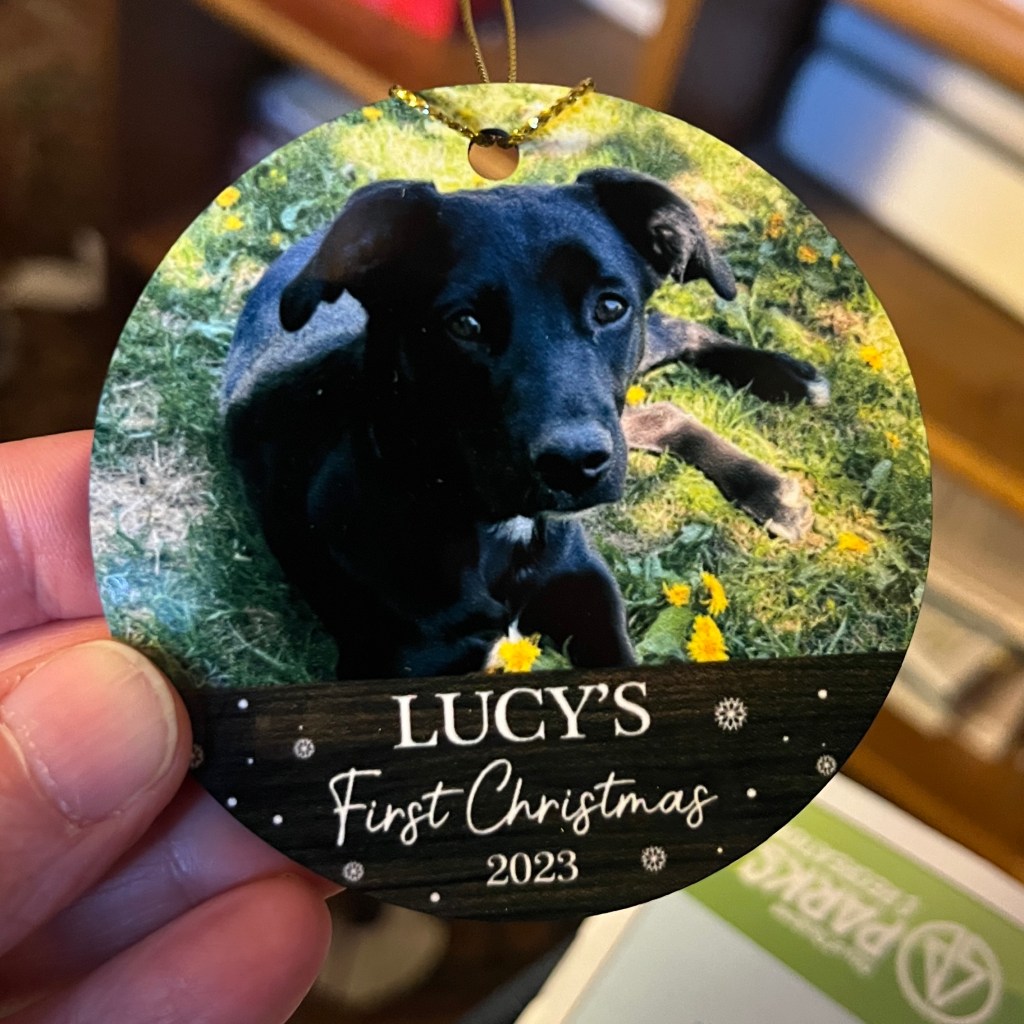
And then, in what seemed like an omen, there was this:

The ornament thing just makes me laugh, because right now, it’s so on brand for this pup. She’s all joyful chaos, and in a way, the ornament is much more reflective of who she is after she “modified” it.

All this to say that Christmas 2023 is going to be mostly a non-event in this household. A tree would be too stressful with Lucy (aka the menace like Dennis), I don’t have the brain space to do a bunch of decorating, and fabulous and talented husband doesn’t seem to notice. Maybe everyone will be more excited about things next year, and maybe Lucy will mellow a little bit? Stay tuned!

The day itself is going to be really busy anyway. My volunteer shift falls on Christmas this year (like the Covid years!). I get to feed the classroom critters along with the raptors, and my fabulous and talented husband is helping me cope beaks and trim talons (and replace some cuffs that didn’t last as long as they should have), so it will be a significant investment of time. Then we’re having supper with some friends who suffered a terrible loss a couple of months ago. We’ll support our friends, and contribute to the Christmas meal with dairy free green bean casserole (if you sub cashew cream for heavy cream, you’re good to go) and a root vegetable tian (also dairy free, subbing the parmesan with a little bit of nutritional yeast).

Then maybe there will be time for some rest…

Speaking of which, it really is my bedtime now, so off I go.

Healthcare · Volunteering

What a year this week has been…

Actually, two weeks, but that’s splitting hairs.

The OLC had a bird escape, for the first time in 25 years. I wasn’t there when it happened, so I don’t really know how it went down, but based on conversations with the handler, it sounds like there was a cascade of events. Any of the distinct scenarios, on its own, would not have been a problem. But put them together and it became a bad situation. The end result: a flighted owl flew away, and hasn’t been found. Hopefully, he’s figured out how to survive on his own and is living his best life (see Flaco, the Central Park Zoo’s escaped Eurasian eagle owl), because the other end of that spectrum is a catastrophe.

Any handler, with any level of experience, could experience this. The more experienced the handler, the less likely this particular result, but it needs to be understood that the chances of an escaped bird never go to zero. Wild, captive animals are still wild, still have wild instincts. No matter how well they’re trained or habituated, unexpected things happen. This particular bird had been in human care for about a year, was reasonably well habituated to his handlers, and was just starting to gain experience working on the glove for education.

That was two weekends ago, and over the first few days, the staff and a few volunteers went on a lot of wild goose chases at all hours of the day (and night).

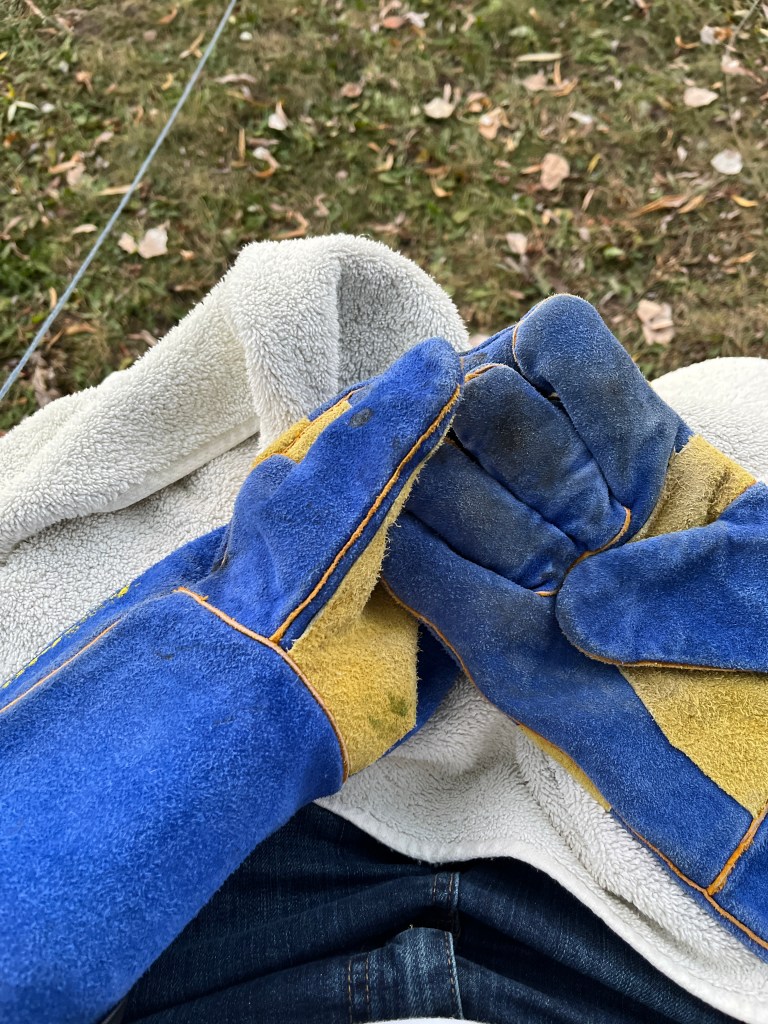
Photo of welding gloves and a towel on the lap of a person hoping to find an escaped owl.
Tools of the trade when hoping to find a wayward great-horned owl: welding gloves and a towel.

I went from that situation to an “urgent” endoscopy (urgent because the clinic had been sitting on it for six weeks, and my doctor had called them), which was a delight, mostly because I wasn’t there (Propofol, FTW), but which left me with heartburn, a sore throat, and some tenderness around my jaw. (Did I mention that I am so glad I wasn’t there.)

And then, to add insult to injury, an endometrial biopsy the next day. That procedure is deeply unpleasant, even when performed by a good doctor doing all the right things (like my doctor). Y’all, the medical establishment has got to figure out how to do women’t health. This procedure involves threading sticks into your insides and scraping the lining of the uterus… without sedation or anesthesia. It doesn’t take that long, thankfully — less than ten minutes. (But word: the actual endoscopy procedure took 15 minutes.) I wouldn’t describe it as painful, per se (I’ve had abdominal cramps that were stop-you-in-your-tracks painful, and this was not that), but it was incredibly uncomfortable. There should be a better way to do this kind of thing, I think. I could live the rest of my life without repeating that procedure, and be happy. (Alas, that does not appear to be in the cards, but I don’t have to do it again for a while, at least…)

Do they biopsy men’s urethras without any kind of numbing? (That’s not a snarky question. I asked my husband for his thoughts, and he shut down the conversation because it was too awful for him to contemplate.)

So yeah, alien probes from both ends, after losing an owl. Thankfully I finished a big school assignment at the beginning of the year, I mean week, and so I had a bit of a breather before diving into the next big assignment, because the stress of alien probes is exhausting, not to mention the unpleasant physical impacts.

At least the results of both were pretty good: no cancer… at least not yet. There are things to work out, but the big, awful stuff has been ruled out, for the moment.

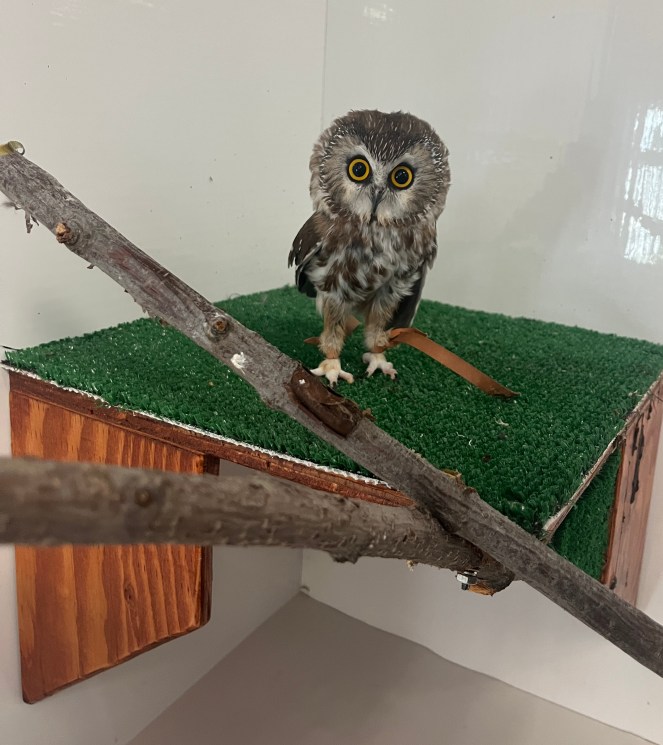
The year, I mean week, continued when fabulous-and-talented husband (technically not an OLC volunteer, but an incredibly good sport) and I picked up a substitute cleaning shift on Saturday, including coping beaks and talons on the hawks, changed out a set of cuffs and jesses for one of the hawks — she was not pleased with any of it, and installed jesses on a saw-whet owl, who, as you might imagine, was also not pleased. (We did this operation in a classroom, so if the bird had gotten away from us, we would have had to make sure he didn’t end up in a turtle tank.)

Photo of saw-whet owl with new leather jesses. His eyes are big and judgemental.
This tiny owl is BIG mad…

And this week, after doing some additional chores in the raptor sanctuary, including prepping for winter (closing the windows, turning on the supplemental heat for some of the birds, winding the hose onto a reel so it can live inside for the next several months), and some maintenance work (a project for our barn owl, and weighing three of the birds), I started training a new volunteer. She’s amazingly smart, and interested in all the animals (including the reptiles!), but it’s going to take her a minute to get used to working with food. That’s not too unusual; if you had told me, fifteen years ago, that I would be butchering small animals for other animals to eat, I would have laughed in your face. (Most of us don’t work with our food in that way, so everyone can be forgiven for needing some time to get used to the idea.)

I’m whipped. Lots of stress and sadness, and no small amount of physical work (with little creative or intellectual engagement), has me on my heels. I’m looking forward to being able to work on a school project (literature review: serious leisure, library programming and falconry) and some work in my sketchbook over the next few days…

… unless someone happens to see a wayward owl. (I have a new cardboard box in my car, welding gloves, and a towel. I’m ready.)

AI · Raptors · Studenting

Being a “Mature” Student

I am what they call a “mature” student. I’ve been around the block a few times. I’ve done a lot of formal education-related activities. I’ve got a bachelor’s degree, a post-baccalaureate certificate and a graduate certificate… and I was something like six units away from an associate’s degree in the middle of all of that (I had to abandon it for a cross-country move).

And now I’m at the point where, as a graduate student, I still want to learn, but I’m not a fan of the trappings of school. I’m working on a project at the moment that I’m kind of excited about… and while I’m paying close attention to all of the rubrics, readings, and feedback, I don’t really care what my professor thinks about it. That’s not to say that I won’t make changes to it in accordance with feedback. I will, for sure, especially if that feedback helps to move the project in a direction I want to go. But I’m intrigued enough by the subject matter that I don’t feel the need to alter the trajectory of it, if that makes sense.

I guess what I’m saying is that I’m not really looking for my instructor’s approval. I’m interested in their opinions about how I can sharpen my argument, or strengthen my sourcing, but I’m not all that concerned about whether they think it’s an amazing piece of work. I think the subject is very, very cool, and that’s what matters to me in this moment, I think.

Hint: falconry, but not in the context of falconry. Falconry is what it’s about, sort of, but folded into an information science topic. (Image source: https://en.wikipedia.org/wiki/Hunting_with_eagles#/media/File:Kazakh-Mongolian_Eagle_Hunter.JPG)

This is kind of a new way of thinking for me, and likely comes from being exhausted from a lifetime of people-pleasing. The thing is, like most people, I generally perform better doing work I’m excited about, or at least interested in. Again, like most people, I *can* do things that don’t really interest me, but I generally don’t excel at them, and that’s fine.

So yeah, this week it was a 1700-word blog post, with photos, a video, and lots of references. Next week, a 1000-word essay about an information seeking-model that pertains to my topic. As I move forward, I’ll fill out my research with more peer-reviewed, academic work (newsflash: I’m currently working with 10-12 sources from the perspectives of archaeology, anthropology, ecology, and, of course, information science).

I’ve been thinking a lot about AI over the last several months, and I’ve concluded that there’s synthesis that happens when I’m researching and writing that AI can’t really help with. Maybe it’s because I’m a deliberate thinker (not all that quick on the uptake), and I need to puzzle ideas out for myself. Maybe it’s because I’m old(er), and I still like to read papers on paper, so I can make notes and mark them up. Also on the “mature,” front, I still draft longhand, occasionally, though I’ve been moving away from that (now I draft mostly in MS Word, so that I can save versions — once a graphic designer…). I’m sure at some point I’ll have to figure out how to work with AI, but at this point, I haven’t found a way for it to be useful for my process.

One thing I am not enjoying? Formatting references (resources… whatever). I’ve always been kind of bad at it, but now I’ve had to switch from MLA to APA, and it’s a little bit different, so… that’s going to take a minute.

But you know what? If I knew how to do any of this I wouldn’t need to be here. So I’m just going to continue to nerd out on my topic, and figure out the rest of it as I go along.

Outdoor Learning Center · Raptors · Volunteering

Responding vs. Reacting

Or, learning how to manage when things don’t go according to plan…

This is Basalt.

Photo of unreleasable saw-whet owl named Basalt. Saw-whets tiny, about the size of a small human fist, with large yellow eyes. Very, very cute.
Basalt, an unreleasable saw-whet owl, in his enclosure. (Those tabs are 3M Command strips — they tack down his mat without damaging the finish of the house.)

Basalt suffered a shoulder injury last winter, from a window strike. He is incapable of sustained flight, and when he came to us, we were told that he wasn’t able to get any lift…

… which, apparently, is not exactly right.

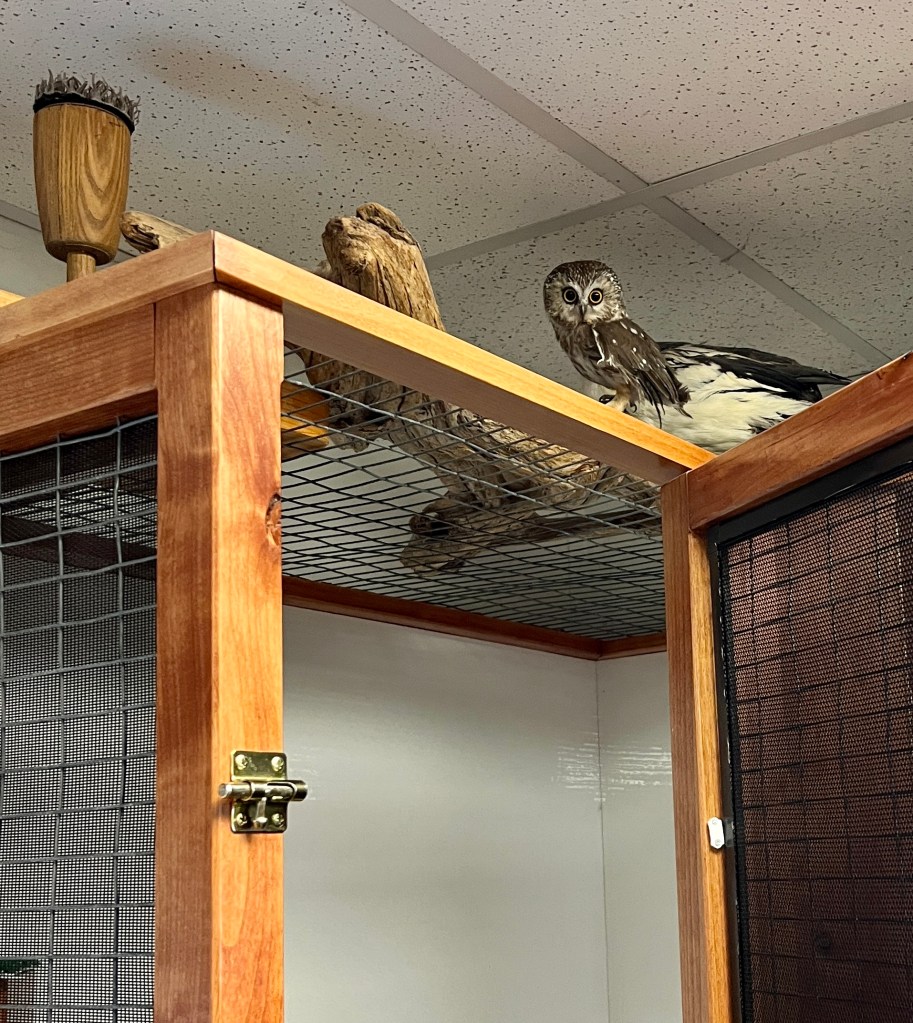
While I was in his enclosure wiping down the floor (after removing his soiled mats), he quite literally flew the coop.

I was the only one at the Outdoor Learning Center at the time — it was an early, quiet morning. The doors to the room and bathroom were closed, so he couldn’t go anywhere outside of the room we were in. He didn’t end up in any of the turtle tanks (which would have required immediate action), so I finished washing his mats and cleaning his enclosure before I started to figure out what I needed to do.

Because it was not an urgent situation, and he didn’t appear to be in any danger, I decided to follow him for a few minutes. In part to assess the situation, but also, it was an opportunity for me to see how he moves (way better and more efficiently than I thought!).

Going up is a known behavior in wild birds, but I was surprised to see him moving around the room to tall perches because I thought he couldn’t. My guess? He had to molt some damaged wing feathers while in care with the vet, and that’s why he couldn’t generate lift. Now that he has those wing feathers, he can really get somewhere. (This wasn’t sustained flight, more like big arc-ing wing-assisted hops.)

I did not chase him. He moved and settled, and then I followed. I did not try to towel him while he was moving, or when he was out of reach. Had he ended up in a turtle tank or a tortoise enclosure, I would have been there immediately to help him before he had to interact with another animal.

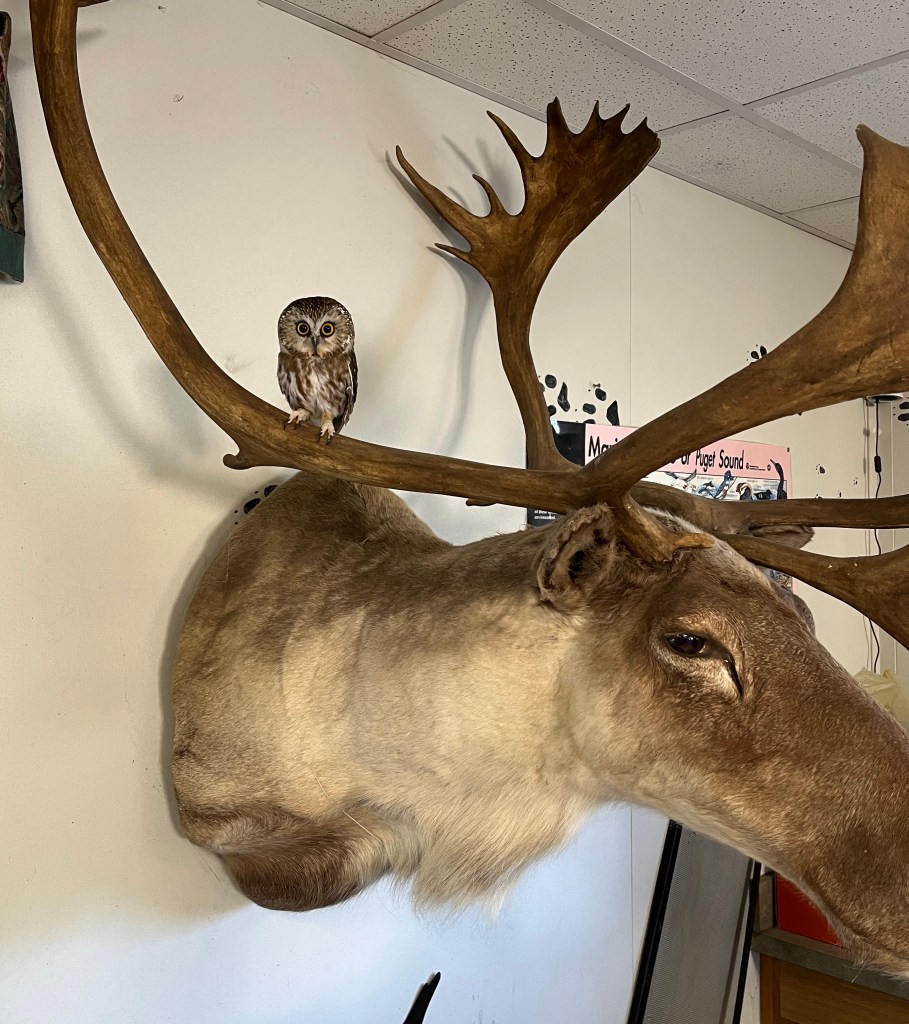
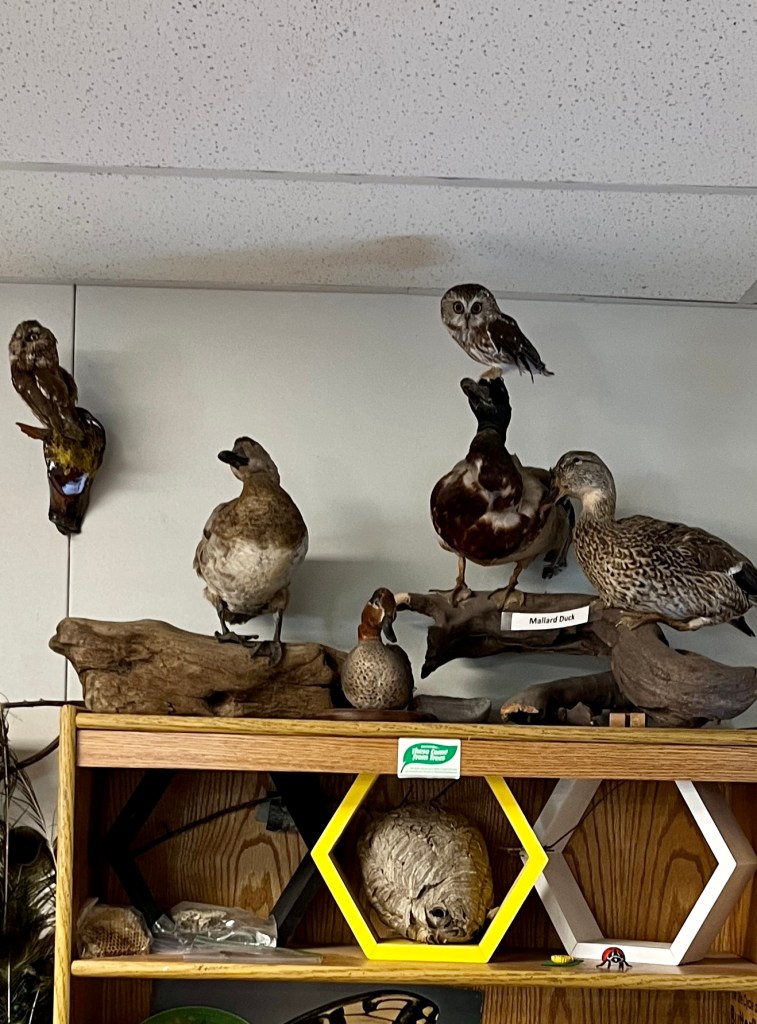
(He yarked up a pellet while sitting on the Mallard’s head, so while I’m sure this wasn’t a relaxing situation for him, he wasn’t so stressed out that he couldn’t take care of his own needs.)

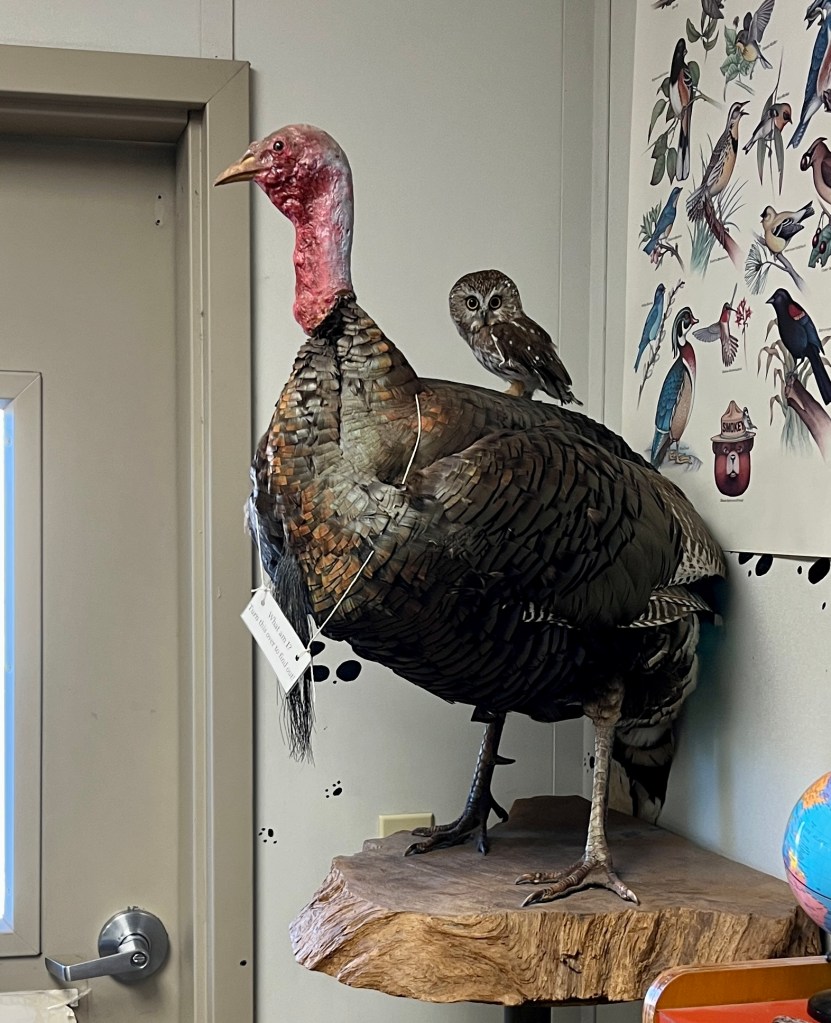
Eventually, after a round robin of the taxidermied mounts and window valances, he got tired and ended up on the floor. At that point, I was able to gently gather him in a towel and move him back to his enclosure.

So yeah, things were a little bit exciting today, in an unexpected way. I don’t want to encourage this behavior — I will have to alter my approach to make sure this doesn’t happen again. But I’m impressed by his ability, and I think it’s time to see about adding a couple of other, higher, perches in his enclosure…