Black History Month

Black History Month: Kadir Nelson

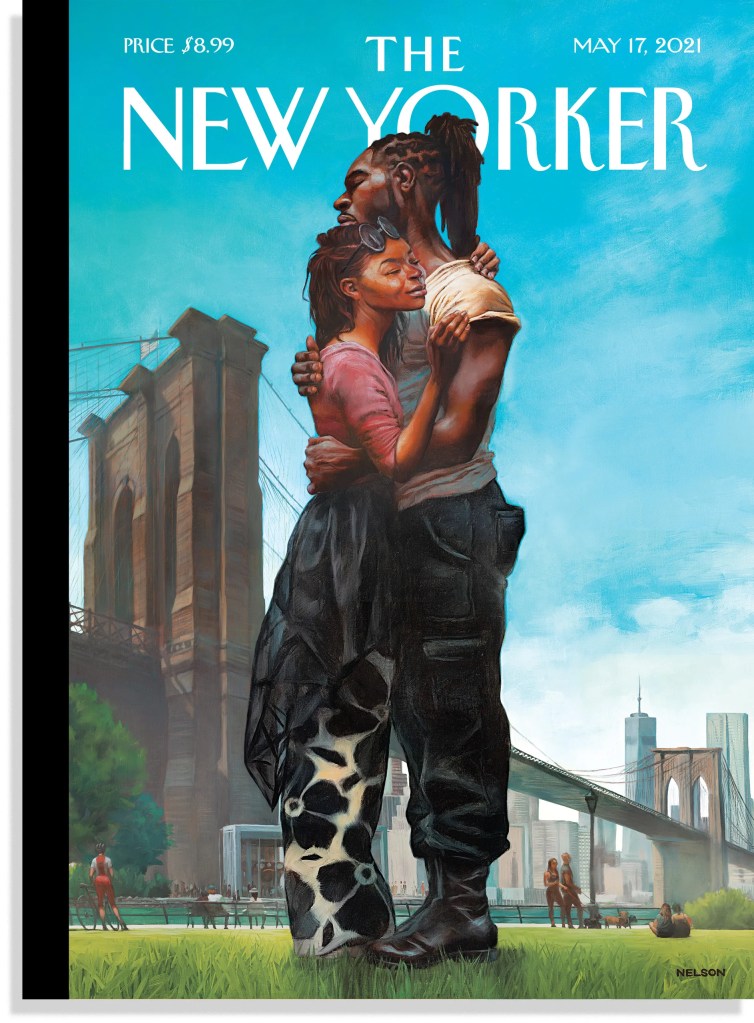
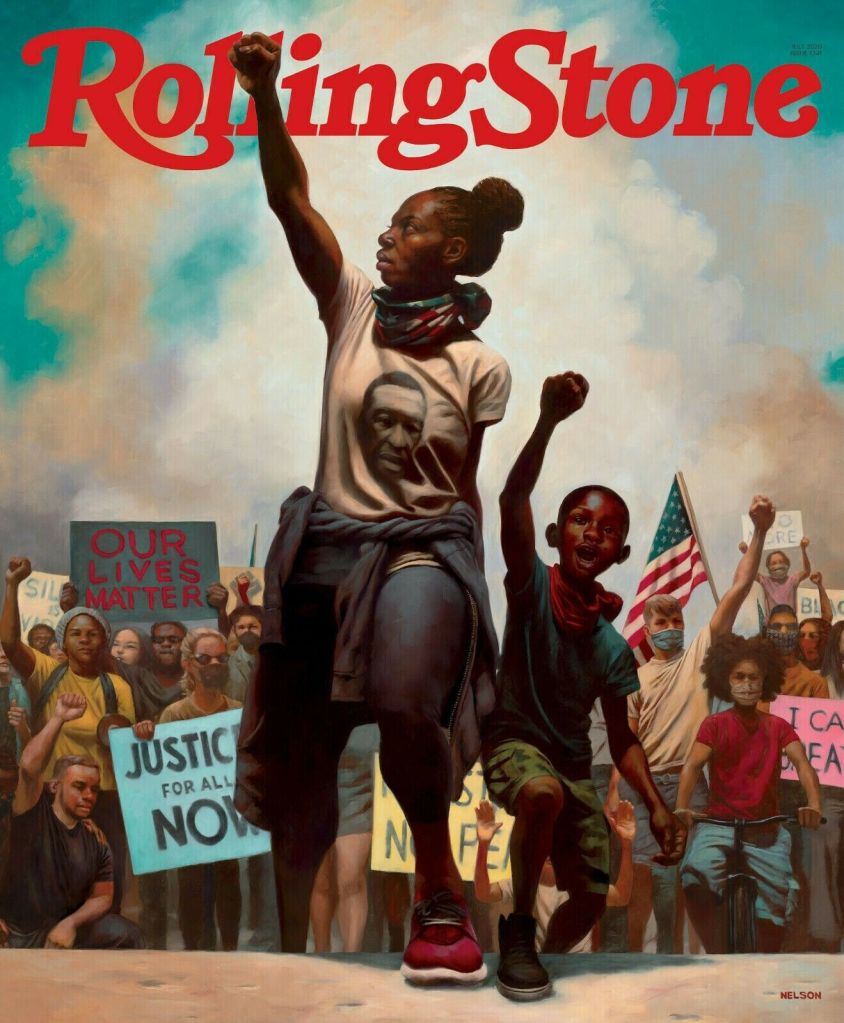
Kadir Nelson is a talented, prolific, accomplished artist. I became aware of his work because of his New Yorker and Rolling Stone covers, which are… just… breathtaking. In addition to his incredible skills as a painter, his narrative chops are second to none.

He has a website, with a gallery and store: https://www.kadirnelson.com/

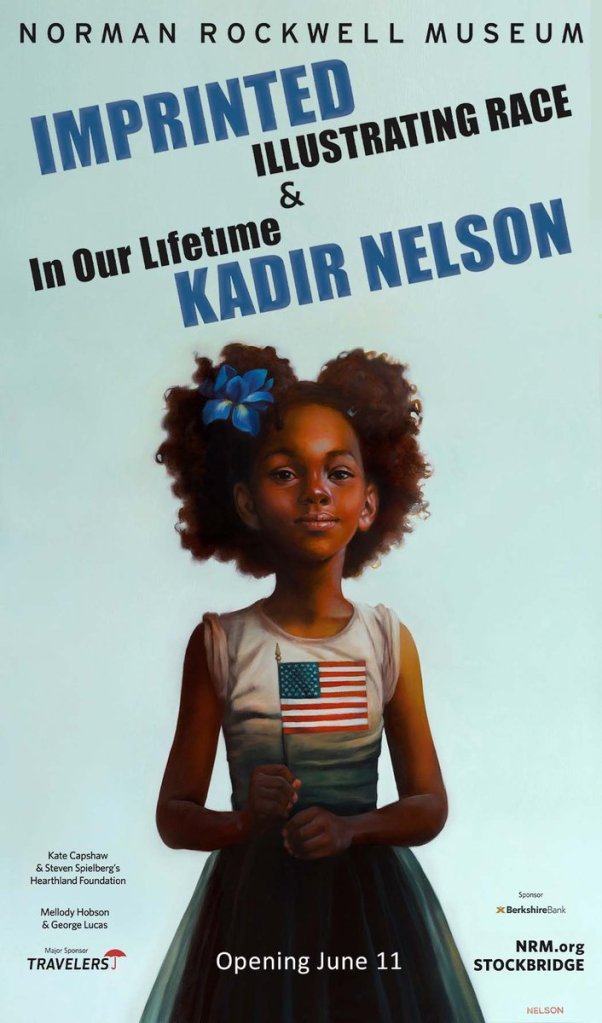
In 2022, the Norman Rockwell Museum curated an exhibition titled “In Our Lifetime: Paintings from the Pandemic by Kadir Nelson.”
He has written and/or illustrated a number of children’s books (autographed copies available).

And he painted what is, quite possibly, the best bookstore poster of all time (in my humble opinion):

Norman Rockwell was able to create self-contained visual narratives, using incredible drawing and painting skills. I would argue that Norman Rockwell was good at showing us what we already knew, sometimes even when we didn’t want to know it. That is a very particular, very specific skill. It is rare, and it is special.

Kadir Nelson is wholly original, artistically — he is one of a kind — but I think he does a similar kind of narrative work, with a similar skillset, and that his work is incredibly important in our time.
Black History Month

Black History Month: Augusta Savage & Annie Easley

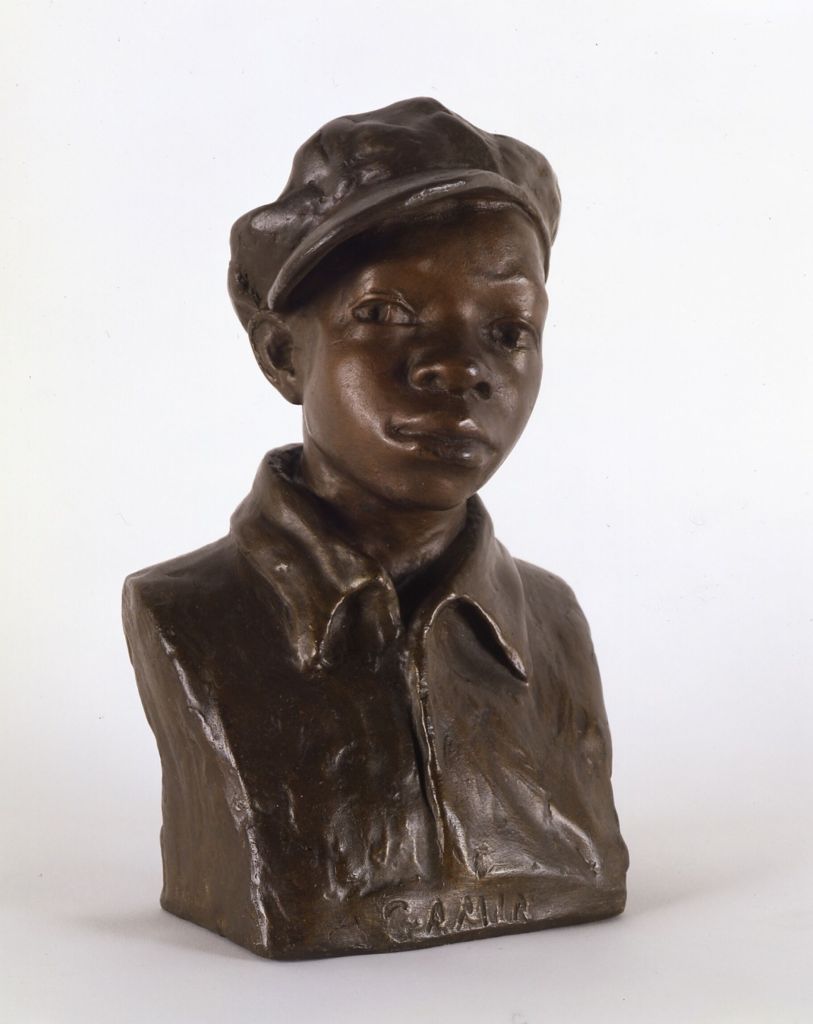
Gamin (1930), by Augusta Savage. Photo credited to the Cummer Museum of Art & Gardens, Jacksonville, Florida. Image featured in Sculptor Augusta Savage’s Towering Impact on the Harlem Renaissance, by Niama Safia Sandy, on artsy.com.

This morning I learned about two extraordinary Black American women: sculptor, poet, teacher and gallery owner Augusta Savage (1892-1962), and mathematician and computer scientist Annie Easley (1933-2011).

[The New York Public Library has a great libguide for Augusta Savage.]

Thank you to Mariame Kaba (@prisonculture.bsky.social) for posting a link to a PBS American Masters segment about Augusta Savage:

Annie Easley was a NASA “computer.” Hidden Figures (the book by Margot Lee Shetterly, and the film of the same name) featured profiles and stories of Black women hired by NASA for their skills and mathematics and engineering. Annie Easley wasn’t featured in that work, but she shared a similar skillset. Among her accomplishments, she created code for the Centaur rocket stage that allowed it to be used successfully (it was blowing up on launch). The code Easley created allowed the Centaur stage to be used in more than 220 launches; the technology was incorporated into other rockets used for missions to the moon, and for the space shuttles.

Annie Easley is one of the featured women in an article at biography.com: NASA’s Hidden Figures: The Unsung Women You Need to Know

Caitlin Aamodt, PhD (@caamodt.bsky.social) posted a gift article of an obituary for Annie Easley, published on February 1, 2025, by the New York Times in their “Overlooked No More” series: https://bsky.app/profile/caamodt.bsky.social/post/3lh7czy27ws2r

The Times summed up some of her skills this way: “She analyzed systems that handled energy conversion and aided in the design of alternative power technology, including the batteries used for early hybrid vehicles.” (For those of us who flirt with data transmission, the article also mentioned that she worked with SOAP.)

Easley spent her retirement mentoring others, and served with the EEOC.

From the Times piece, in a 2001 interview, Easley said this: “My thing is, if I can’t work with you, I will work around you.”

Wise words.