
I’m a volunteer raptor docent. It’s the most amazing thing ever, I think, even if I spend most of my time cleaning and feeding the raptors.
Raptors in captivity are unusual (as they should be). In our facility, we take in raptors that were wild, but have sustained injuries that would make it impossible for them to survive on their own in the wild. Most of them have wing injuries (are not flighted), but some of our birds have (or have had) eye injuries. The decision about their releasability is made by a veterinarian and the rehabber tasked with the bird’s care when it comes into captivity. When a bird comes to the West Valley Outdoor Learning Center, the OLC commits to supporting them with appropriate diets, enclosures, medical care, and enrichment for the rest of their lives.
The birds become education ambassadors for the community. They visit classrooms, go to events at the local wildlife refuge, parks department, local libraries. They are involved in open houses and classes at the OLC. Some of them don’t travel well, so do their work on site. Some of them don’t tolerate heat well, so they “retire” for the summer.
They never cease to be wild. They are not pets. They do not become domesticated. Most of them would be content to never see any of us ever again. There are times when we have to do things that they DO NOT ENJOY, like trimming talons and beaks, West Nile vaccines and boosters, or vet visits.
Most of these birds are solitary unless they’re nesting or migrating. Because they don’t even form social relationships with members of their own species (except under specific circumstances) in the wild, and none of them are imprinted to humans, it’s unrealistic for us to think that we can develop deep social connections with them. They recognize us, learn to work with us, and sometimes learn to trust us, but they don’t like us, the way a dog or cat might.
But, here’s the thing: they all have unique personalities and preferences. They are delightful. Some of them are hilarious. Some of them are really demonstrative, and opinionated — you always know how they’re reacting to what’s going on. I enjoy their company, even though they (mostly) don’t enjoy mine.
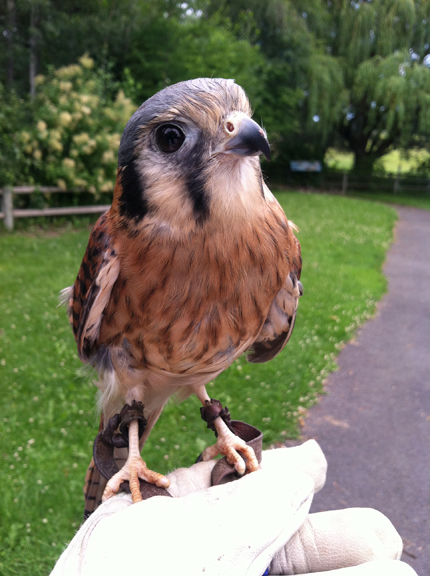
Sadie, American Kestrel 
Kiwi, Red-tailed Hawk 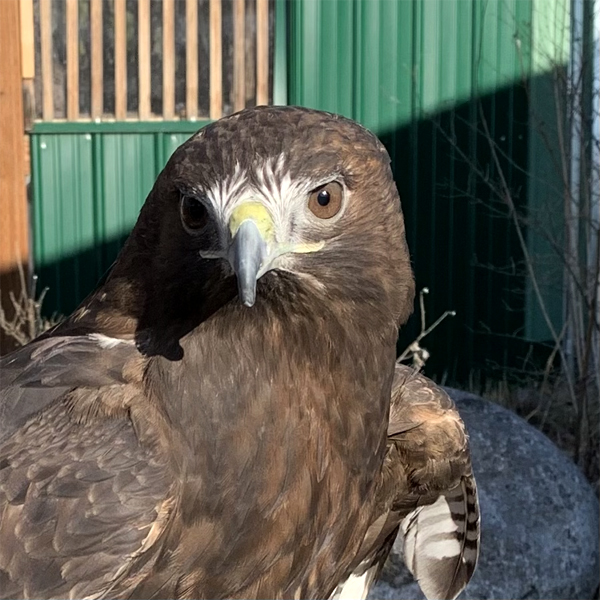
Arden, Red-tailed Hawk 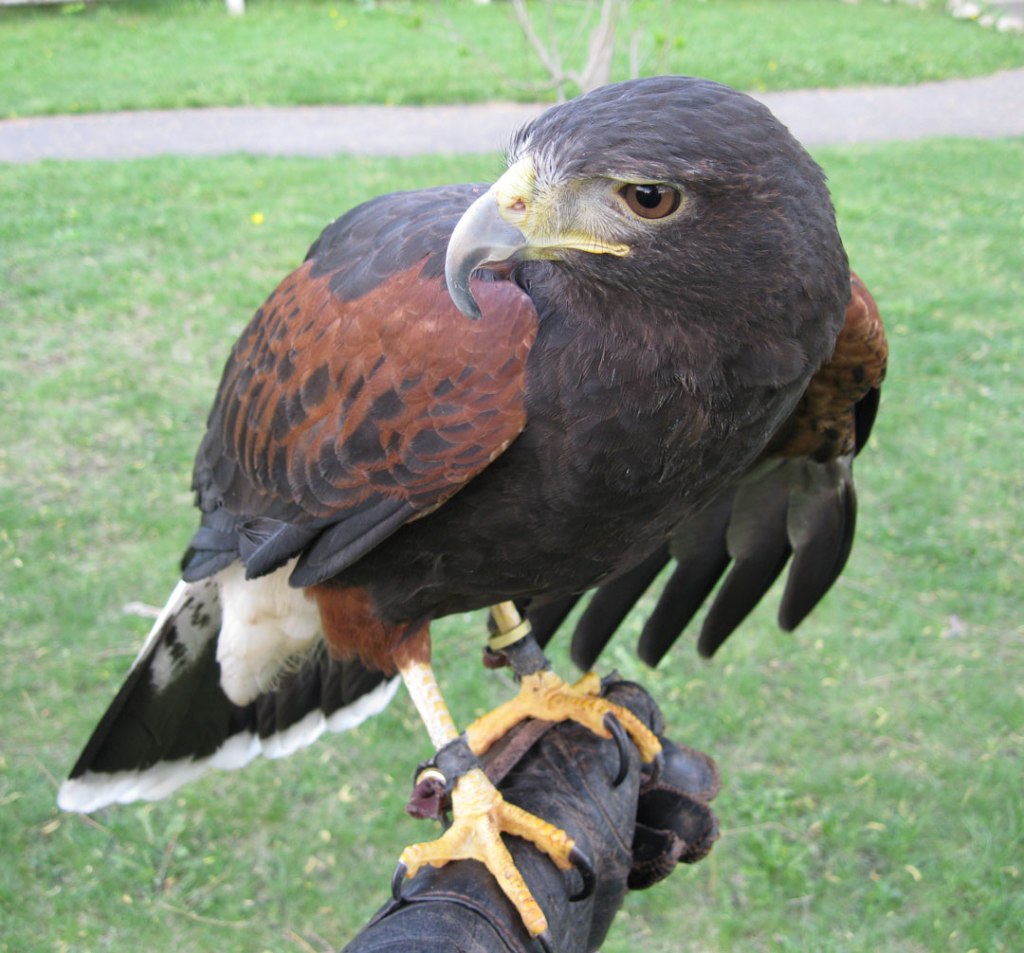
Stan, Harris’s Hawk 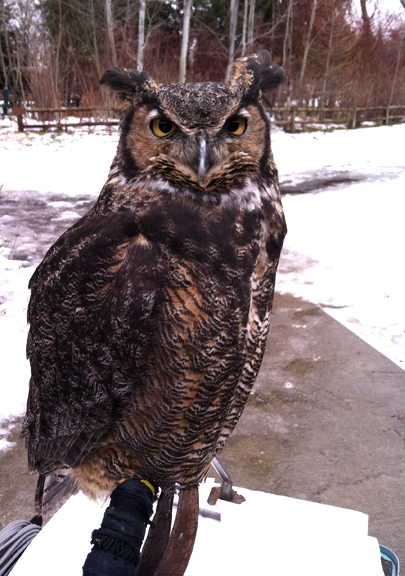
Hanovi, Great Horned Owl 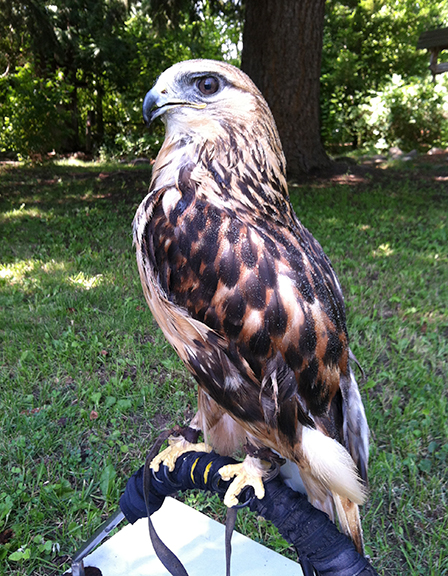
Pants, Rough-legged Hawk 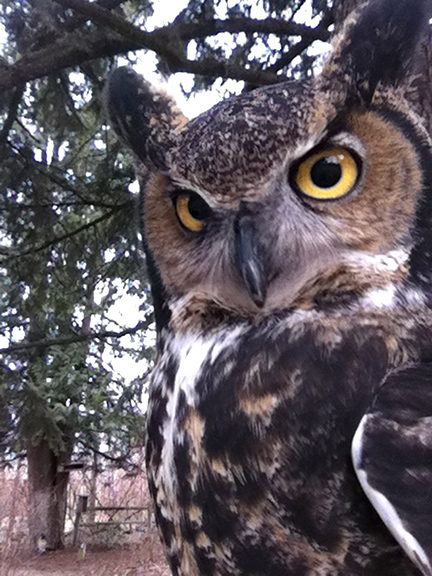
Alberta, Great Horned Owl
Some of these birds are no longer with us (Sadie, Kiwi, Hanovi), and their deaths are devastating. It’s like losing a member of your family. They live long lives, for raptors, but as with most animals, their lives are not long enough.
I asked a veterinarian once how it was possible to fall so in love with a creature who can’t love you back… she said that she thinks that on some level, they know that their handlers are there to help. I’d like to think that’s true.
 Carmen Yount