If you’re expected to be one of the smarter people in the room, I understand that it’s tempting to wade in to a topic you know nothing about and make stuff up, to sound smart.
Bit of unsolicited advice: don’t do that. Particularly if you don’t know what you don’t know. Fudging around the edges? Still not great, but if you really don’t know what you’re talking about, best to avoid the practice altogether.
On Friday, President Trump visited California to meet with leaders about the recent fires. During a press conference, he said this:
“We shouldn’t be in a position where you have tumbleweed that’s dry as a bone. Even tumbleweed can be nice and green and rich and it’s not gonna burn. You don’t even have to remove it. It’s not gonna burn. But it’s just dry. So I hope you can all get together and say I’m so happy with the water that’s gonna be flowing down.”
Here’s a link to the quote, with a video clip: https://www.threads.net/@aaron.rupar/post/DFOvAG0gftr?xmt=AQGznvArbxu623oBVtLN56adx9ax68B0y7JBCf_HgY0bbg
Here’s one reason the President’s statement is problematic: with *my meager credentials* (they are neither comprehensive, nor sterling), I can say — with some confidence — that there is no context where that statement is correct.
I have no special knowledge about tumbleweeds. I’m actually allergic to them, which seems kind of weird, but whatever. In Spring 2020, I took a community-college-level botany class, because I think plants are pretty amazing and it seemed like a good opportunity to learn some new stuff (good class, highly recommend). Because of where I live (Eastern Washington), and other interests (I’m a master naturalist), I have a passing interest in (but not a lot of knowledge about) fire ecology.
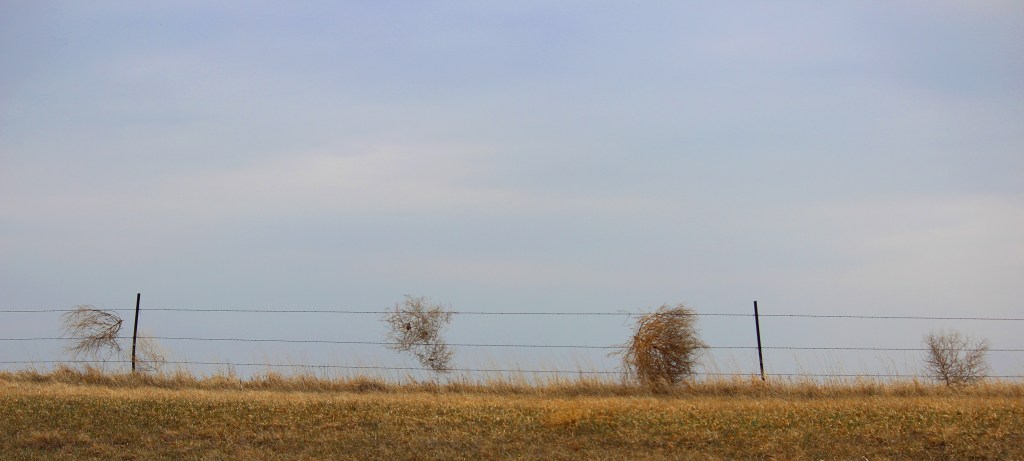
At least one species of tumbleweed commonly found in the West is invasive: Russian Thistle (Salsola tragus). This plant is an annual. And yes, it is green for part of its life cycle, but it’s the early part, when the landscape still has access to some water ( –> lower fire risk). Near the end of its life cycle, as its above-ground structure starts to senesce (begins the process of dying), it dries out and breaks off at its stem. And then, like the name says, it tumbles. The agitation helps to disperse its seeds. The plant evolved to work this way.
By the time this structure breaks off as a tumbleweed, it’s combustible. I think everyone agrees that in fire conditions, a rolling mass of dried out plant plant matter is bad. But the solution here is not to water the tumbleweeds. Setting aside the botany, the economics of that strategy don’t check out; even if you could locate every stand of tumbleweeds in California, it would be a tremendous waste of water that could be used for agriculture (or, you know, whatever). It would be great to figure out how to mitigate (or eradicate) invasive weeds in the West (LA County is working on this!) — our native landscapes would likely be healthier (less competition for resources from invasive species)… and maybe even a bit more fire-resistant.
To take this a bit further, even if there were no tumbleweeds, at least some of our ecosystems rely on periodic fire to maintain growth and foster regeneration. When I mention fire here, I’m not referring to the conflagrations we’ve seen in recent years. Those are a combination of factors, including climate change, decades of fire suppression, and human activities. (Good, recent article about this at the United Nations Office for Disaster Risk Reduction (UNDRR) website, PreventionWeb.)
Fire is a complex challenge in North America, with no one-size-fits-all solutions. But there are experts who know a lot about this very complex issue, because they study it, have experience with it, work with others on it, and think about it… a lot. Some of these experts include, but are not limited to: local indigenous land managers, local ecologists and fire ecologists, emergency managers, and with their first-hand experience, wildland firefighters (who do incredible work, under very trying circumstances, every year). I’m spitballing here, but it’s probably a good idea to defer to these folks when trying to suss out solutions for this, particular, very complex challenge.
The broader point is this, and we should all take a note: none of us has to be the smartest person in the room. If you run into a topic you don’t know anything about, it’s a really good idea to stop talking (or better, start asking questions!). Bullshitting can create misinformation, and it undermines your credibility, particularly if you’re screwing up on the lowest of low-hanging fruit by workshopping a poorly-reasoned organismal solution to a community problem.

 Carmen Yount
His apparent belief that you can just turn on a tap and divert water from Canada all the way to California is another puzzler. I don’t know alot about hydrology but I lived in both Southern and Northern California over the years and the any sensible person knows that isn’t how it works. Maybe he will just tumble away while seeking the source of the non existent Canwasorecal river.
LikeLike